Nirmal Purja did not die on the mountain he set out to climb. He died on the one he added at the last minute — and the reason he added it tells you almost everything about how a man like this ends up dead at 43.
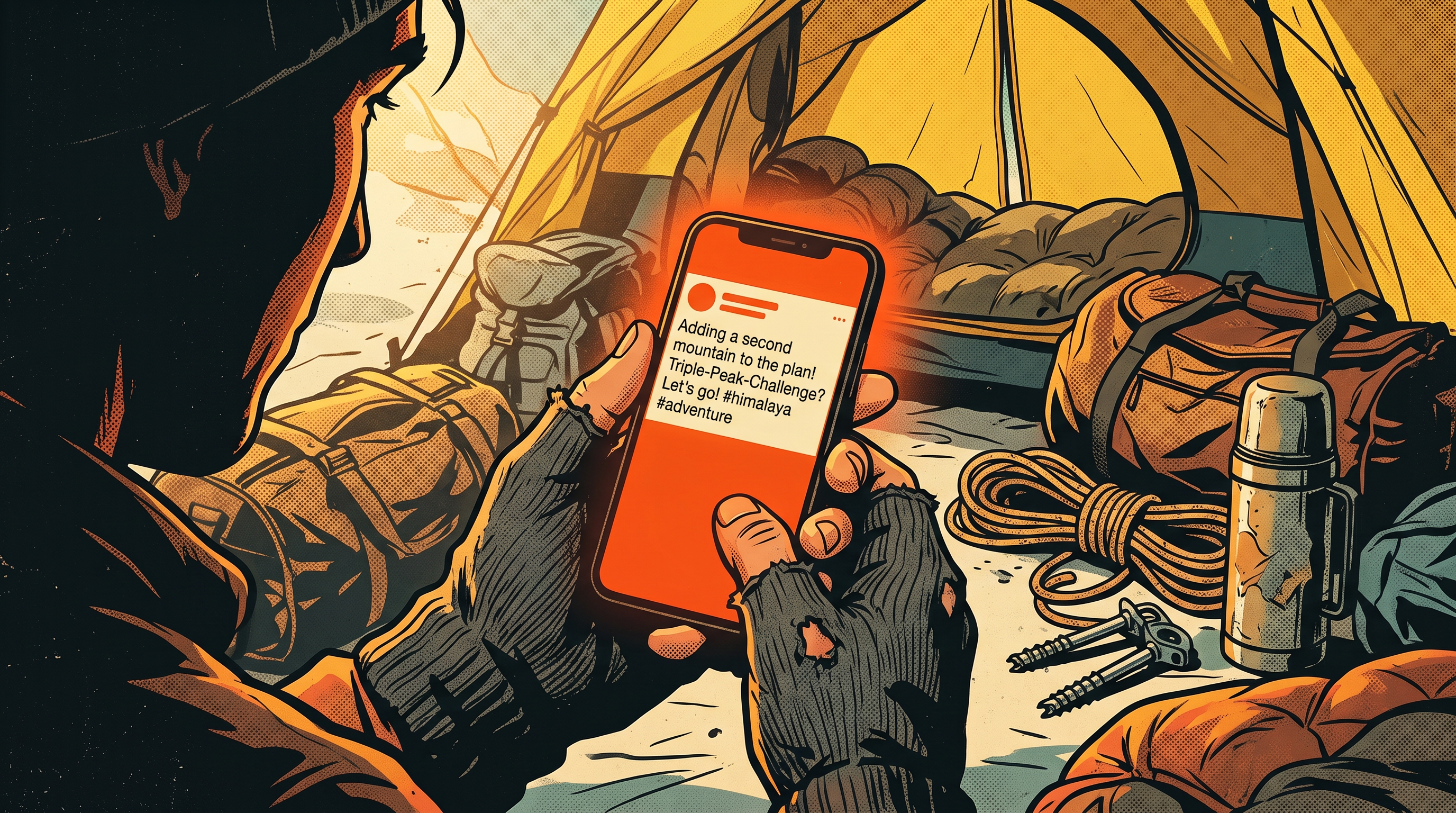
His final post on X, published on Monday, reads now like a confession dressed as inspiration. The plan for Pakistan, he wrote, was "to climb just G2" — Gasherbrum II. Then, just before flying out, he did the arithmetic. Adding Broad Peak would leave him a single mountain short of becoming the first person in history to climb all 14 eight-thousanders twice, without oxygen. "This wasn't planned," he wrote. "But opportunities don't scream: they whisper to those already working in silence."
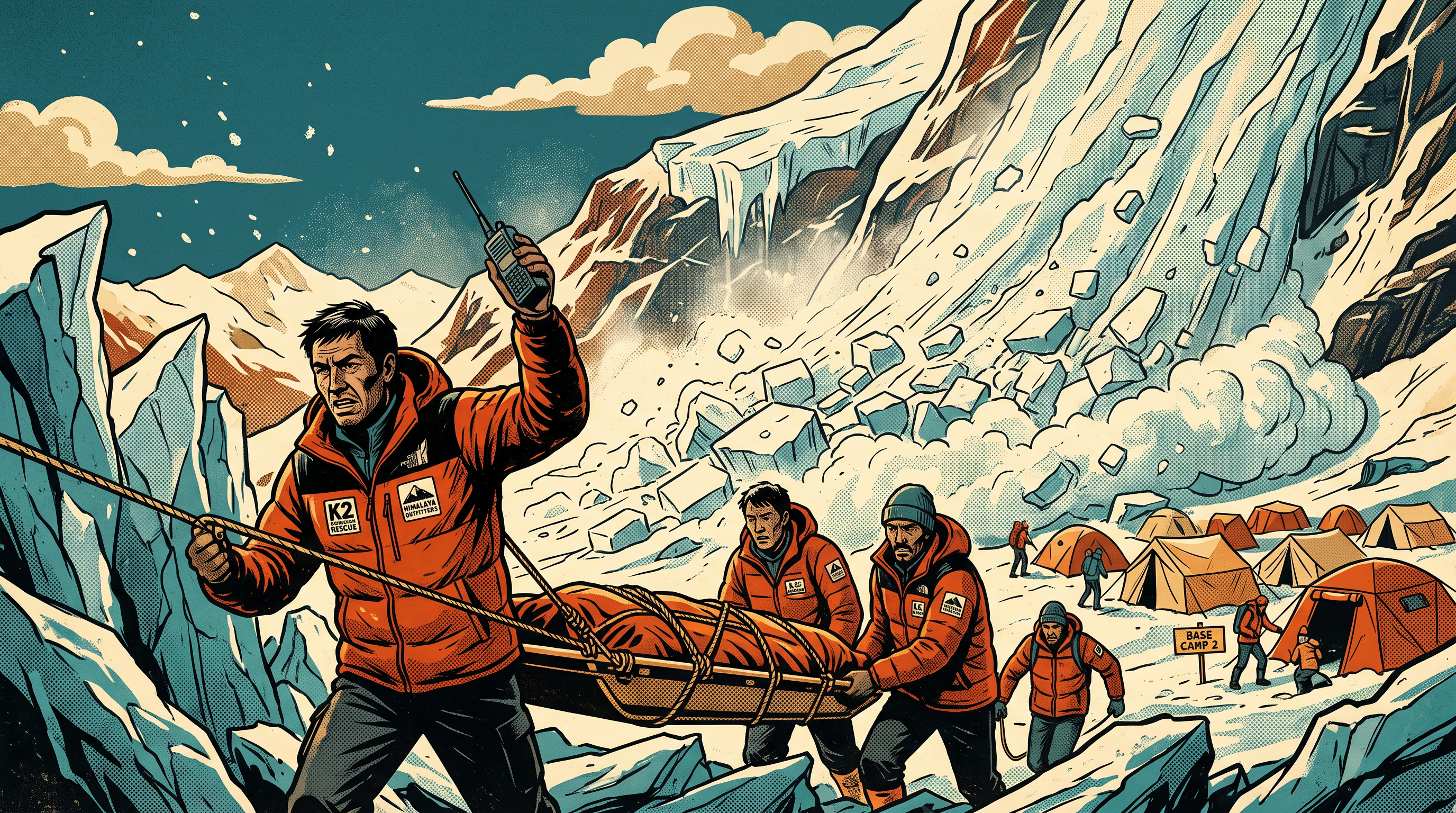
On Thursday, an avalanche on Broad Peak killed ten people. On Saturday his company, Elite Expeditions, confirmed he was among them. On Sunday, the Alpine Club of Pakistan announced that his body had been found at around 5,700m. Rescuers reported seeing three more bodies nearby, still unidentified. A ground team is bringing them down to a Japanese camp.
The Phenomenon
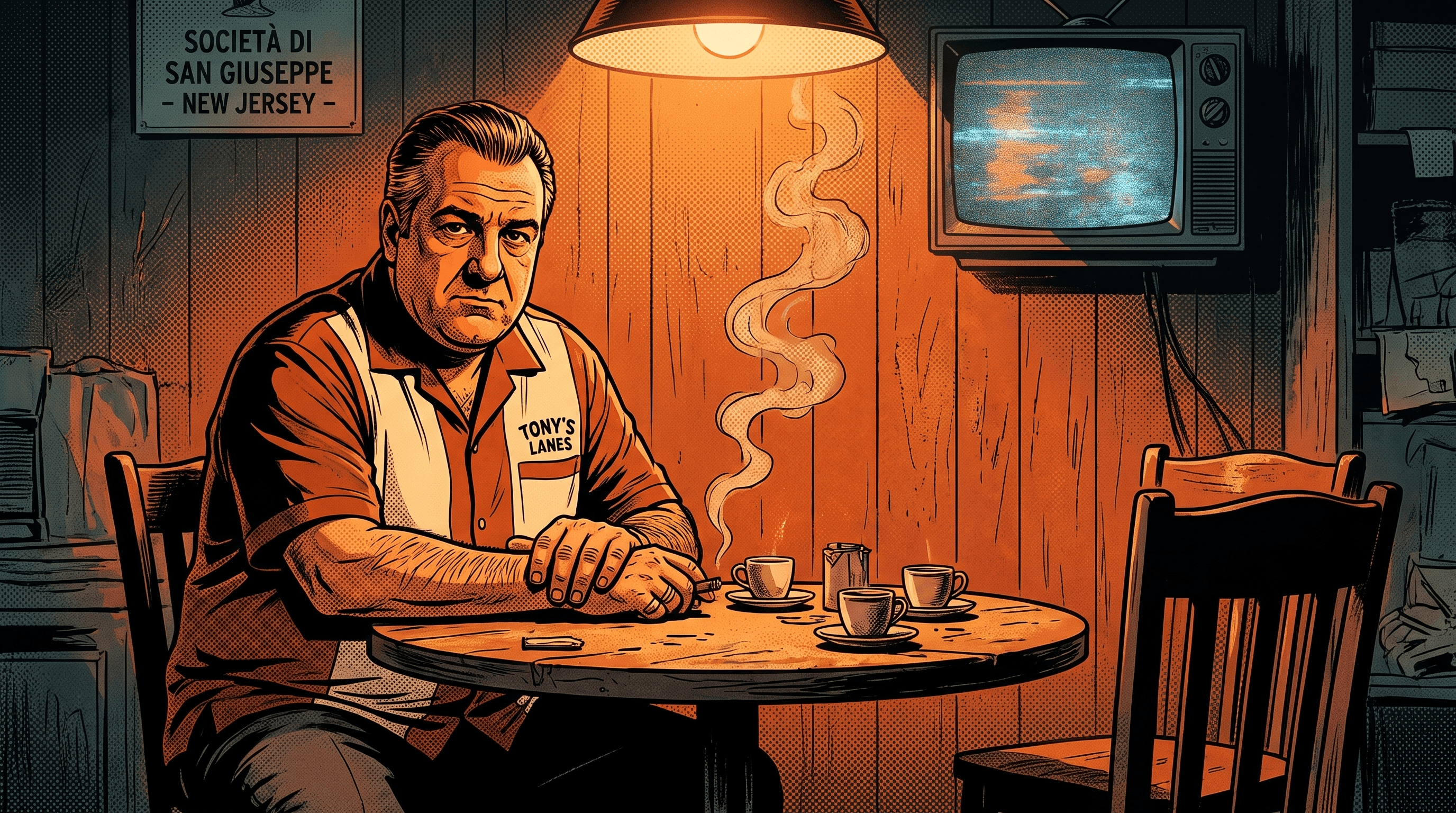
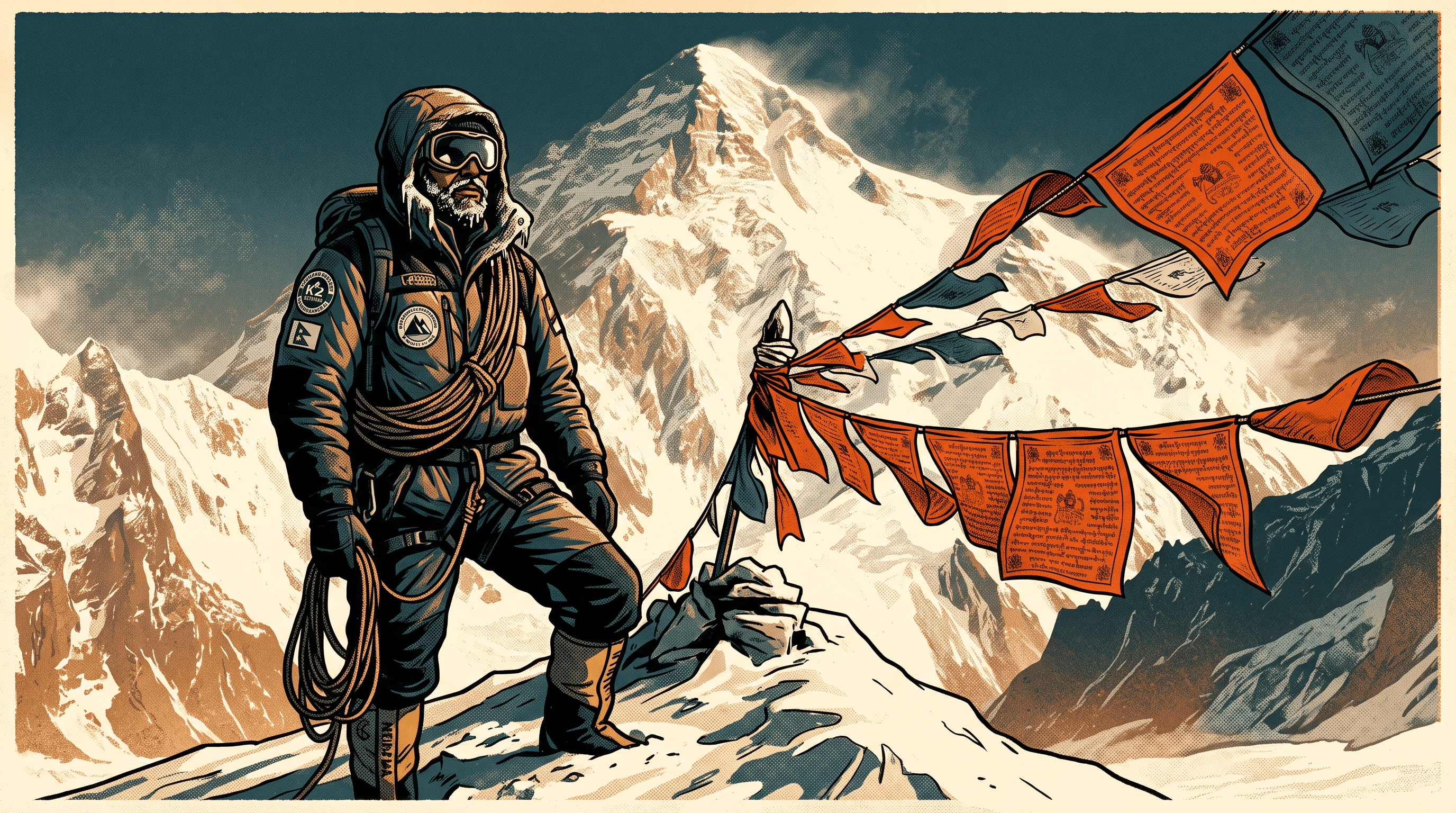
Purja was a genuine phenomenon, and I don't use that word to soften anything. British-Nepali, born in Nepal, he served 16 years in the British military — ten of them in special forces — and said he was the first Gurkha to climb Everest while still serving. In 2019 he climbed all 14 of the world's peaks above 8,000 metres in 189 days, beating the old record by more than seven years. Not seven per cent. Seven years.
That feat became the 2021 Netflix film 14 Peaks: Nothing Is Impossible, which turned him into a global figure. He collected an MBE from the late Queen in 2018 for high-altitude mountaineering. He lived in Hampshire with his wife and his three-year-old daughter. He founded and ran Elite Expeditions, and he was leading this one.
The tributes have been enormous and sincere. Prince William called him "one of the greatest mountaineers." Wes Streeting called him "inspirational." His brother, Kamal, wrote: "Although our hearts are broken, we are incredibly proud of you. Your legacy will live forever." Nobody is disputing the man's courage. That was never in doubt. What deserves a harder look is the machine his courage got fed into.
The Machine
Here is the uncomfortable part. Purja didn't just break records. He built a business, a brand, and eventually an entire incentive structure around breaking them — and that structure has a logic all its own, and the logic does not care whether you get home.
Look at the escalation. First it was fastest — all 14 peaks quicker than anyone. Once you've done fastest, fastest is over; you can't win the same race twice. So the next frontier becomes all 14 without oxygen. And once that's in reach, the only unclaimed prize left is all 14 twice, without oxygen — a target so specific it could only have been invented to be the first to hit it. Each record, once broken, forces the next one to be harder, because the whole point is to do the thing no one has done. The mountain of achievement can only ever get steeper.
That's why Broad Peak got bolted onto the itinerary days before departure. Not because Purja "took the mountain for granted" — his own last words insist he didn't. "Broad Peak, I ask for nothing but safe passage up and back down. I take zero mountains for granted," he wrote. He was, by every account, careful. Naila Kiani of the Alpine Club of Pakistan called him "very experienced" and "fearless" and praised his leadership. The problem was never carelessness. The problem is that once "twice without oxygen" exists as a target, every mountain within reach stops being optional and becomes a box to tick. The whisper he described isn't opportunity. It's a treadmill that only speeds up.
No Final Level
Let me put the record-chasing thing in plain terms, because the mountaineering world talks about it like it's noble and mysterious, and it's actually pretty simple.
Imagine achievement as a video game where the developers keep patching in a harder difficulty the moment anyone beats the current one. You finish the game on Normal — congratulations, here's Hard. You beat Hard — here's a mode where the checkpoints are removed. You clear that — now there's a mode where you have to do the whole thing twice with one hand tied behind your back. There is no final level. The design guarantees it. The prize is always "the thing nobody's done," and the instant you do it, it stops being the prize.
Now add the crucial detail that separates this from a video game: in this one, you have a real body, real lungs, and a real three-year-old at home in Hampshire. There's no respawn.
And notice which mountain the machine chose for him. Broad Peak is the smallest of the 14 eight-thousanders — it clears the 8,000-metre line by under 50 metres. If the eight-thousanders were a nightclub with a strict height requirement, Broad Peak is the one that got in wearing lifts in its shoes. You'd assume "smallest" means "safest." It doesn't. Broad Peak is regarded as one of the tougher ones. It was first climbed in 1957 by an Austrian expedition, and dozens have died on it since; 2013 alone killed at least six. "Smallest" here means it still qualifies to kill you, and reliably does.
So the man who once needed to summit the fourteen biggest mountains on Earth ended his life adding the runt of the litter to his list — not because it was a summit he burned to stand on, but because it was the one square missing from a scoring grid he'd designed. That is the whole tragedy in one sentence.
The Shorter List
There's a phrase Purja used after his 189-day record that has aged into something almost unbearable: "I hope to have proven that anything is possible with some determination, self-belief and positivity." He meant it as encouragement, and millions took it that way. But "nothing is impossible" is a lie, and it's a specific kind of lie — the kind that removes the word stop from your vocabulary. Nature keeps a much shorter, much older list of things that are entirely possible, and one of them is a wall of snow coming down a mountain that was not even on your plan a week earlier.
Six of the ten who died were Nepalese. The named dead recovered so far are Mallory Geis, Nadhira Ahmed Abdullah Al Harthy, Pur Bahadur Gurung, and Purja himself. Three more lie sighted but unnamed on the same slope. Nepal's Prime Minister Balendra Shah said the deaths "shocked us." They shouldn't have. This is what the escalation was always going to cost eventually, because the one record the mountains never let anyone break is their own.
Purja was extraordinary. He was also proof that "extraordinary" and "safe" are not the same word, and that the most dangerous target in the world is the one you invent solely so that you can be the first to reach it.