A man is stabbed in north Belfast on a Monday night. By the weekend, people who never met him have set fire to the homes of strangers in his name. That is not justice. It is not even revenge. It is a machine, and the depressing thing about Belfast this week is how well we already knew the blueprint.
The Week Belfast Burned
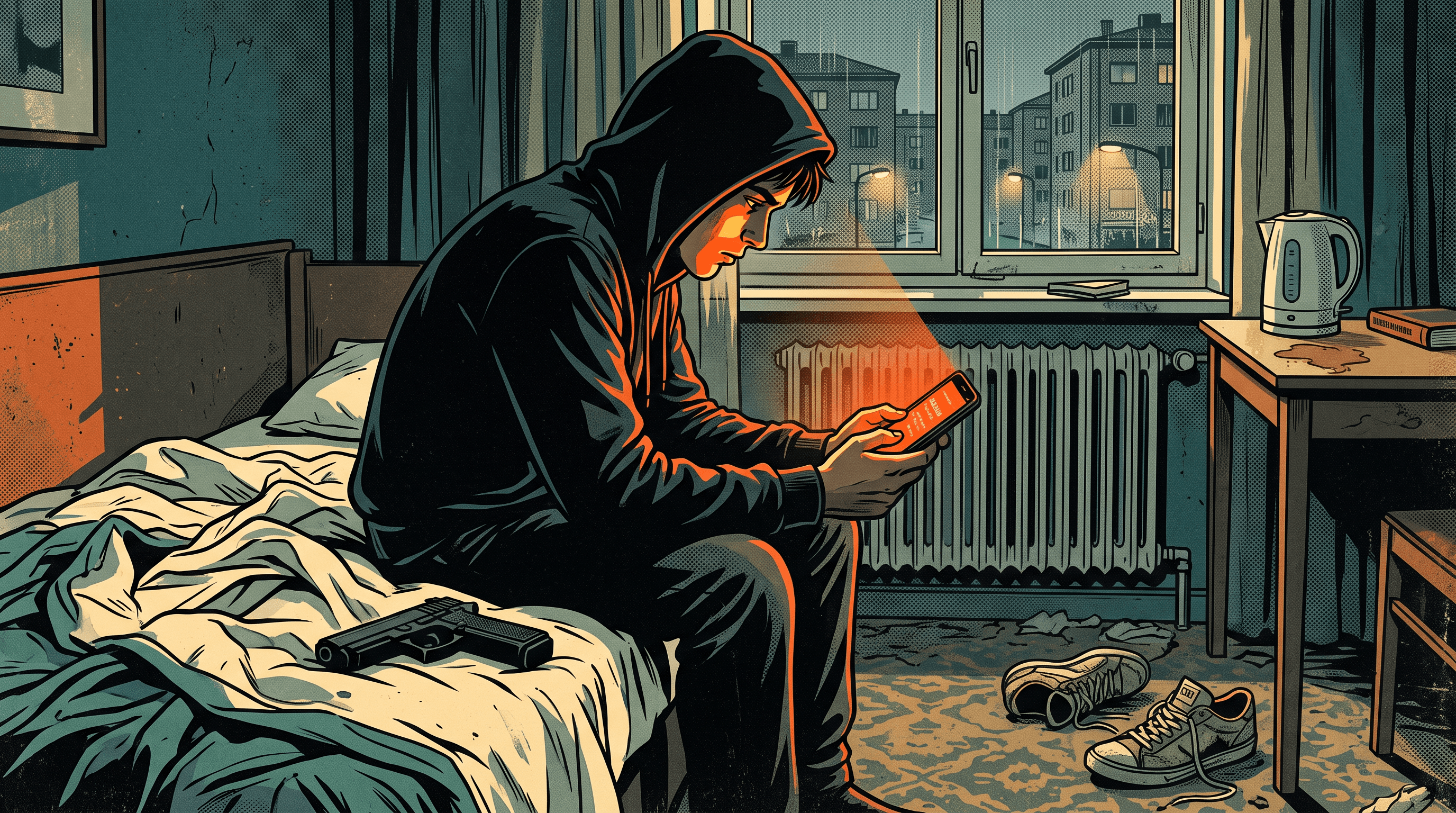
Here is what happened, stripped of noise. On Monday night a man was attacked with a knife in north Belfast and left with serious injuries. Footage of the attack was shared widely on social media. A man has since been charged with attempted murder.
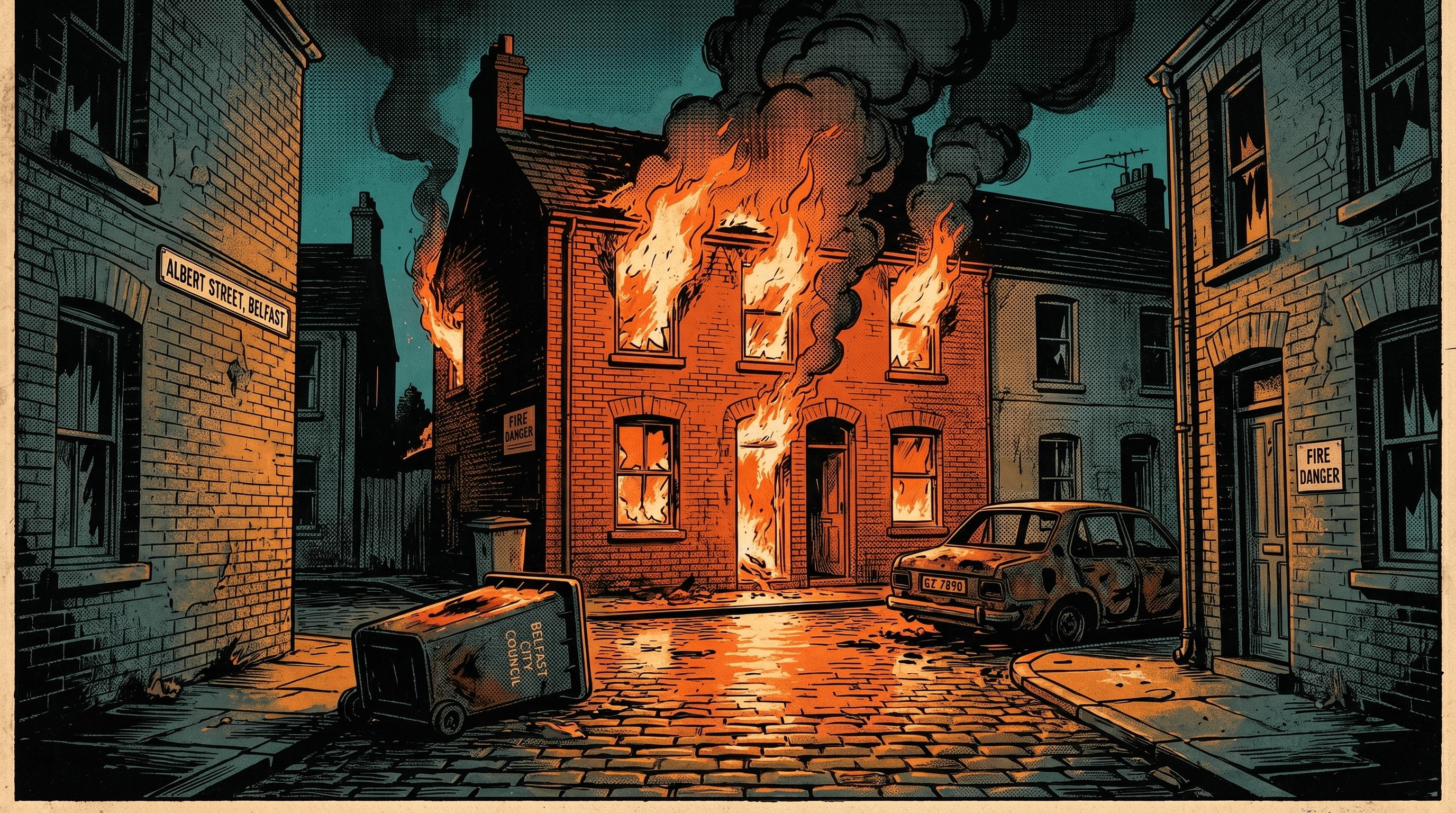
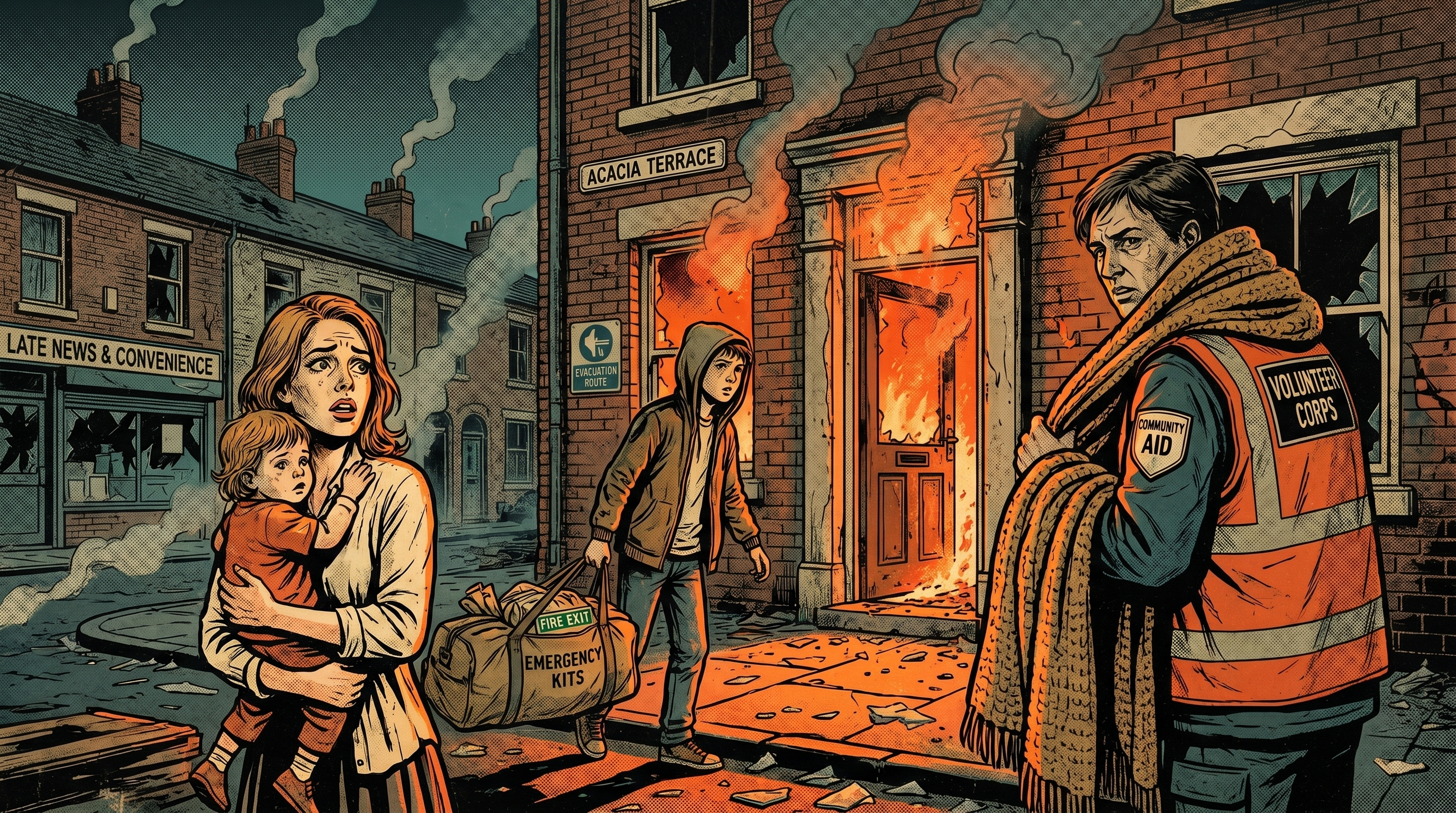
Then the city had several nights of violence. People's homes, businesses and vehicles were targeted, damaged or destroyed. Families fled. By the time the smoke cleared, police had made 23 arrests. Seventeen people were charged to court, five were bailed, and one was reported to the Public Prosecution Service.
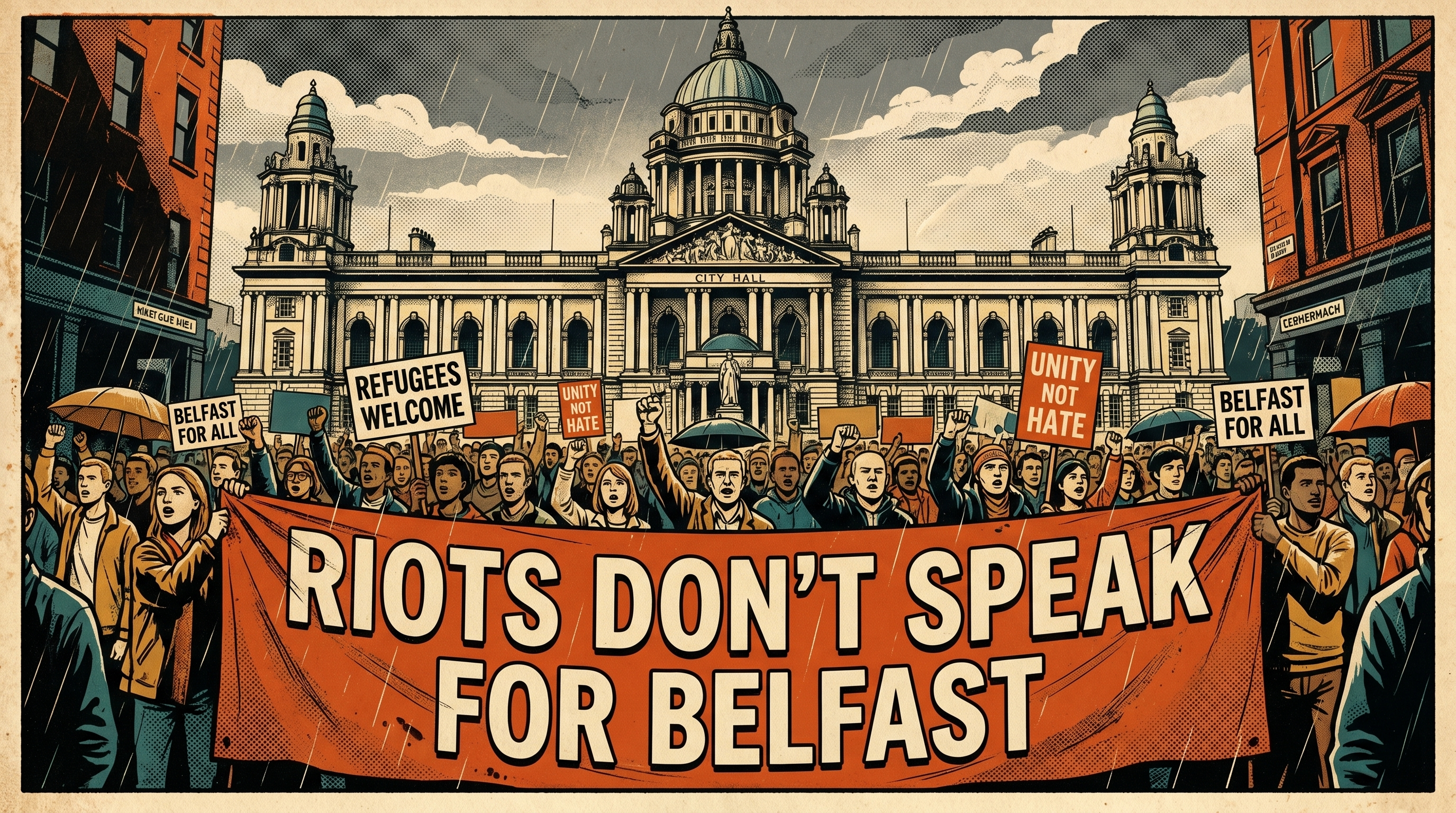
On Saturday, the other Belfast answered. From around one o'clock, up to 20,000 people gathered at City Hall for a rally called "Together Against Hate," organised by United Against Racism. Police closed roads to fit them all in. A parallel protest filled Londonderry's Guildhall. Political parties and trade unions turned out. The banners read "Strike back against racism," "Refugees welcome," and the line that cut deepest: "Riots don't speak for Belfast."
The Real Story Isn't the Mob. It's the Machine.
Everyone wants to talk about the rioters, which is exactly the wrong instinct, because the rioters are the least interesting part of this.
The interesting part is the mechanism. A real crime happens. The footage travels faster than the facts. As Ivanka Antova put it, "rich and powerful people used their online platforms." A mob assembles around an injury that has nothing to do with the people whose windows it then breaks. Antova didn't reach for euphemism — she called the events "racist pogroms" with "nothing legitimate" about them. "This week," she said, "we witnessed something we will never forget. The scenes of families and young children fleeing their homes in terror." And: "the whole world watched Belfast in horror."
Notice who was absent from the rescue. Speakers said again and again that the on-the-ground response was left to refugee women and local community groups, not the state. Solidarity went to hundreds of volunteers who "evacuated people, provided meals, and reassured frightened communities." Carmel Gates of the Irish Congress of Trade Unions saluted the healthcare workers, firefighters, bus drivers and teachers who "picked up the pieces."
And here is the detail that should make any government minister wince. Gates said one of them phoned to ask what could be done. A whole apparatus of power, ringing up a trade unionist mid-crisis to ask for the homework answers. Her reply was brutally simple: "The only practical thing that Westminster can do is provide money to tackle the poverty that fuels racism."
That's the scandal hiding in plain sight. The people with the platforms lit the match. The people with the power asked what to do. The people with neither put out the fire.
How the Machine Actually Works
Let me lay out the mechanism, because once you see the parts you can't unsee them.
Part one: the spark. You need a genuine grievance — a real victim, real injuries, real fear. This matters. The machine doesn't run on lies; it runs on a true thing wrenched out of shape. The knife attack was real. The victim's suffering was real. Speakers at the rally extended sympathy to him before they condemned the rioting, which is the morally serious order of operations.
Part two: the accelerant. Footage. A clip that travels through phones faster than any newsroom or court can establish what it actually shows. By the time anyone asks "wait, who is this and what happened," ten thousand people have already decided, and they've decided wrong.
Part three: the misfire. This is the cruel genius of it. The anger generated by the spark gets aimed at people who had nothing to do with it. Think of it like a fire alarm wired to the wrong room — the smoke is in the kitchen, the sprinklers go off in the nursery. The fury was real. The target was random. That is not a side effect of the riot. That is the riot.
Part four: the empty chair. The state, which is supposed to be the thing standing between an angry crowd and a frightened family, simply isn't in the room. So the chair gets filled by whoever's brave enough — and this week that was refugee women, unions, and volunteers ladling out meals.
Now here's the part Belfast of all places should recognise instantly. Swap the costumes and you've seen this play before. Speakers explicitly linked this racism to Northern Ireland's long history of sectarian division, and the link is not decorative. The template is identical. There is an "us." There is a "them." The "them" is whoever is nearest and most vulnerable, and the only thing that's been updated is the name on the target. For decades the dividing line ran between two communities who, to an outsider, looked maddeningly similar. The machine has simply found a fresh "other" to feed in. Same engine. New fuel.
This is why Gates told the crowd, "We have had enough division… enough sectarianism and we will not tolerate racism," and then drove the point home: "Worker's rights are migrant's rights, same struggle, same fight." She was naming the trick. The whole purpose of the machine is to convince people at the bottom that their enemy is the person standing beside them, rather than the conditions they're both standing in.
The Lie at the Centre of It
There's one justification worth dismantling because it gets recycled every single time: the idea that this kind of violence protects somebody.
Elaine Crory of the Women's Resource and Development Agency put a stake through it. "Nothing about this violence," she said, "supports the safety of women and girls in our community." She said hundreds turned up out of "disgust and rage." Good. Disgust is the correct response to men burning family homes while claiming to defend the vulnerable. You cannot torch a neighbourhood into safety. The arithmetic has never once worked.
And the human cost is not abstract. Mohamed Eltayeb has lived in Belfast nearly twenty years and spent this week fielding calls from relatives checking he was still alive — which is a grotesque thing to have to do after two decades in a city you call home. He said the "correct way" to channel anger is "civilised protest" without the violence, and that seeing the politicians, unions and locals turn out made him "feel more relaxed." Manal Mahdi, from Sudan and ten years in Northern Ireland, said the rally gave her the reassurance she'd been hoping for.
That is the whole ballgame. Twenty thousand bodies in a square, chanting "Who is Belfast? We are Belfast," so that a man who's been there twenty years can stop expecting the worst. It shouldn't take a crowd that size to establish that a person belongs in their own city. But here we are, and the crowd showed up.
A Machine You Can Refuse to Feed
Don't accept the framing that Belfast "erupted," as though a city is a volcano with no say in the matter. Machines get switched on, by people who profit from the heat and pay none of the cost, and then they get switched off — not by ministers making phone calls, but by volunteers carrying meals to the families those ministers failed to protect.
The riots did not speak for Belfast. The 20,000 did. The lesson is not that hate is powerful; it's that hate is predictable — a machine running an old script with the cast recoloured. And a machine you can see this clearly is a machine you can refuse to feed.