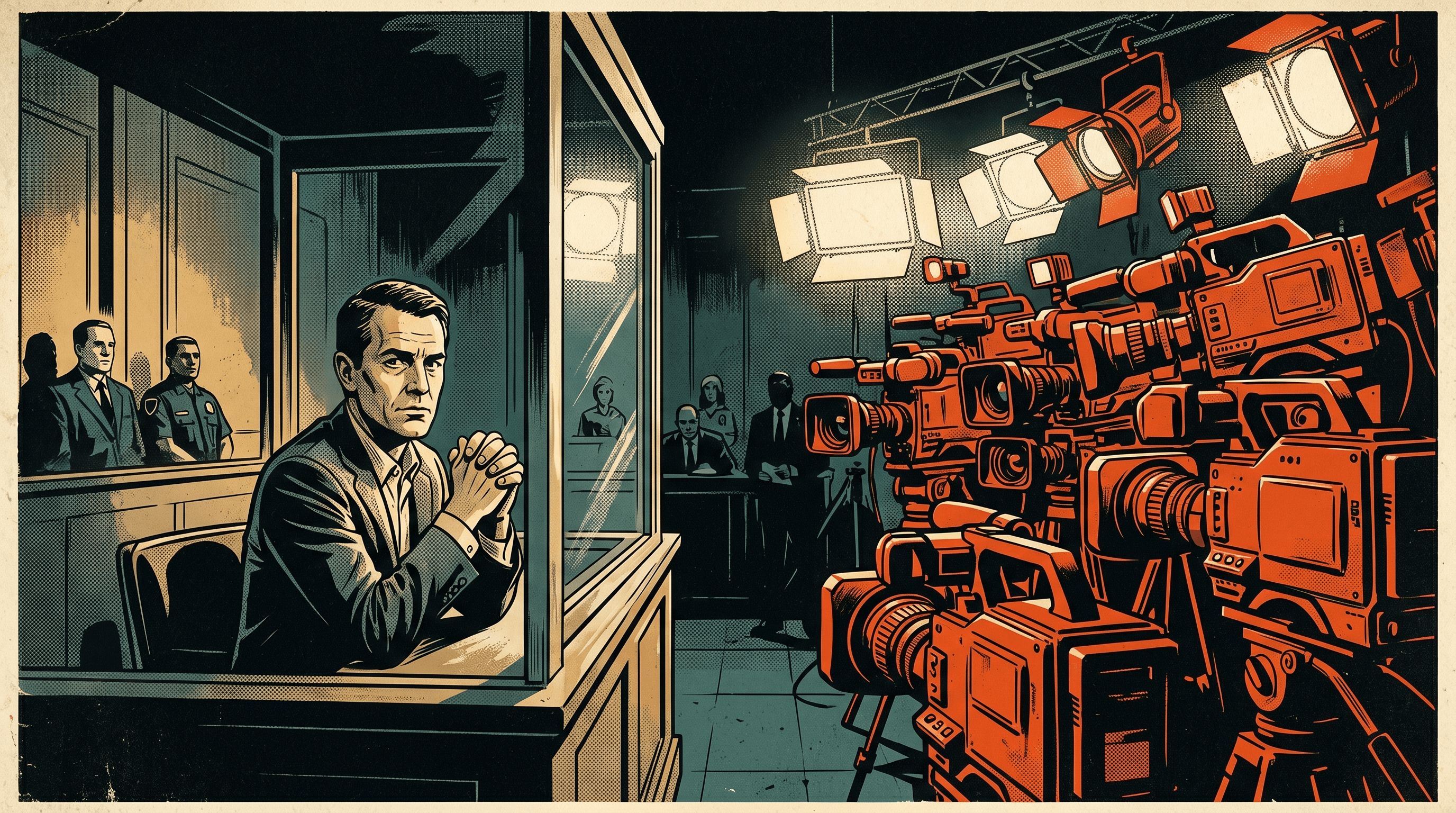
Israel isn't building a court. It's building a stage.
A special military tribunal in Jerusalem, purpose-built legislation, cameras rolling for a dedicated broadcast website, charges that include genocide — this is a legal system designed not to find the truth but to produce a moment. The comparison Israeli politicians keep reaching for is the Eichmann trial. They should be careful what they wish for.
What's Actually Happening
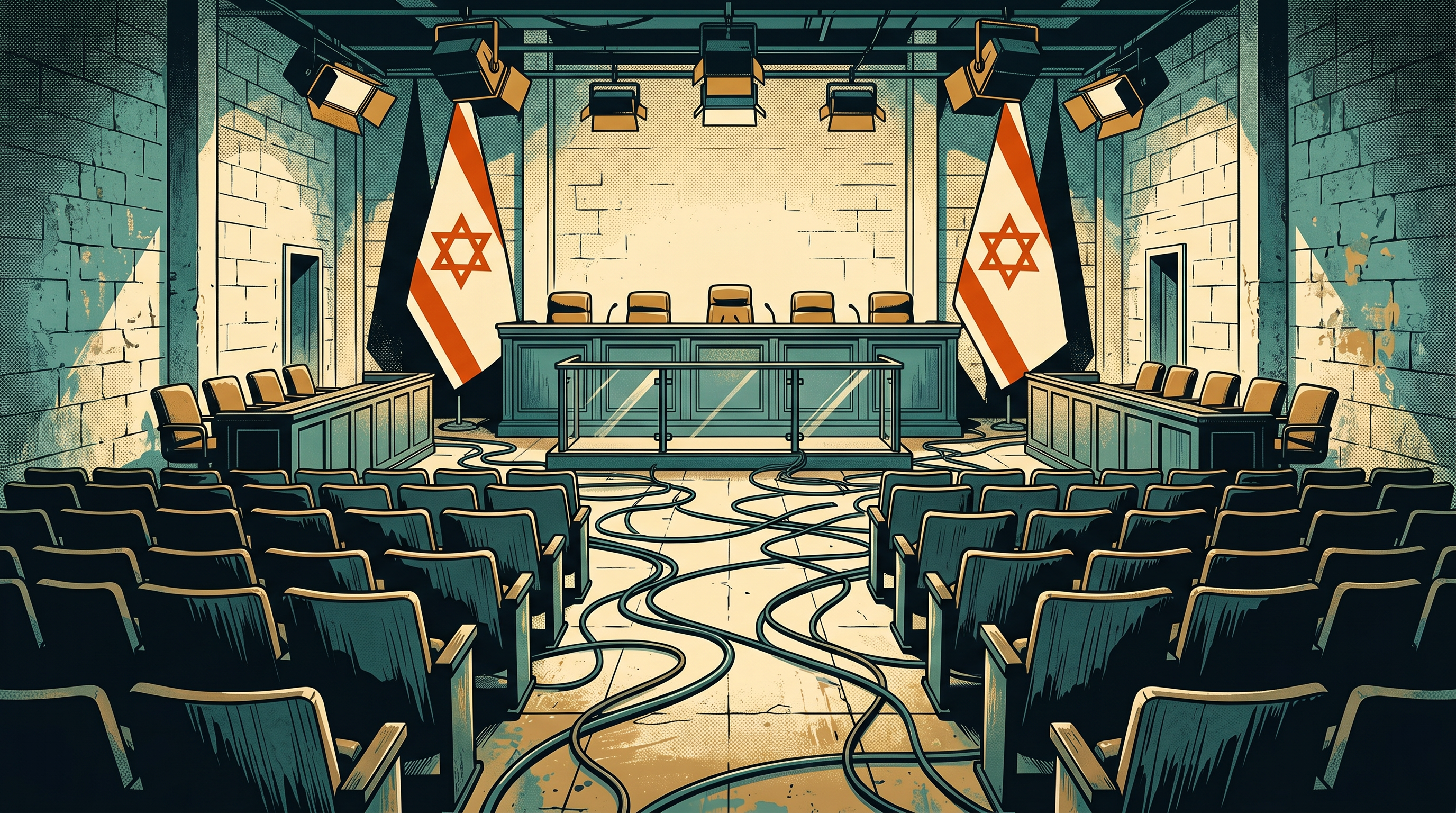
Israel has created a bespoke legal framework to prosecute those accused of direct involvement in the October 7 attacks — the deadliest day in the country's history. The law establishes a special military court in Jerusalem and, crucially, allows for the death penalty. Key hearings, including opening statements, verdicts, and sentencing, will be filmed and broadcast on a dedicated website. The charges may include terrorism, murder, sexual violence, and genocide.
The targets are captured members of Hamas's Nukhba forces and other alleged direct participants. An earlier piece of legislation — the March "Death Penalty for Terrorists" law — didn't apply retroactively, so an entirely new legal mechanism had to be invented for these specific defendants.
That's worth pausing on. When your existing law can't do what you want it to do, and you write a new one that can, you are no longer describing justice. You are designing an outcome.
The Eichmann Problem
Israeli politicians have compared these proceedings to, and superficially the comparison flatters. Adolf Eichmann's execution remains the singular precedent for the death penalty in Israel's civil court history. That trial was, by most accounts, a genuine reckoning — a bureaucrat of genocide forced to answer for industrial-scale murder in the country his victims built.
But the Eichmann comparison cuts both ways, and the people making it seem to have noticed only the edge that suits them.
The Eichmann trial derived its moral authority from its restraint. One man. One set of charges. One verdict. One execution in sixty-plus years. The power of that precedent comes precisely from how rarely Israel has reached for it.
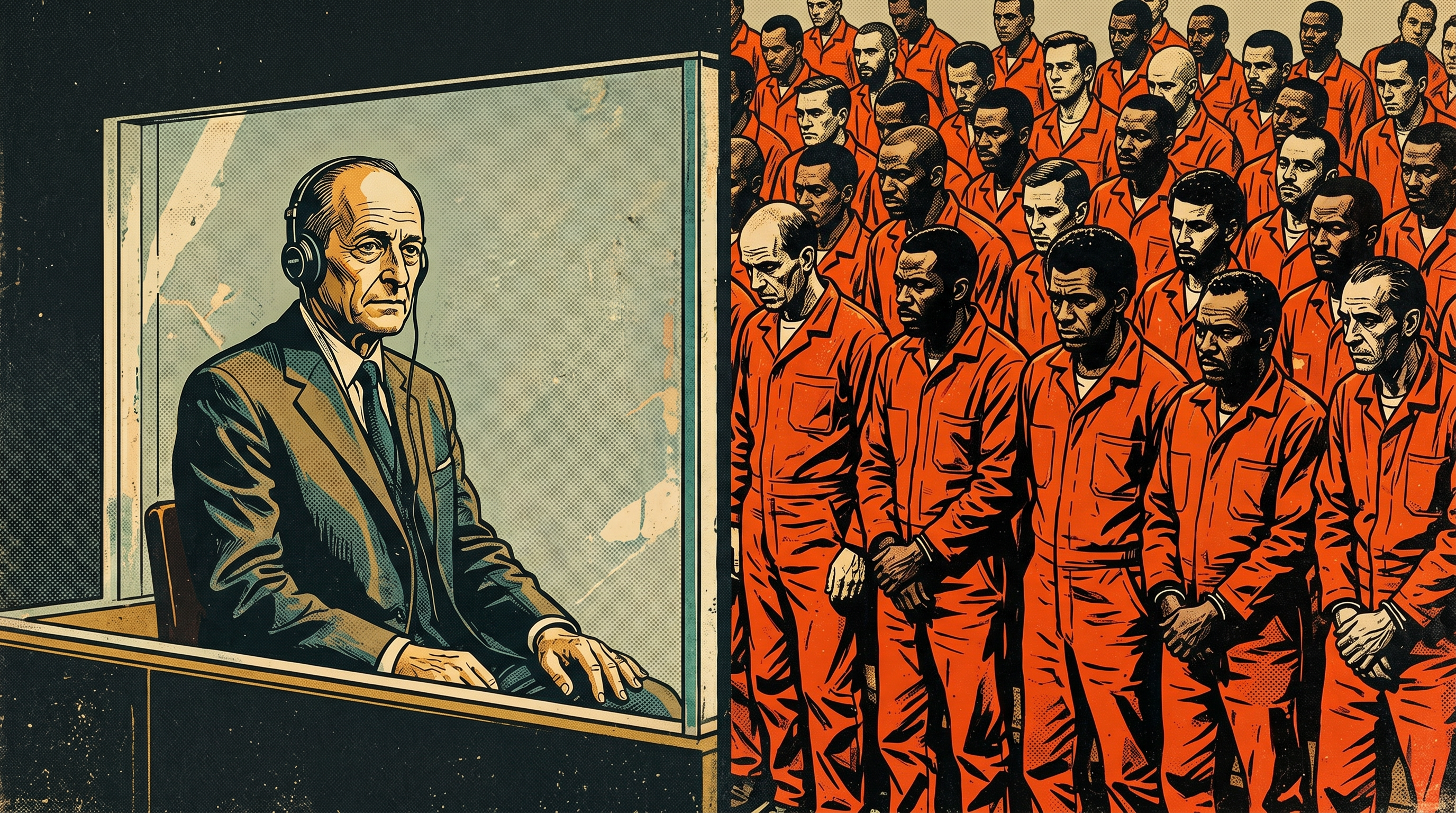
Now imagine the opposite. Over a thousand so-called unlawful combatants held without formal charges, hundreds more who may face criminal prosecution connected to October 7. Mass proceedings. Broadcast executions — or at least broadcast death sentences. This isn't the Eichmann model. It's the Eichmann model fed through a photocopier until the ink runs out and you're left with a smudge that vaguely resembles the original.
A single, solemn execution carries historical weight. A production line does not.
The Torture-Shaped Hole in the Middle of Everything
Here's where the architecture starts to buckle under its own ambitions.
If the evidence is rotten, nothing built on top of it holds.
Human rights groups have specifically warned that Palestinians held in connection with October 7 have allegedly been tortured. They've warned that confessions may have been extracted under coercion. And they've warned that this special court may use tainted evidence to deliver mass death sentences.
Now, rights campaigners aren't naive about what happened on October 7. They reject death sentences categorically, but they do not deny the need for accountability. This is an important distinction that tends to get flattened in the discourse. You can believe that what happened on October 7 demands a legal response and believe that torturing defendants into confessions vaporises the legitimacy of that response.
The problem Israel faces is almost comically self-inflicted. If you want your trial to be the next Eichmann moment — a historic reckoning that the world watches and takes seriously — you cannot also run a system where defendants are allegedly beaten until they say what you need them to say. You get one or the other. You don't get both. History doesn't grade on a curve.
The People Caught in the Machinery
Carmit Palty Katzir, who represents some of the victims' families, has said that for many of them October 7 is not over — citing unanswered questions, missing information, unresolved pain, and the ongoing burden of hostage trauma and captivity deaths. This is not political posturing. It is a plain description of suffering that continues.
But there's a second group of people caught in this machinery who receive considerably less attention. Some Gazan families are still searching for basic information about relatives who crossed into Israel, were detained afterwards, or disappeared in the aftermath. Over a thousand people are being held without formal charges. "Unlawful combatant" is the legal designation, which — whatever you think of the individuals involved — is the kind of indefinite, uncharged detention that democracies usually criticise other countries for.
This is where the broadcast-trial strategy reveals its deepest flaw. A spectacle designed to project moral clarity works only if the backstage area can withstand scrutiny. And the backstage area here — the detention conditions, the coercion allegations, the thousand-plus people held without charges, the families who can't find their relatives — looks less like the machinery of justice and more like the machinery of something else entirely.
Why Spectacle Eats Legitimacy
Let's run a thought experiment. Imagine two versions of these proceedings.
Version A: Careful, methodical trials. Transparent evidence. Defendants with adequate legal representation. No torture allegations. No cameras broadcasting to a special website. Convictions — where they come — based on evidence that would survive scrutiny in any international court. Boring. Slow. Unglamorous. The kind of thing that makes for terrible television and excellent precedent.
Version B: A purpose-built court. Specially written legislation. Broadcast hearings. Politicians comparing it to the most famous trial in Israeli history. Charges of genocide. The death penalty on the table. Torture allegations hanging over the evidence. Over a thousand detainees held without charges in the background.
Version A produces justice. Version B produces content.
The victims deserved proceedings so scrupulously fair that no one could question the result. Instead, they're getting a production so elaborate that almost everyone will.
What the Spectacle Costs
The sharpest irony of this entire enterprise is that Israel is undermining the one thing it most wants to establish: that what happened on October 7 was so monstrous that it demands the ultimate legal response. That case practically makes itself. The facts are overwhelming. The suffering is real and ongoing. The need for accountability is acknowledged even by those who oppose the death penalty.
And yet, by building a legal system that appears designed to produce history rather than verdicts — by allegedly torturing detainees, by holding over a thousand people without charges, by writing retroactive legislation, by broadcasting proceedings like a national event — Israel is doing something remarkable. It is taking one of the strongest moral cases in its history and systematically injecting reasonable doubt into it.
A democracy that builds a court to perform justice, rather than to deliver it, will find that the performance is all anyone remembers.