The worst career move in boxing isn't losing to a great fighter. It's winning the wrong fight at the wrong time and watching the great fight vanish while you're still towelling off.
Three Doors, One Clock
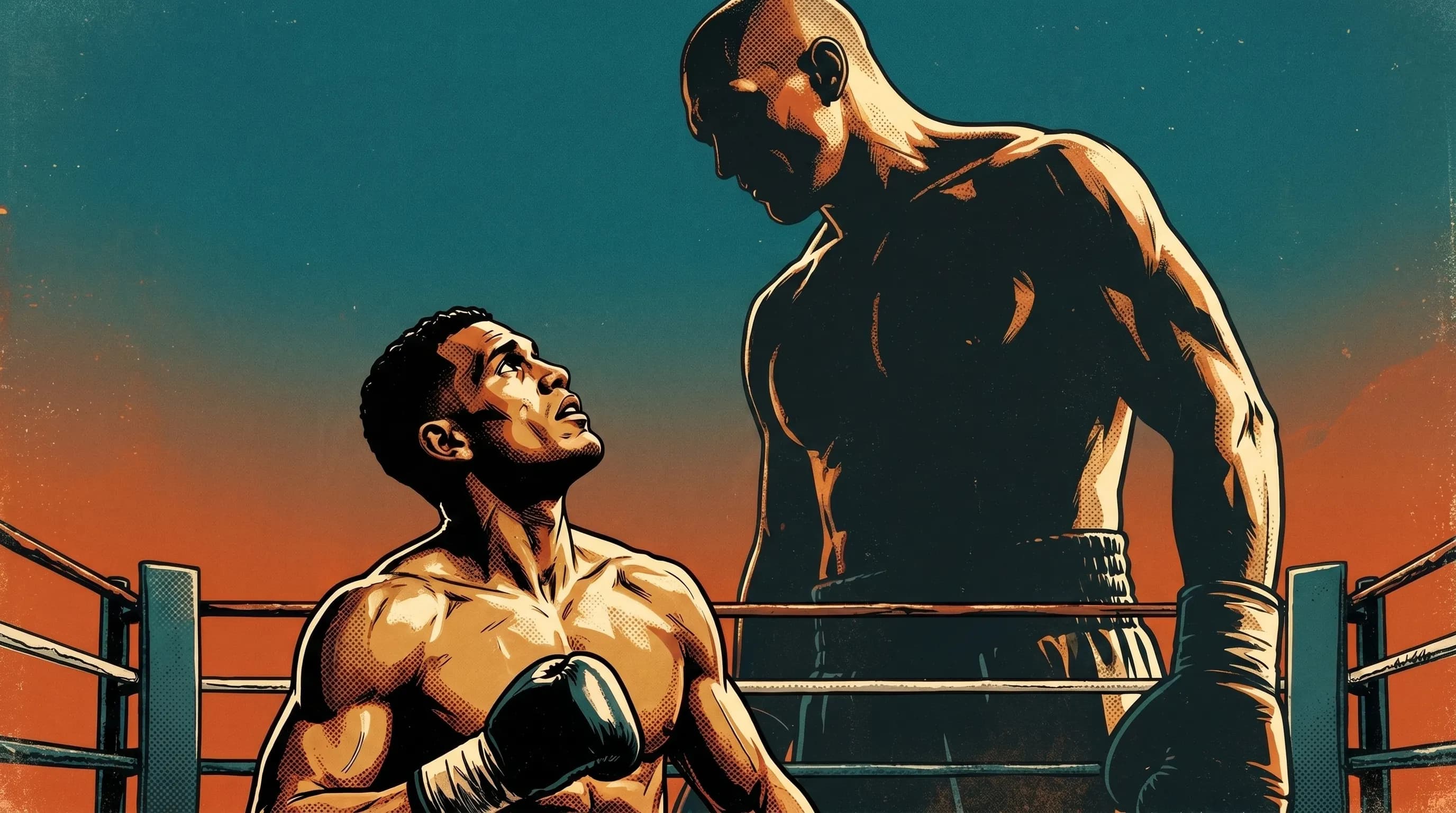
David Benavidez has a problem most fighters would kill for: too many options. The super-middleweight champion, who also holds light-heavyweight world-level status, now sits at a crossroads with three paths forward. He can fight Dmitry Bivol at light-heavyweight — the natural next step on a divisional ladder he's already climbing. He can fight Jai Opetaia around cruiserweight territory — a logical proving ground for upper-weight legitimacy. Or he can jump straight to Oleksandr Usyk at heavyweight.
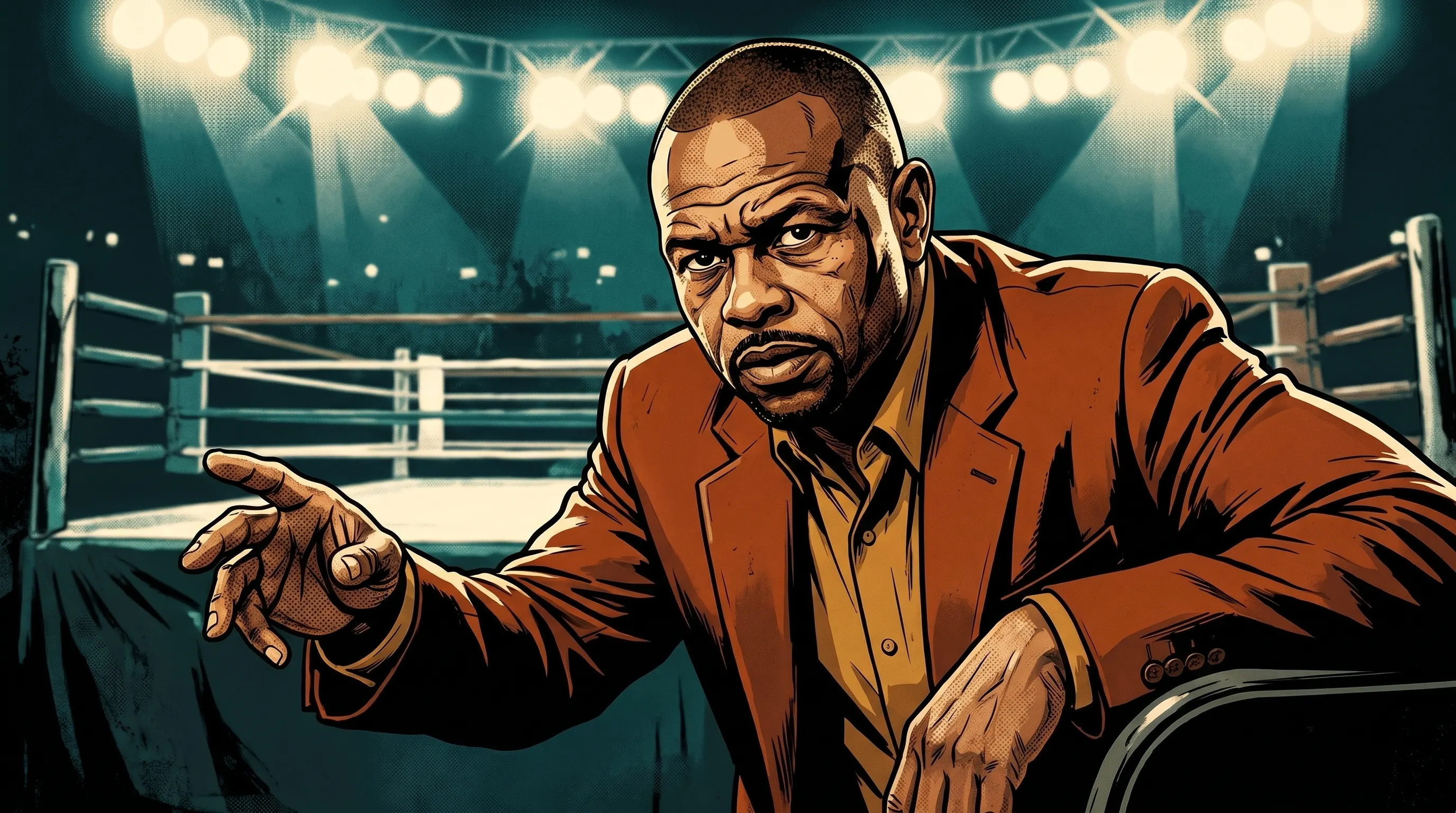
Roy Jones Jr, a man who knows something about fighting across weight classes, has weighed in with advice that sounds reckless until you think about it for more than thirty seconds: take the Usyk fight now. Not later. Not after proving something at cruiserweight. Now.
His reasoning has nothing to do with matchup advantages or Benavidez's chances of winning. It has everything to do with timing.
The Asymmetry of Losing
Jones's argument rests on a brutal piece of logic that applies far beyond boxing. Not all losses are created equal.
If Benavidez fights Usyk and loses, life goes on. The Bivol fight is still there. The Opetaia fight is still there. Nobody looks at a man who went up to heavyweight to challenge one of the smartest boxers of the era and says, "Well, clearly he's finished." They say, "That was ambitious as hell." The loss costs him almost nothing. The other opportunities survive it.
Now flip it. If Benavidez fights Opetaia first and loses — a fight Jones considers entirely possible, since Opetaia is dangerous enough to beat him — the Usyk fight doesn't just become harder to make. It likely disappears. The public interest evaporates. The champion's team loses the incentive. The aura cracks. The negotiating leverage dies.
This is the asymmetry that matters. Door A leads to a room where all other doors remain open. Door B leads to a room where the biggest door locks behind you. Jones isn't telling Benavidez which fight he can win. He's telling him which fight he can afford to lose.
The Window and the Ladder
Think of Benavidez's situation like a job market — if the job market involved getting hit by very large men.
Imagine you have three job offers: a solid step up, a lateral résumé-builder, and a moonshot at the biggest company in the world — impressive on your LinkedIn even if you don't land it.
The conventional wisdom says: take the safe step, build your credentials, then go for the big one. The problem is that the big one has a window. The CEO who's interested in you is retiring. The role is being restructured. By the time you've padded your résumé with the safe moves, the opportunity has moved on to someone else.
That's what Jones sees. The Usyk fight isn't just the biggest money and the biggest global attention — it's a timing window. Public interest, champion availability, the freshness of a division crossover story, Benavidez's pre-loss leverage. You can't put them in the freezer and defrost them in eighteen months.
Benavidez is a physically large man by lower-division standards, but Usyk has already proven he can solve fighters with more natural heavyweight scale. Usyk would be the logical favourite based on ring IQ, heavyweight experience, and tactical sophistication. None of that changes Jones's calculus. The point isn't that Benavidez would be the favourite. The point is that being in the conversation at all is doing more for his career than a win over Opetaia ever could.
And this is where the argument gets genuinely interesting.
The Value of Ambition as a Product
Something strange has already happened to Benavidez's career trajectory. He's now discussed by pundits in terms of legacy architecture rather than contender status. That's a meaningful shift. Most fighters spend years begging to be taken seriously as title challengers. Benavidez has leapfrogged that conversation entirely. People are debating which historical achievement he should pursue next, not whether he belongs in the ring.
Even the mere discussion of Benavidez as a potential Usyk opponent reinforces his public image as ambitious and dangerous across divisions. It's a strange kind of compound interest: the bigger the fight people associate you with, the bigger you become, even before the fight happens. Ambition itself has become part of the product.
This is why the Opetaia fight is what Jones essentially frames as a trapdoor. It's not a bad fight. It's a divisionally logical fight. It makes sense on paper. But it makes sense in the way that eating your vegetables before dessert makes sense — admirable in theory, catastrophic when the restaurant is about to close.
The Bivol fight, meanwhile, aligns more naturally with Benavidez's proven divisional ladder. It's the sensible option. Nobody would criticise him for taking it. But nobody builds a legacy on fights that nobody would criticise them for taking. You build it on the ones that make people say "Is he insane?" and then watching what happens.
Fortune Favours the Impatient
A win over Usyk would permanently change Benavidez's career standing. That's not hyperbole dressed up as analysis — it's a straightforward description of what happens when a super-middleweight champion beats one of the best heavyweights of the era. The historical angle alone would echo for decades.
But Jones's deeper insight is that even attempting it elevates Benavidez's ambition profile. The fight itself — win or lose — places him in a narrative category that the Opetaia fight simply cannot access. You don't get to tell your grandchildren about the time you prudently managed your risk profile. You tell them about the time you walked into the ring against a man who outweighed your natural division by the equivalent of a small Labrador and had a ring IQ that made professors feel inadequate.
Jones is making a case that boxing careers are not spreadsheets — they don't reward linear optimisation. They reward the fighters who understand that certain windows open exactly once, and that missing one always costs more than jumping through it and falling.
The Opetaia fight is a good fight. The Bivol fight is a sensible fight. The Usyk fight is the only fight that can change everything. And the order in which you take your risks determines which version of your career you end up living.
Benavidez can climb the ladder rung by rung. Or he can grab the chandelier. But the chandelier won't hang there forever, and Roy Jones Jr — a man who spent his career reaching for things that weren't supposed to be within his grasp — knows exactly what it looks like when you wait too long and find it's already been taken down.