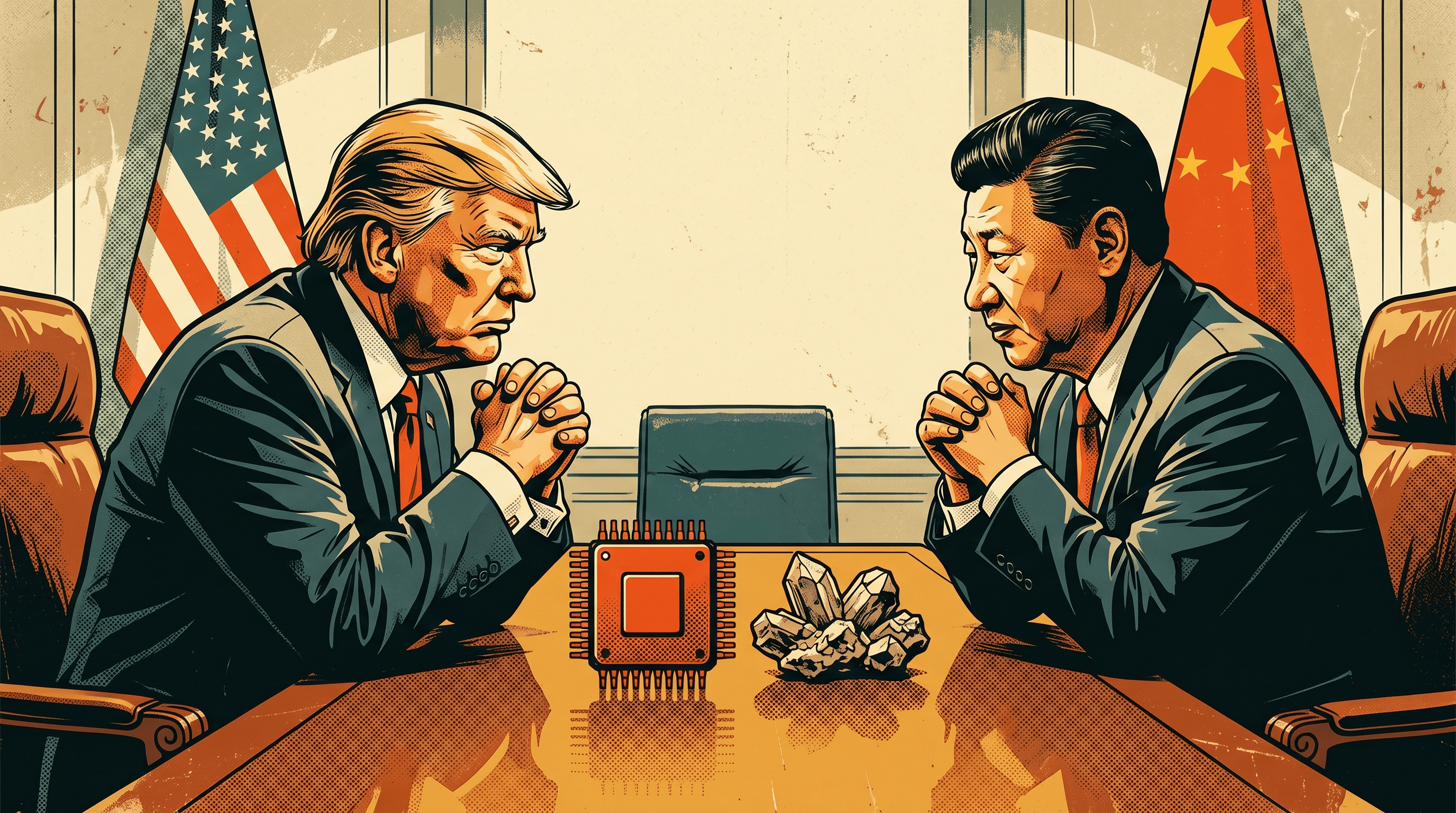
Two men sit down in Beijing this week, each holding a bag of the other's nightmares. Donald Trump brings semiconductor export controls. Xi Jinping brings rare earths. Trump brings Iran. Xi brings Taiwan. And both arrive knowing something that makes this summit unlike any diplomatic meeting of the last century: neither can afford to walk away, and neither can afford to stay.
What's on the Table
Trump is in Beijing for a two-day visit, and the agenda reads less like a diplomatic schedule than like a hostage negotiation with four simultaneous crises. The four clusters: Iran, Taiwan, trade, and AI/technology. Each one alone could consume an entire summit. Together, they form something more interesting — a web of leverage so tangled that progress on any single issue almost certainly requires concessions on another.
China's economy is export-driven and sluggish. Instability in the Strait of Hormuz — driven by Middle East conflict — is disrupting shipping flows and inflating Chinese cost structures. Oil prices hurt. The US, meanwhile, has been throttling China's access to top-end semiconductor chips through export controls, while launching trade investigations and keeping tariff tools loaded and visible.
China, for its part, dominates global rare-earth processing. These aren't exotic curiosities — they're in your phone, in wind farms, in advanced manufacturing, and in defence systems. If semiconductors are the brain of the modern economy, rare earths are the nervous system. And Beijing controls the supply.
Leverage as Currency
Here is what makes this summit genuinely novel. This is not two leaders meeting to resolve a dispute. This is two leaders meeting to trade disputes — to swap pressure across domains like derivatives traders hedging positions they can't close.
Think about what's actually happening. The US believes China has enough proximity and leverage with Tehran to act as a persuader — a pressure valve on Iran. China, in turn, has diplomatic interest in presenting itself as a mediator rather than a spoiler in the Middle East. So the US is essentially saying: help us with Iran, and maybe we'll discuss those chip restrictions. China is essentially replying: ease the chip restrictions, and maybe we'll discuss those rare-earth exports you need for your defence industry.
This is not diplomacy. This is a multi-asset swap between adversaries who are too economically entangled to divorce but too strategically opposed to marry. So they negotiate.
Four crises, two players, zero trust, and complete mutual dependency.
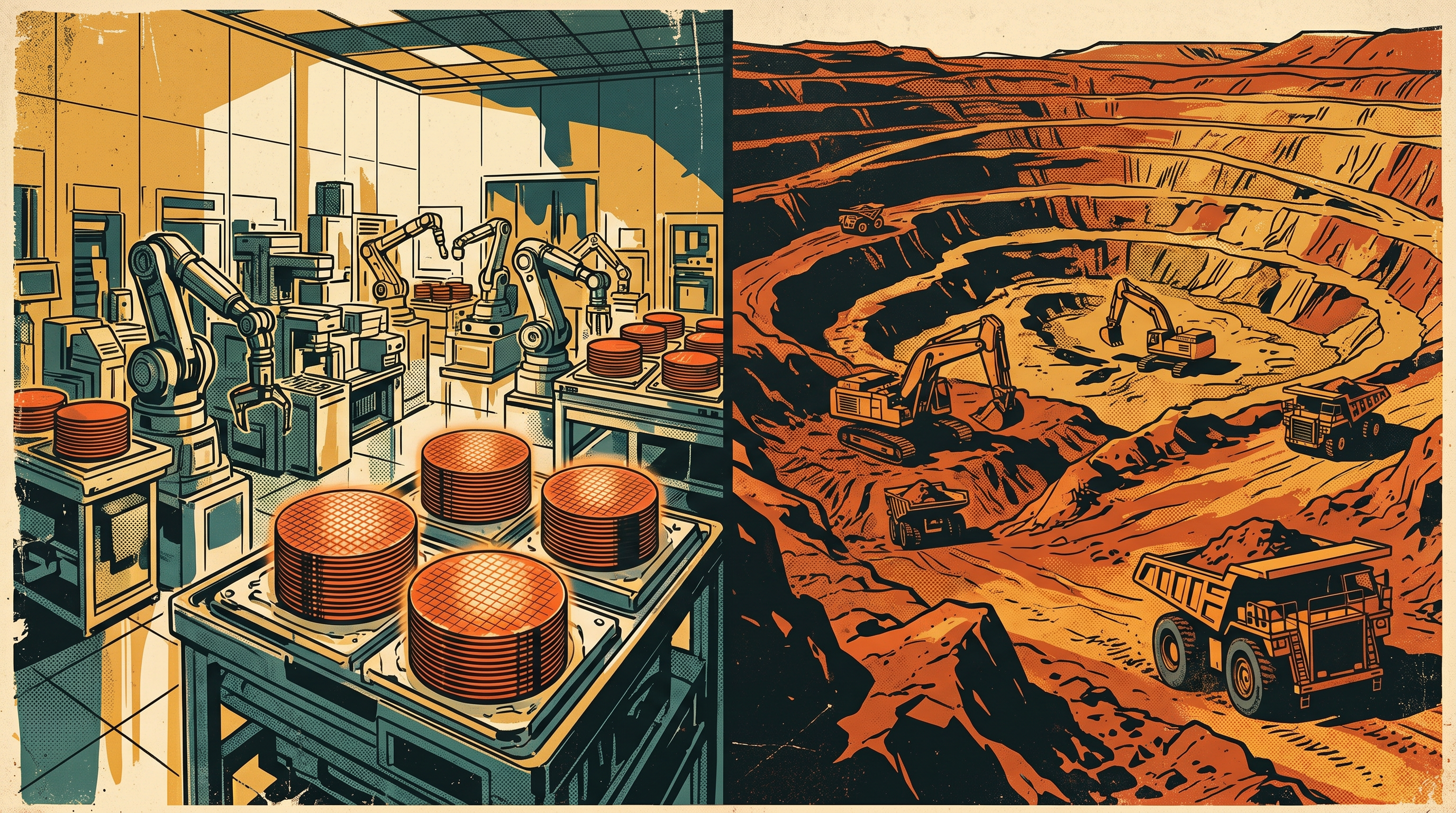
The semiconductor situation is particularly elegant in its absurdity. The US controls access to the chips China needs for AI development and advanced manufacturing. China controls the rare earths the US needs for — among other things — the defence systems that protect Taiwan. So America is using tech restrictions to contain China's rise, while depending on Chinese minerals to maintain the military posture that underwrites that containment. It's the geopolitical equivalent of trying to arm-wrestle someone while they're feeding you dinner.
The Taiwan Knot
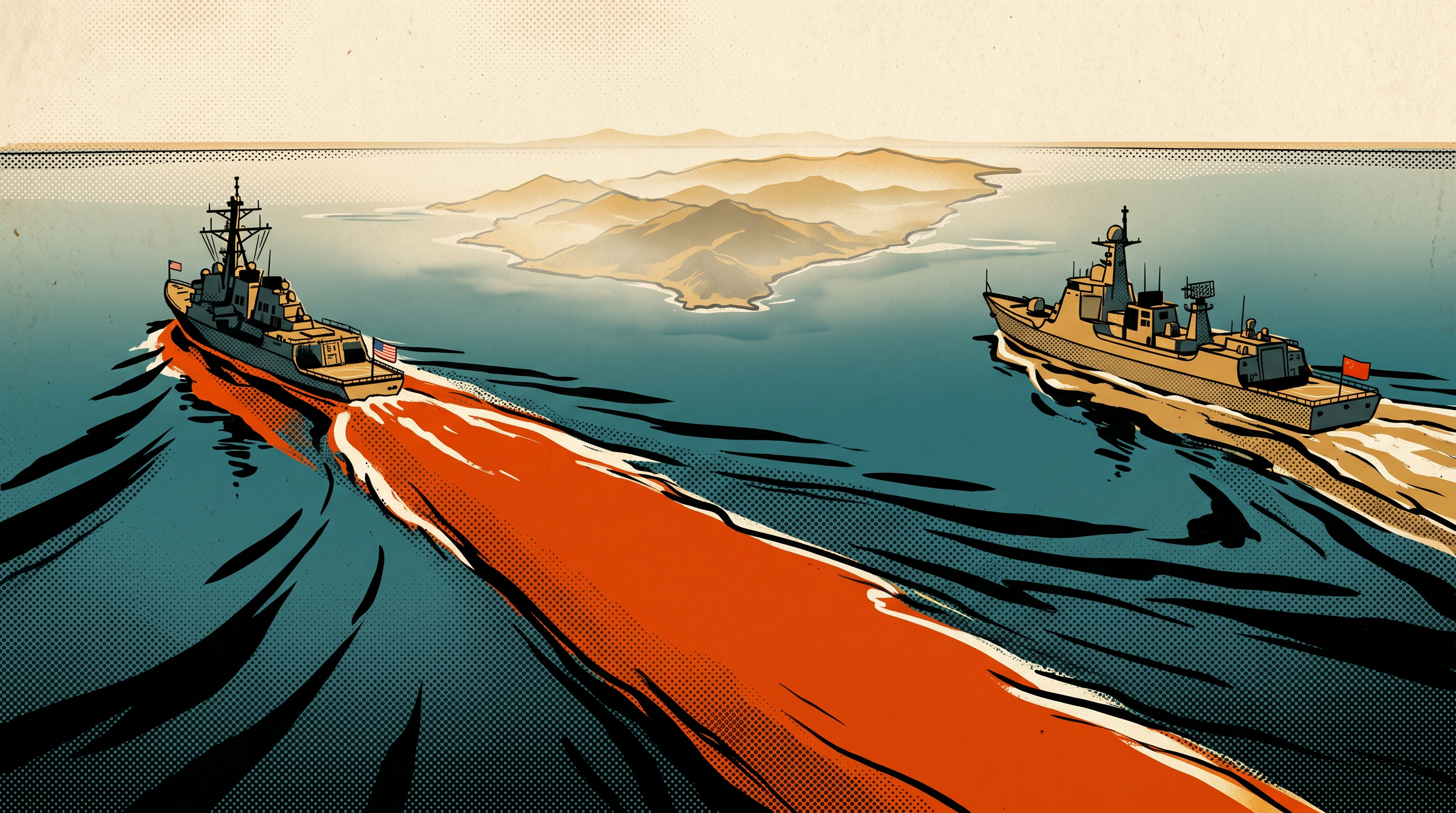
Taiwan sits at the centre of all of this, and it's the one area where both sides appear to agree on at least one thing: neither wants it to become a near-term crisis trigger. This is encouraging in the way that two people standing next to a gas leak agreeing not to light a cigarette is encouraging.
Trump's rhetoric on Taiwan has been described as muddy, transactional, and unsettling. This matters more than it might seem. Taiwan deterrence strategy depends heavily on clarity of signalling between Washington and Beijing. When the signal is garbled — when one side can't tell whether the other is bluffing, hedging, or simply confused — the risk of miscalculation goes up. And miscalculation over Taiwan is not the kind of mistake you get to learn from twice.
The US continues to arm Taiwan. Beijing has been increasing military pressure around the island. Both sides know this trajectory is unsustainable, which is precisely why it's being bundled into the broader negotiation. Taiwan isn't being discussed in isolation. It's being priced in — another asset in the swap.
Trade: The Cooling Engine
On trade specifically, the temperature has cooled since the wilder tariff swings of the past year. The US wants increased Chinese purchases of American goods, especially agriculture. China wants relief from export controls and tariff threats. This is the most conventional part of the summit — two countries haggling over who buys what — but even here, the dynamic is warped by the other three agenda items. A soybean deal isn't just a soybean deal when it's happening alongside conversations about Iranian oil flows and Taiwanese defence procurement.
Trade investigations and tariff tools remain loaded on the American side. They function less as policy instruments and more as bargaining chips — which is fitting, since apparently everything at this summit is a bargaining chip, including the actual chips.
What This Tells Us
The Beijing summit reveals something important about where great-power rivalry has arrived. It's not a cold war, a hot war, or even — exactly — a trade war. It's a permanent negotiation between two powers that have achieved a kind of awful equilibrium — each too strong to be coerced, each too dependent to disengage, each holding exactly enough of what the other needs to prevent either resolution or rupture.
The old model of diplomacy assumed that nations met to solve problems. The new model, visible in every corner of this summit, is that nations meet to trade problems — to shift leverage across domains, to swap concessions on Iran for flexibility on chips, to price Taiwan risk into agricultural purchasing agreements.
This is what happens when the world's two largest economies build themselves into each other so deeply that separation would be more destructive than the rivalry itself. You don't get peace. You don't get war. You get an endless series of two-day summits where everything is connected to everything else, and the best possible outcome is that nobody does anything catastrophically stupid before the next meeting.
Trump and Xi will shake hands. They'll announce something. The details will matter less than the structure — two men, too entangled to quit, trading each other's vulnerabilities in a city neither can afford to leave empty-handed. Great-power rivalry hasn't ended. It's just been securitized.