Nobody washes a rental car. You drive it hard, you park it carelessly, and you return it without a backward glance because it was never yours. It was just the thing that was available when you needed to get somewhere.
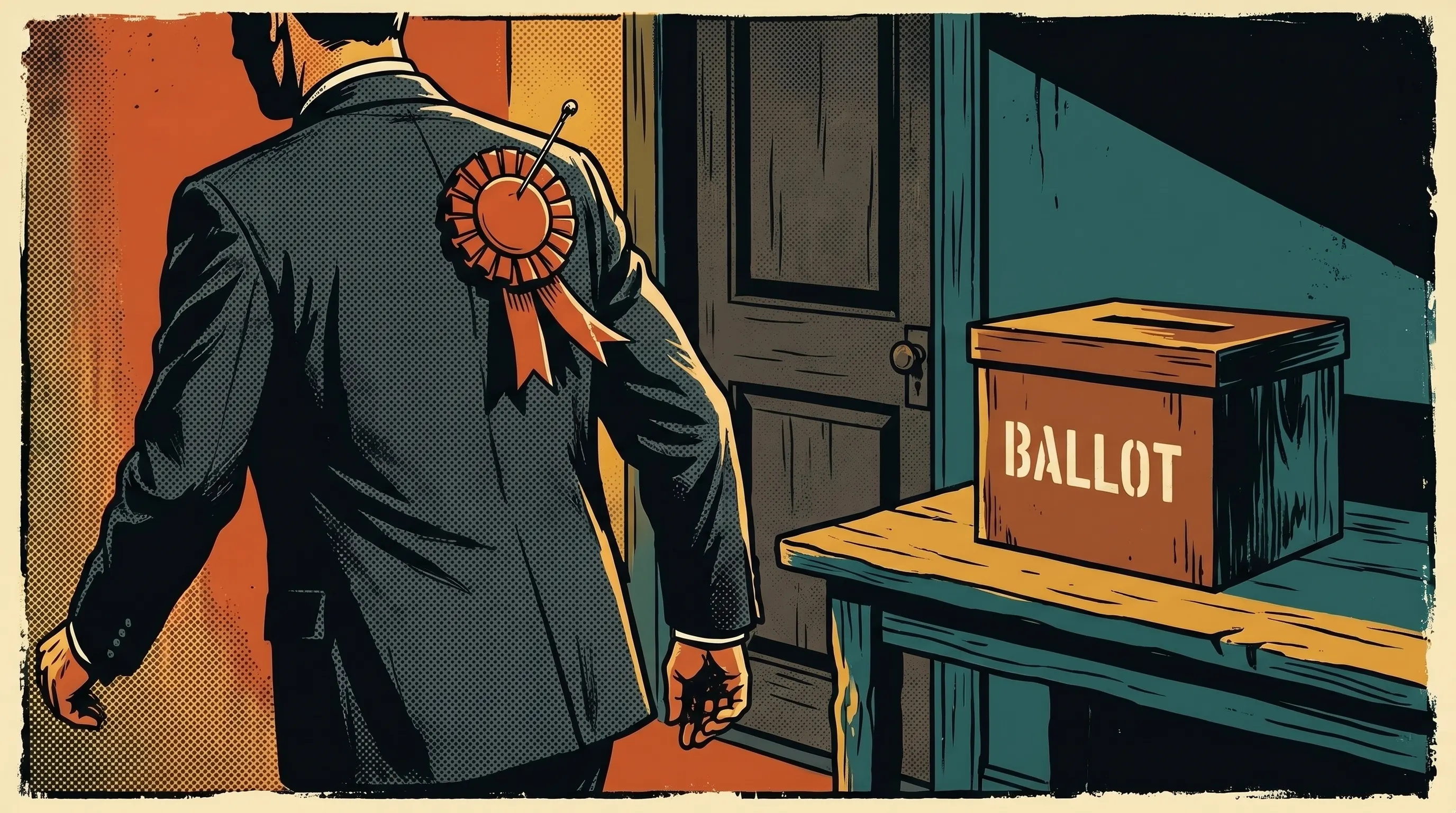
On 8 May 2026, voters across England, Scotland, and Wales told Labour, in the most democratic terms possible, that they've become British politics' rental car.
What Actually Happened
The facts are straightforward enough. Local elections took place across English councils. Scotland and Wales held their own elections simultaneously — Wales, notably, under a brand new proportional electoral structure. Mayoral contests ran alongside the lot.
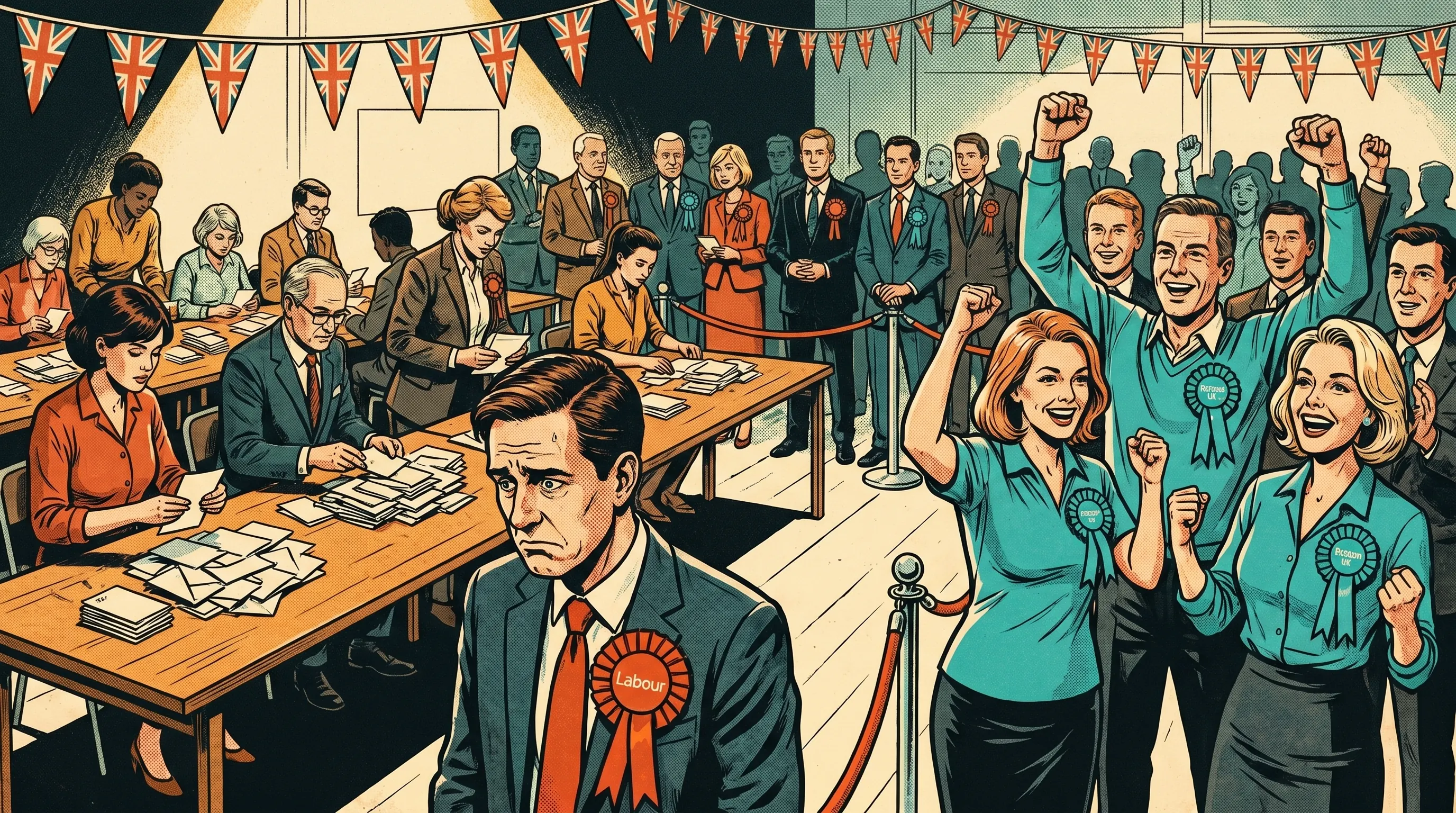
Labour lost control of some councils. Reform UK made gains. That's what happened.
What's interesting isn't the movement itself. Parties win councils, parties lose councils — this is the cardiovascular system of democracy doing its job. What's interesting is the direction of the blood flow.
The Personality Problem
Here's the thing most post-election commentary will get wrong: it will treat Labour's council losses and Reform's gains as two separate stories. One about a governing party taking its lumps. Another about a populist insurgency finding its feet. Tidy. Symmetrical. Wrong.
They're the same story. And the story is about what happens when a political party becomes so relentlessly functional — so defined by the absence of things it isn't rather than the presence of things it is — that voters start treating it like a means of transport rather than a destination.
This is Labour's problem in miniature. Millions of people have voted Labour not because they were excited about Labour but because Labour was the thing on the lot. The political Not-The-Other-Guys. And here's the iron law of rental-car politics: the moment something with even slightly more personality shows up in the next bay, people will wander over and kick its tyres.
Reform UK, whatever else you might say about it, has tyres worth kicking.
How Parties Become Furniture
To understand how a political party goes from "movement" to "rental car," imagine a spectrum. On one end, you have what we might call conviction politics — a party driven by ideas so specific that they attract some people and actively repel others. Love it or hate it, you know what it is.
On the other end, you have default politics — a party so carefully sanded down, so allergically opposed to saying anything that might alienate anyone, that it becomes functionally invisible. It doesn't attract; it simply fails to repel. It wins not by inspiring but by being the least objectionable option remaining after everyone else has disqualified themselves.
Now, default politics can win elections. It can win them quite comfortably, in fact. The problem comes after. Because voters who chose you by default will leave you by default. They have no loyalty. They have no emotional investment.
Labour, having successfully positioned itself as the sensible option, the responsible choice, the party of Not Making Things Worse, is now discovering the downside of that strategy. Not Making Things Worse is a fantastic pitch right up until someone else offers to Make Things Different. "Different" beats "not worse" every single time — "not worse" is a promise about the floor; "different" is a promise about the ceiling. And humans, being the irrational optimists that natural selection built us to be, will pick hope over safety with a regularity that drives political strategists to drink.
Which, to be fair, is a short commute for most of them.
Wales and the Wrinkle
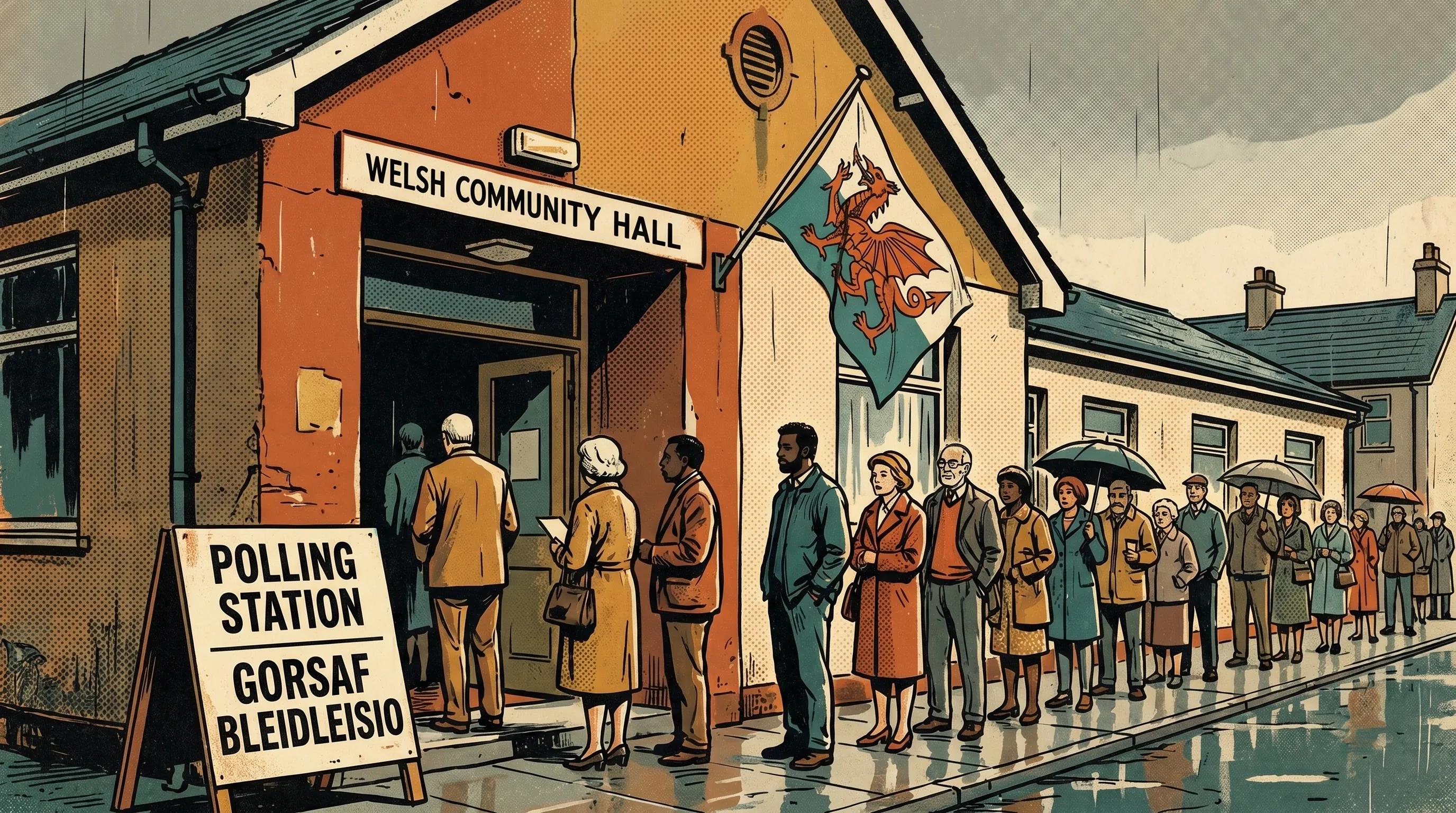
Wales introduced proportional representation for its elections this time around, which adds an interesting wrinkle to the national picture. Proportional systems don't just count votes differently — they change what voting means. Under first-past-the-post, voting for a smaller party often feels like setting fire to your ballot paper while making meaningful eye contact with the returning officer. Under proportional systems, every vote actually goes somewhere.
This matters because it means Wales just handed voters a permission slip to be honest. The major parties would rather not know the results.
It's a bit like the difference between asking someone "Would you like to come to my dinner party?" and asking "Rate my dinner parties on a scale of 1 to 10." Proportional representation is the anonymous survey of electoral systems. The results, historically, are not kind to parties whose main selling point is "we're big enough to win."
The Reform Question
Reform's gains deserve a moment of honest assessment rather than the usual pantomime of either panic or dismissal.
The gains are real. They happened. Treating them as a temporary aberration is the political equivalent of a restaurant owner explaining that the empty tables are actually a sign of exclusivity. Something is drawing voters toward a party that, not long ago, most of the political establishment treated as a permanent asterisk.
But here's what's worth noting: Reform's growth says as much about the vacancy it's filling as about anything Reform itself is doing. When the centre of politics becomes a place defined by caution, managerialism, and a studied reluctance to say anything memorable, the edges of politics become more attractive almost by default. Not because the edges got better, but because the centre got boring.
And boring, in politics, is a death sentence that takes a while to carry out. You don't lose everything at once. You lose councils. Then you lose enthusiasm. Then you lose the people who knock on doors. Then, eventually, you lose the kind of elections that don't come back so easily.
The Actual Lesson
The lesson of 8 May 2026 is not that Labour is doomed or that Reform is the future or that proportional representation in Wales will reshape British politics overnight. The facts don't support any of those conclusions, and anyone selling you certainty on an election night is working on commission.
The lesson is simpler and older than any of the parties involved. People do not stay loyal to things they chose out of convenience. They stay loyal to things that made them feel something. This is true of restaurants, football clubs, romantic partners, and — yes — political parties.
Labour's problem isn't tactical. It isn't about messaging or ground games or which councils they target. It's existential in the most literal sense: it's about whether the party exists in the minds of voters as something they want, or merely as something they'll tolerate until an alternative presents itself.
Nobody ever looked back at a rental car with fondness, and nobody ever took one home.