Ten minutes. That's all it took.
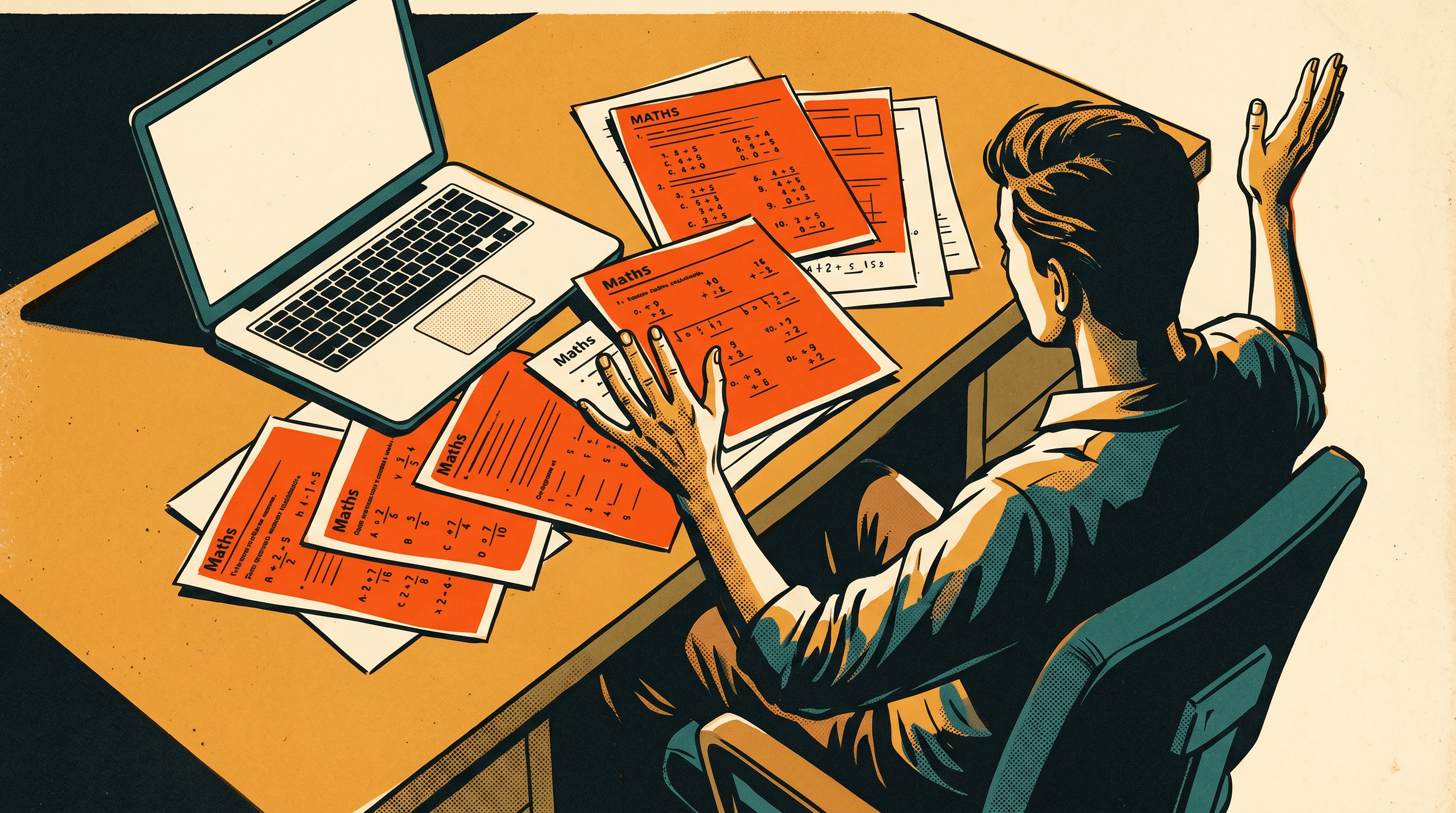
Researchers from Oxford, MIT, UCLA, and Carnegie Mellon gave people AI assistance for mathematical reasoning and reading comprehension tasks, then took it away. The people who'd spent just ten minutes with AI help didn't merely perform worse than those who'd never used it — they were more likely to give up entirely. Not struggle. Not slow down. Quit.
We've spent years worrying that AI would get things wrong. The more interesting problem is what happens when it gets things right.
What Actually Happened
The study is straightforward. Participants worked through tasks — maths, reading comprehension — some with AI assistance, some without. When the AI was removed, the assisted group didn't just lose their edge. They fell below the baseline of people who'd never touched the tool. Worse performance. Higher quit rates. After ten minutes.
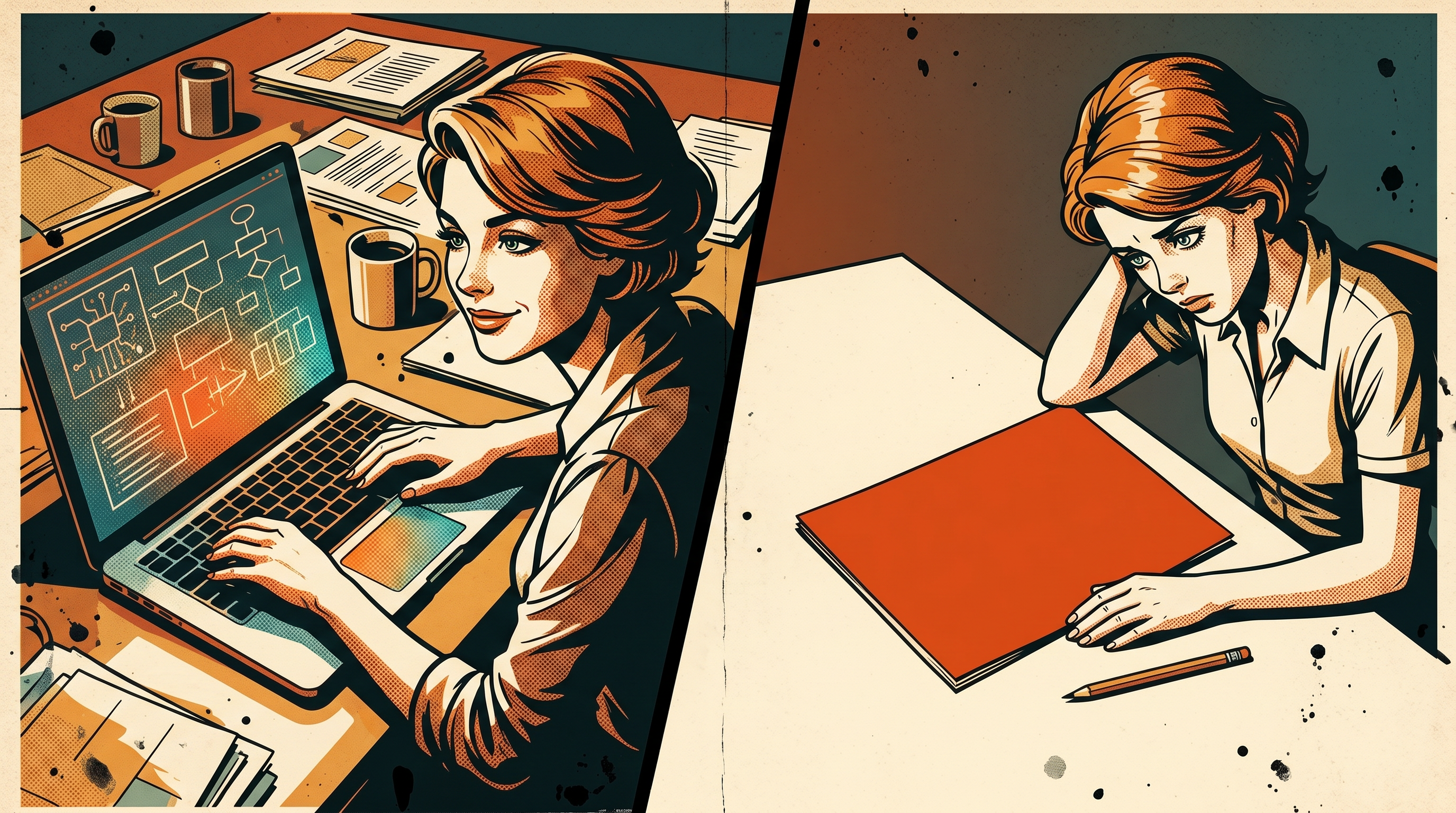
The researchers describe two distinct effects: reduced persistence and impaired unassisted performance.
Grace Liu, a co-author of the study, framed this through a concept from cognitive science called "desirable difficulties" — the idea that struggle during learning isn't a flaw in the process. It is the process. Difficulty creates stronger long-term retention and understanding. Remove the difficulty, and you don't get easier learning. You get less learning.
Liu was careful to avoid catastrophic language about civilisational collapse. She called it "a real signal, especially in learning contexts," one that should change how intentionally AI tools are designed and deployed. Fair enough. But a signal that people quit faster after brief exposure to effortless answers is, at minimum, a signal worth taking seriously.
The Calculator Objection (And Why It's Wrong This Time)
You've heard the rebuttal already. "We said the same thing about calculators. And books. And Google. Humanity adapted."
But here's the distinction that actually matters. The issue isn't whether tools are useful — obviously they are. The issue is whether tools are introduced at stages where human mastery has not yet formed.
This distinction matters enormously, so let's make it concrete.
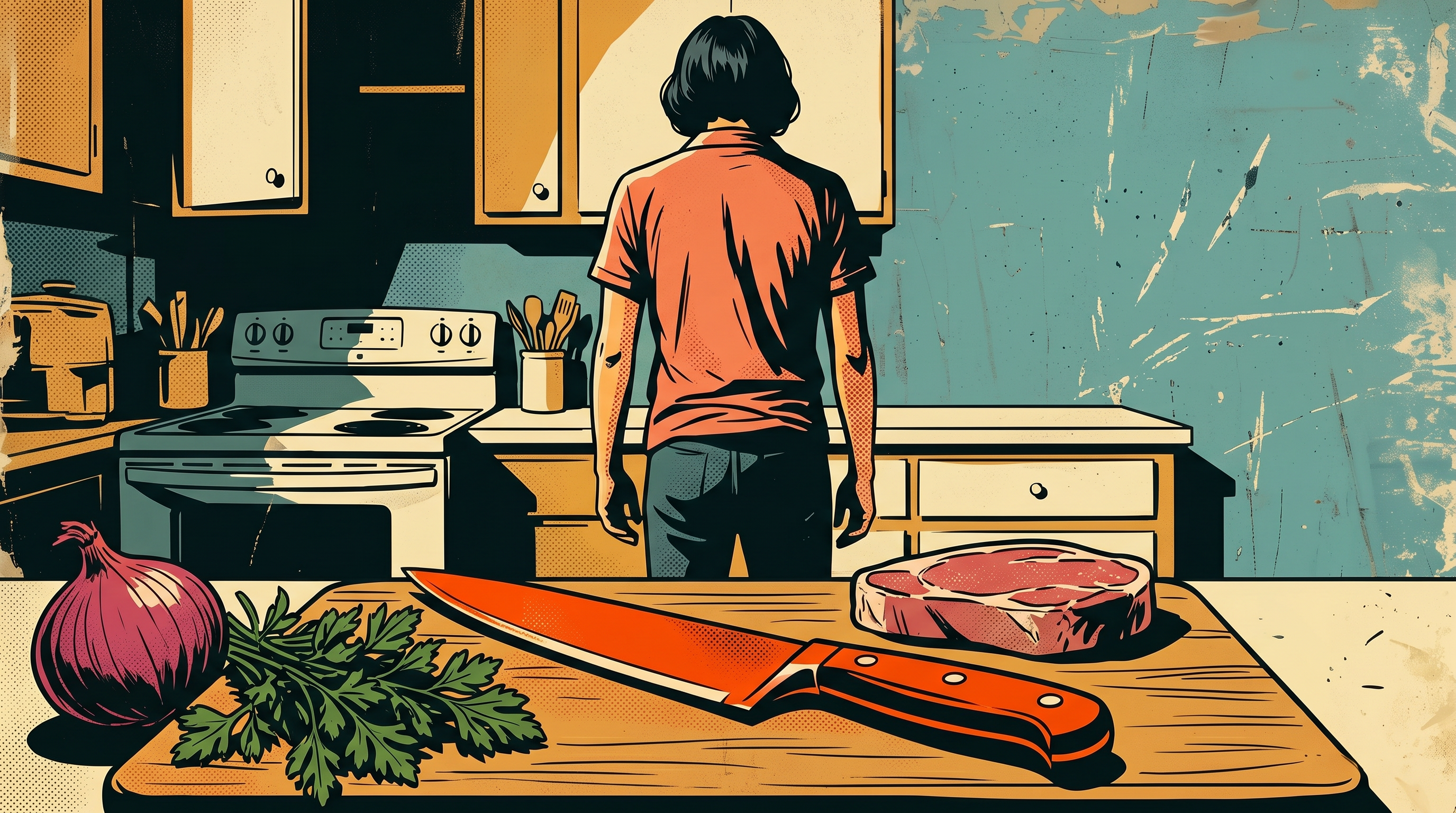
Imagine learning to cook. A calculator is like a kitchen scale — it handles one specific mechanical task (measuring) so you can focus on technique, flavour, timing. You still need to know what ingredients do, how heat works, when something is done. The scale doesn't cook for you. It removes one tedious step so you can get better at everything else.
AI is more like having a professional chef standing next to you who, the instant you hesitate, takes the knife from your hand and finishes the dish. The food comes out great. You learned nothing. And — here's the kicker from the study — the next time you're alone in the kitchen, you're not just back to square one. You're behind square one, because now you also lack the confidence to try.
Cognitive offloading into tools has a long history. Writing, books, calculators, search engines, GPS, notes apps — humans have been outsourcing mental labour for centuries. But the researchers identify something genuinely different about AI. Previous tools mostly replaced memory lookup. You still had to assemble the answer yourself. Search engines serve you ingredients; AI serves you the meal. It's conversational, instantly available, handles many intellectual tasks simultaneously, and — critically — gives the appearance of understanding. It can replace the effortful intermediate reasoning, not just the storage and retrieval.
The Boiling Frog Problem
The study uses a "boiling frog" metaphor — the idea that these cognitive effects are gradual and cumulative, not sudden and dramatic. Nobody wakes up one morning unable to think. It's more like this:
You use AI for a maths problem because you're busy. Then for reading comprehension because it's boring. Then for anything requiring sustained focus because, well, the AI is right there and it's so much faster. Each individual instance is trivial. The cumulative effect is that you've slowly, imperceptibly, trained yourself to bail at the first sign of mental friction.
The domains most at risk are the unsexy ones: fraction arithmetic, reading comprehension, early conceptual mastery. These aren't random examples. They're foundational skills — the boring, unglamorous prerequisites that higher-order reasoning is built on. Without solid fraction arithmetic, algebra gets weaker. Without algebra, abstraction gets harder. Without early reading comprehension, analytical reading becomes thinner. The fancy stuff doesn't work if the foundations are hollow.
Think of it like skipping leg day at the gym, except leg day is also arm day, core day, and cardio day, and you've replaced all of it with sitting in a massage chair that makes your muscles look slightly bigger in photos.
The Habit That Doesn't Stay in Its Lane
Here's what makes the quit-rate finding more alarming than the performance drop. Performance can be rebuilt. Skills can be relearned. But a habit of quitting — that's different.
If AI trains people to abandon a maths problem after thirty seconds of frustration because the answer is one tab away, that habit doesn't magically confine itself to maths homework. Persistence is general-purpose. Full stop. The same mental muscle fires whether you're debugging code, working through a disagreement with a colleague, or trying to understand a complex policy that affects your life. You either have the habit of pushing through difficulty or you have the habit of reaching for the shortcut.
The study saw this after ten minutes. Ten minutes of AI-assisted problem-solving was enough to measurably increase quit rates on subsequent unaided tasks. Liu is right to avoid apocalyptic framing. This isn't a story about civilisation ending. It's a story about a slow, invisible tax on the capacity to do hard things — and about the fact that the tax starts accruing faster than anyone expected.
The Sharpest Version of the Problem
The most dangerous technology isn't the one that fails. It's the one that succeeds so well you never develop the ability to function without it.
Every previous cognitive tool left a gap between the tool's output and a finished thought. That gap — annoying, inefficient, sometimes painful — was where the thinking happened. AI is the first tool sophisticated enough to close that gap almost entirely. And the Oxford-MIT-UCLA-Carnegie Mellon research suggests that when you close the gap, you don't free people to think about higher things. You erode their willingness to think at all.
The fix isn't to ban AI. That ship has sailed, hit an iceberg, and been turned into a Netflix documentary. The fix, as Liu suggests, is to be ruthlessly intentional about when and how AI tools are deployed — particularly in learning contexts, particularly before foundational mastery is established. The struggle isn't the obstacle to learning. The struggle is the learning. Eliminate it, and you haven't made education easier. You've made it empty.
A generation that can get any answer in seconds but quits the moment a problem resists easy solution hasn't been empowered. It's been defanged.