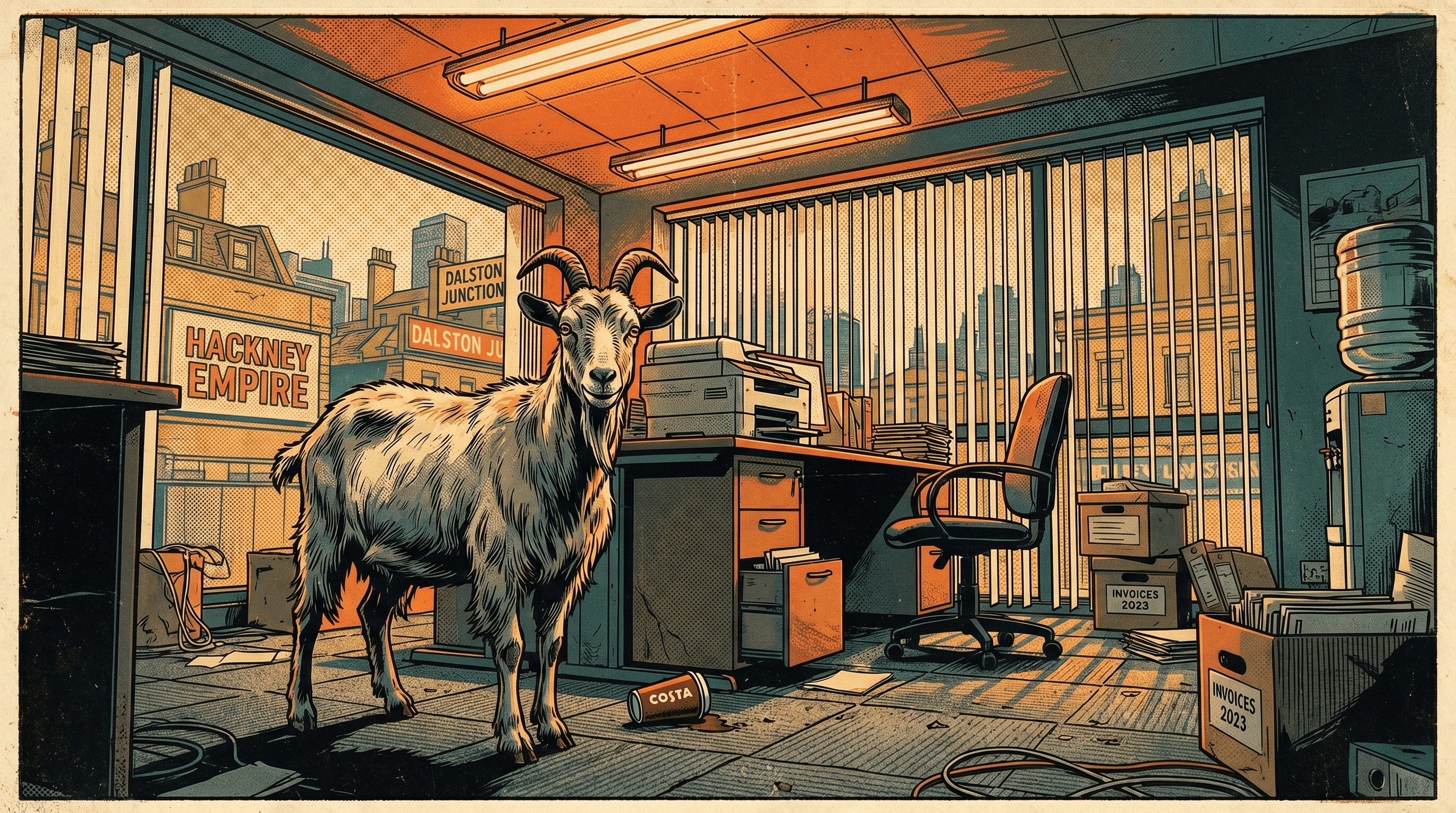
A goat allegedly met its end in a rented Hackney office, and the whole of London leaned in to laugh. Witches! In an office! With a lease and presumably a printer! It's the kind of story that writes its own headline and gets shared with a cackling-emoji.
But the laughter dies in your throat the moment you look at what sits on either side of it.
What Actually Happened
The bare facts are these. In a rented office in Hackney, someone is alleged to have sacrificed an animal — a goat. That's the story everyone wants. Quirky, lurid, gone by lunchtime.
What gives it weight is the city it happened in. London runs two completely separate operations under the same word: "witchcraft." One is a thriving consumer business. The other is a documented record of children being hurt.
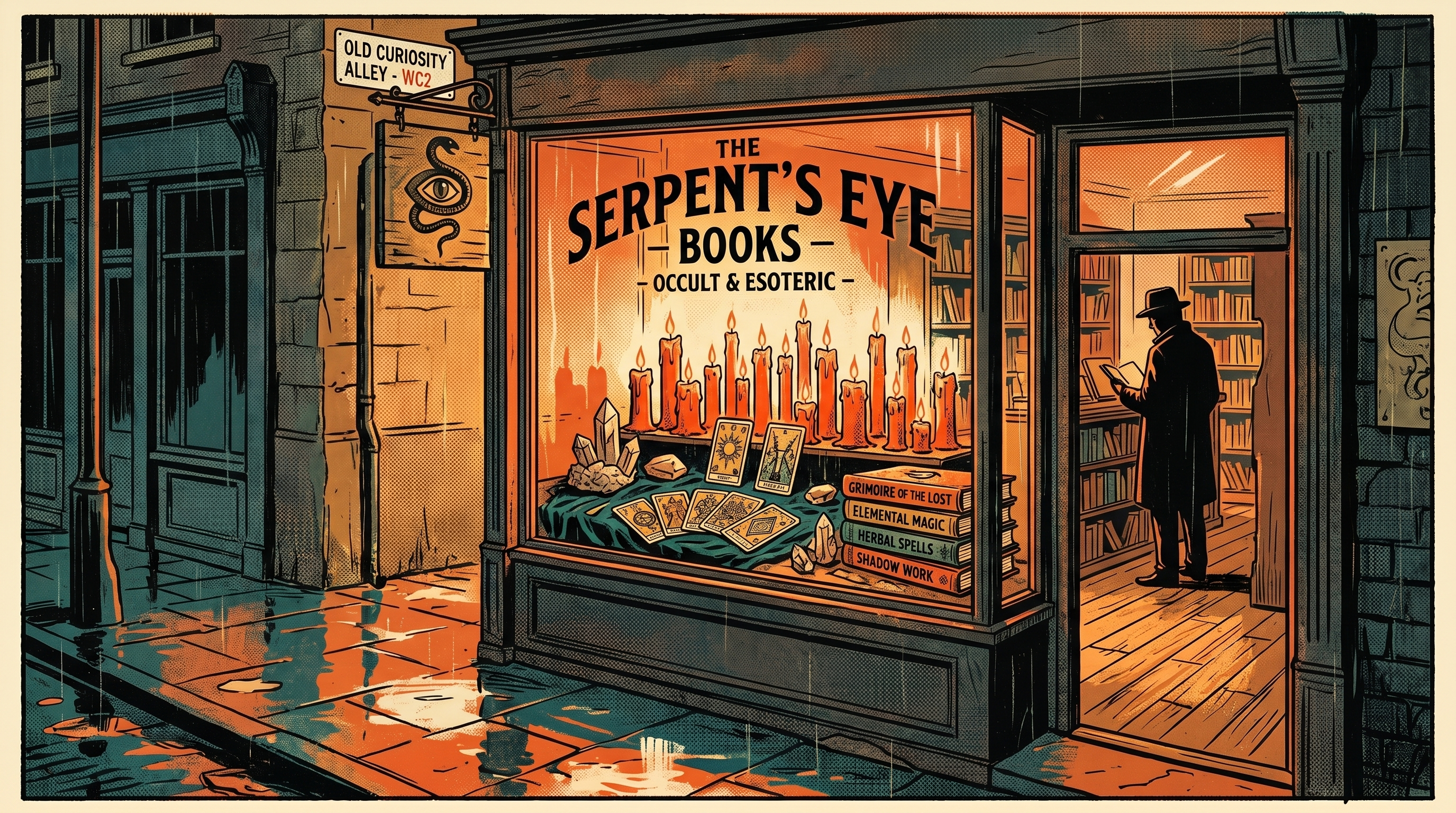
The first London is the fun one. It has occult and esoteric bookshops, some with genuine links to the development of modern Wicca in Britain. It has pagan and Wiccan meetups, workshops, festivals, and a glossy, commercialised "modern witch" wellness scene where the supernatural arrives gift-wrapped and tastefully lit.
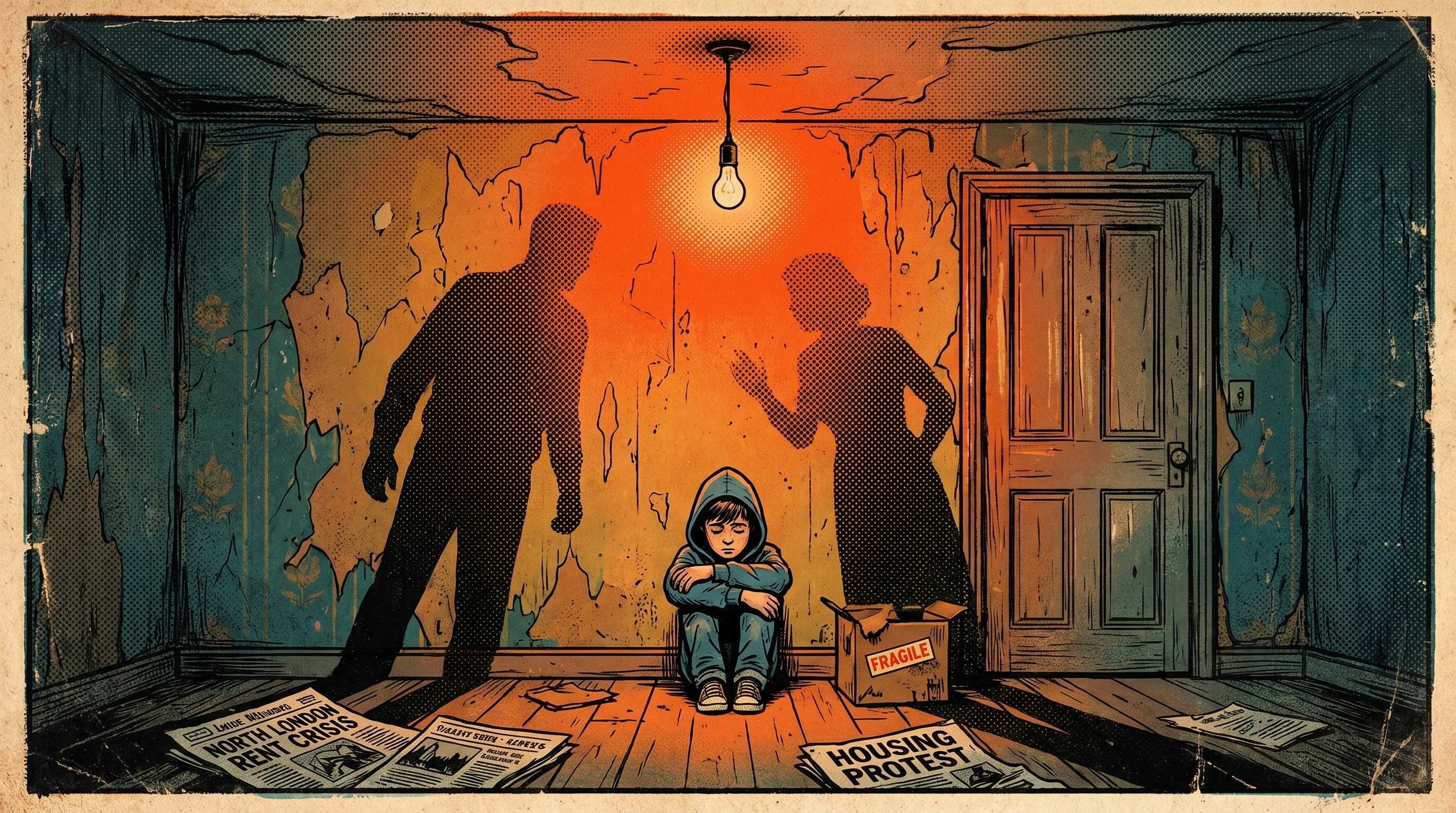
The second London is the one nobody puts on a tote bag. Thousands of children in England have been subject to abuse linked to faith or belief over the past decade. That's not a vibe. That's a number with a body count.
The Joke and the Knife
Here is the thing most people miss while they're busy enjoying the goat: these two Londons share a vocabulary but almost nothing else.
One sells you a candle. The other accused a child of being a witch.
Mardoche Yembi was accused of witchcraft as a child growing up in north London. Not in the seventeenth century. Not in a far-off village. In north London — the same city with the meetups and the festival stalls. He was a child, and the belief that fell on him was not a lifestyle choice. It was an accusation, and accusations have consequences.
The most infamous of those consequences has a name everyone of a certain age remembers: Victoria Climbié. She was abused and murdered after being accused of witchcraft and possession. February 2025 marked the 25th anniversary of her death, and the grim headline is that the category of harm that killed her is still very much a live file.
So when London giggles at a goat, it's giggling on top of a grave it has mostly chosen to forget. That's the nerve the Hackney story hits. Not "ooh, spooky." More like the uneasy realisation that the funny version and the fatal version are wearing the same costume.
The Two Buckets, Explained
Let me make this concrete, because it's easy to blur the two and that blurring is exactly the problem.
Picture two buckets, both labelled "witchcraft."
Bucket one is the marketplace. Imagine a high street, but for the spiritual. Bookshops with creaking floors and tarot in the window. Meetups where adults — entirely of their own free will — light candles and call themselves Wiccans. Workshops you pay for. Festivals you queue for. Some of these shops genuinely helped build modern Wicca in Britain, so this isn't cosplay invented last Tuesday; it has real roots. The defining feature of bucket one is consent. Everyone in it chose to be there, swiped a card, and went home.
Bucket two is the casework. This is where belief stops being a hobby and becomes a weapon pointed at someone who didn't volunteer — usually a child. The terminology here isn't "tarot" and "wellness." It's "kindoki," it's "witch boy" — words used not to empower a child but to mark one as possessed, as a problem to be beaten out. The defining feature of bucket two is the absence of consent. Nobody in it chose to be there.
The reason the buckets matter is that the public keeps pouring them into one glass. We hear "witchcraft in London," and our brain reaches for bucket one — the fun one — because the fun one is everywhere and the painful one is, by design, kept quiet.
And we have the numbers to prove the painful one is real. Since 2018, experts identified 14,000 social work assessments in the faith or belief-linked abuse category. In the single year to March 2024, the Department for Education recorded 2,180 such assessments. That's not a historical curiosity. That's a rolling, present-tense total — more than two thousand in one year alone.
The police know it too. A Metropolitan Police disclosure from March 2024 covers ritual and witchcraft offences committed between April 2022 and January 2024, and it references something called Operation Violet. You don't name an operation after a problem that doesn't exist.
Why the Goat Sits So Awkwardly
Now drop the Hackney goat into the middle of those two buckets and watch it refuse to fit either.
It's too theatrical for bucket two. No child was harmed in the story as we have it; it's an animal in an office, which reads as fringe and faintly ridiculous rather than tragic.
But it's too dark for bucket one. The wellness scene sells serenity, crystals and self-care. It does not, as a rule, involve a dead goat behind a fire door on a commercial lease. That's not "modern witch." That's something older and colder wandering into a WeWork.
So the goat lands in the gap between the marketplace and the casework — the uncomfortable middle nobody has a tidy label for. And the gap is precisely where our instinct fails us. We want to file it under "harmless eccentrics" because that's the comfortable bucket. The 14,000 assessments suggest we should at least pause before we do.
There's a dark comedy in the office detail. The idea of someone signing a tenancy agreement, sorting the WiFi, and then conducting a sacrifice between meetings is genuinely absurd. But the absurdity is a trap. It invites you to treat every story with the word "witchcraft" in it as a punchline — and that reflex is exactly how the serious stuff stays under-reported. Victoria Climbié didn't make a funny headline. She barely made the front page for long enough.
The Takeaway
London's relationship with witchcraft is not one story. It is two, and they have almost nothing to do with each other except a shared and dangerously slippery word.
One is a consumer choice — bookshops, meetups, festivals, a wellness racket with deep enough roots that it helped build British Wicca. Fine. Laugh at it, buy from it, ignore it, whatever you like. Nobody's getting hurt who didn't sign up.
The other is a documented pattern of abuse — 2,180 children in a single year, 14,000 since 2018, a murdered girl whose 25th anniversary we just marked, and a police operation with a colour for a name. That one isn't a vibe and it isn't a joke.
The goat is funny right up until you remember which city it's in. The real scandal isn't that London has witches. It's that London has spent twenty-five years finding the subject amusing while the casework piles up in a bucket nobody wants to look in.