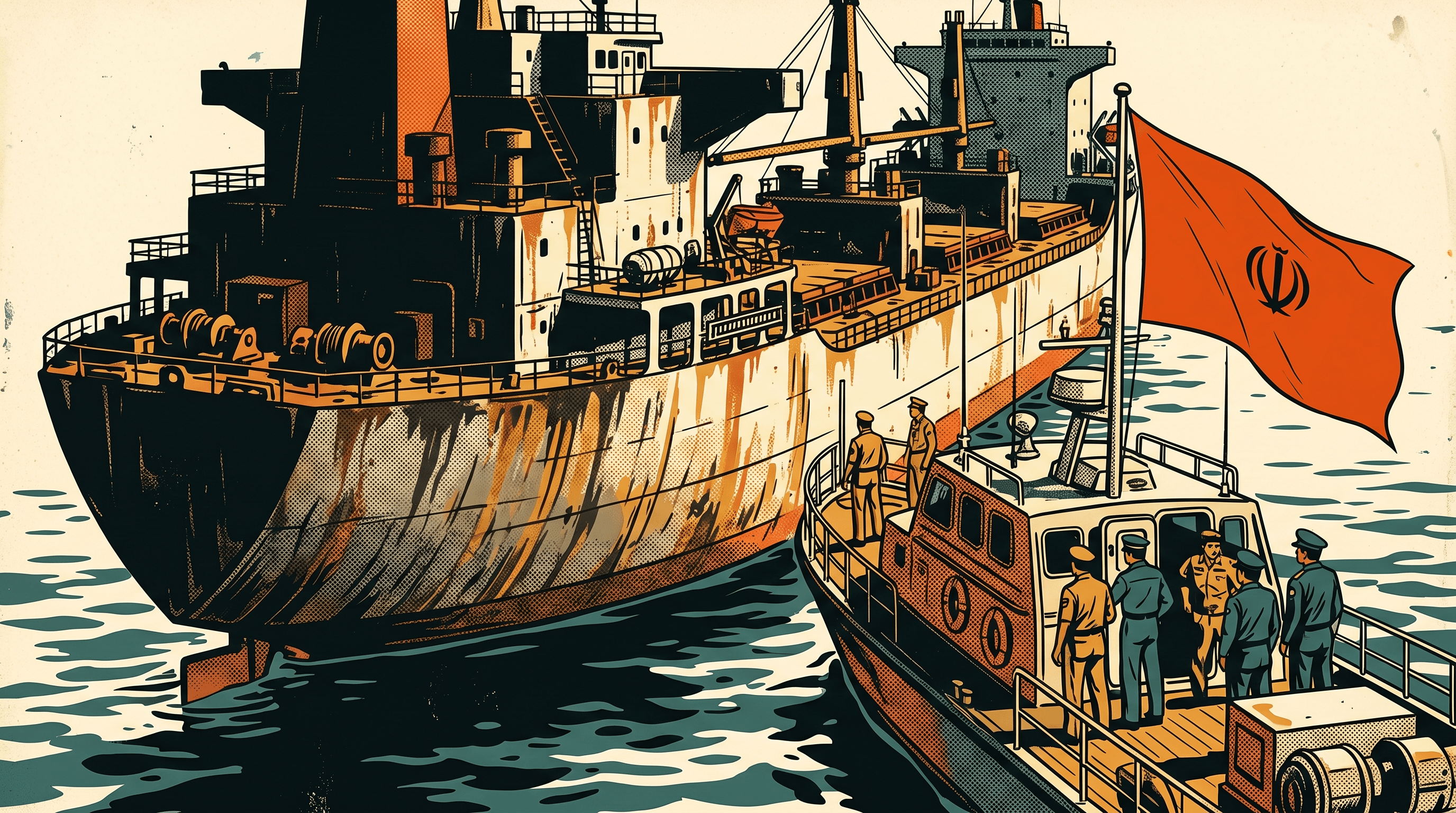
The next geopolitical crisis will not begin with a formal declaration of war. It will begin with a ship nobody can properly identify doing something nobody can properly explain in waters nobody can properly govern — and every government involved will have excellent reasons to lie about what happened.
What Actually Happened (Insofar as Anyone Will Say)
Iran has seized a vessel called the Hui Chuan. The ship is described as a "floating armoury" — a term that sounds like it was invented by a spy novelist but is, in fact, a real category of vessel — one that stores and transfers weapons at sea, typically for private maritime security. The Hui Chuan had spent the previous month drifting off the north-east coasts of Oman and the UAE, doing whatever it is that floating armouries do when they're floating and armouring.
Here is what we do not know: who owns the Hui Chuan, what flag it sails under, who crewed it, who operated it, or under what legal or military justification Iran seized it. That is a rather spectacular amount of not-knowing for a story involving a warship-adjacent vessel and a sovereign state's navy.
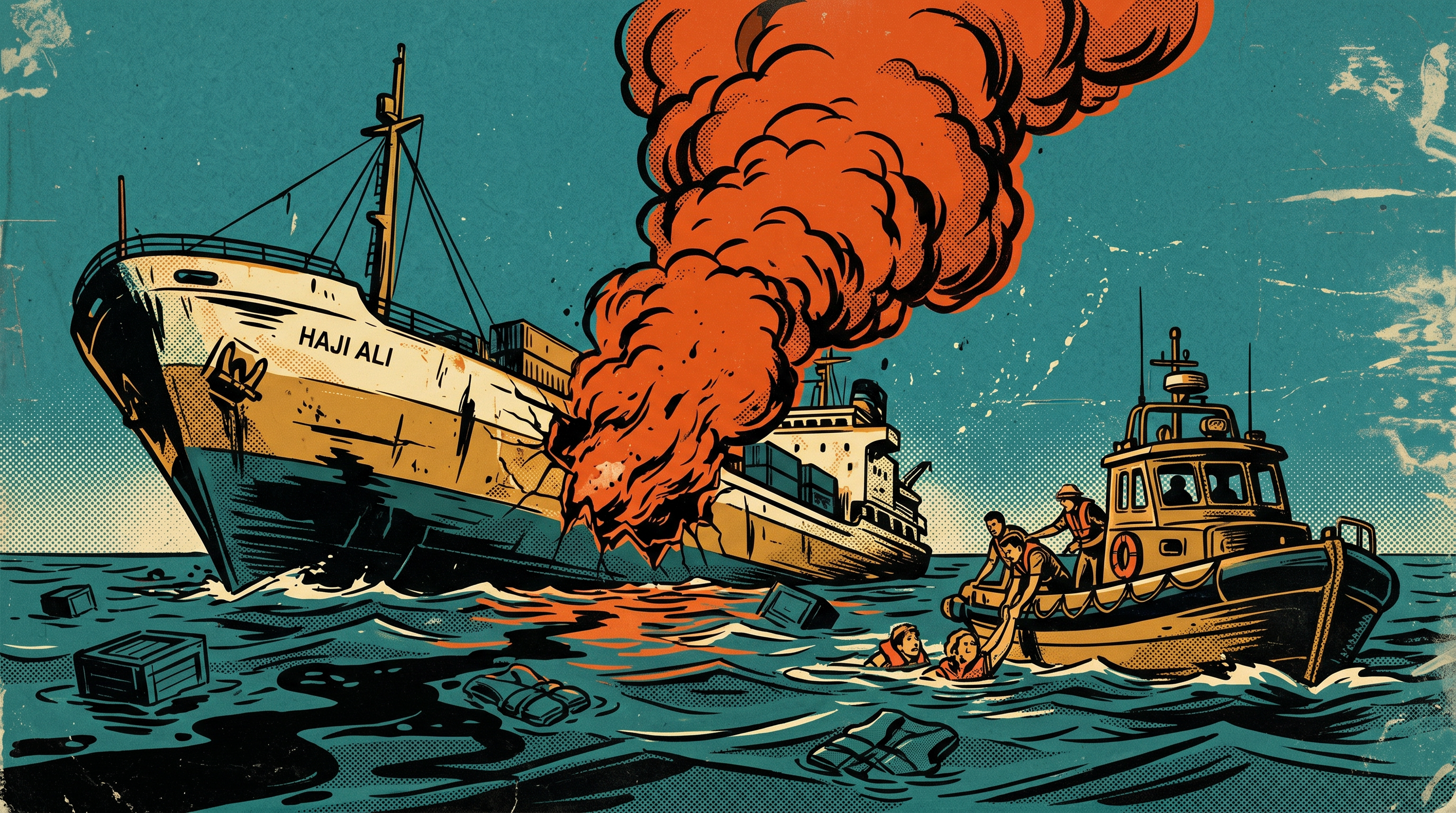
Separately, an Indian-flagged vessel called the Haji Ali was attacked off the coast of Oman — struck by what is described as a suspected drone or missile before sinking. All crew were rescued safely, which is the lone unambiguous piece of good news in this entire affair. Whether these two incidents are connected, nobody has established. Both occurred in or around the approaches to the Strait of Hormuz.
The language of the reporting is instructive. The Hui Chuan was "reportedly" seized. The Haji Ali suffered a "suspected" strike. Facts are "believed" and "apparent." We are watching a major international incident unfold almost entirely in the subjunctive mood.
The Chokepoint
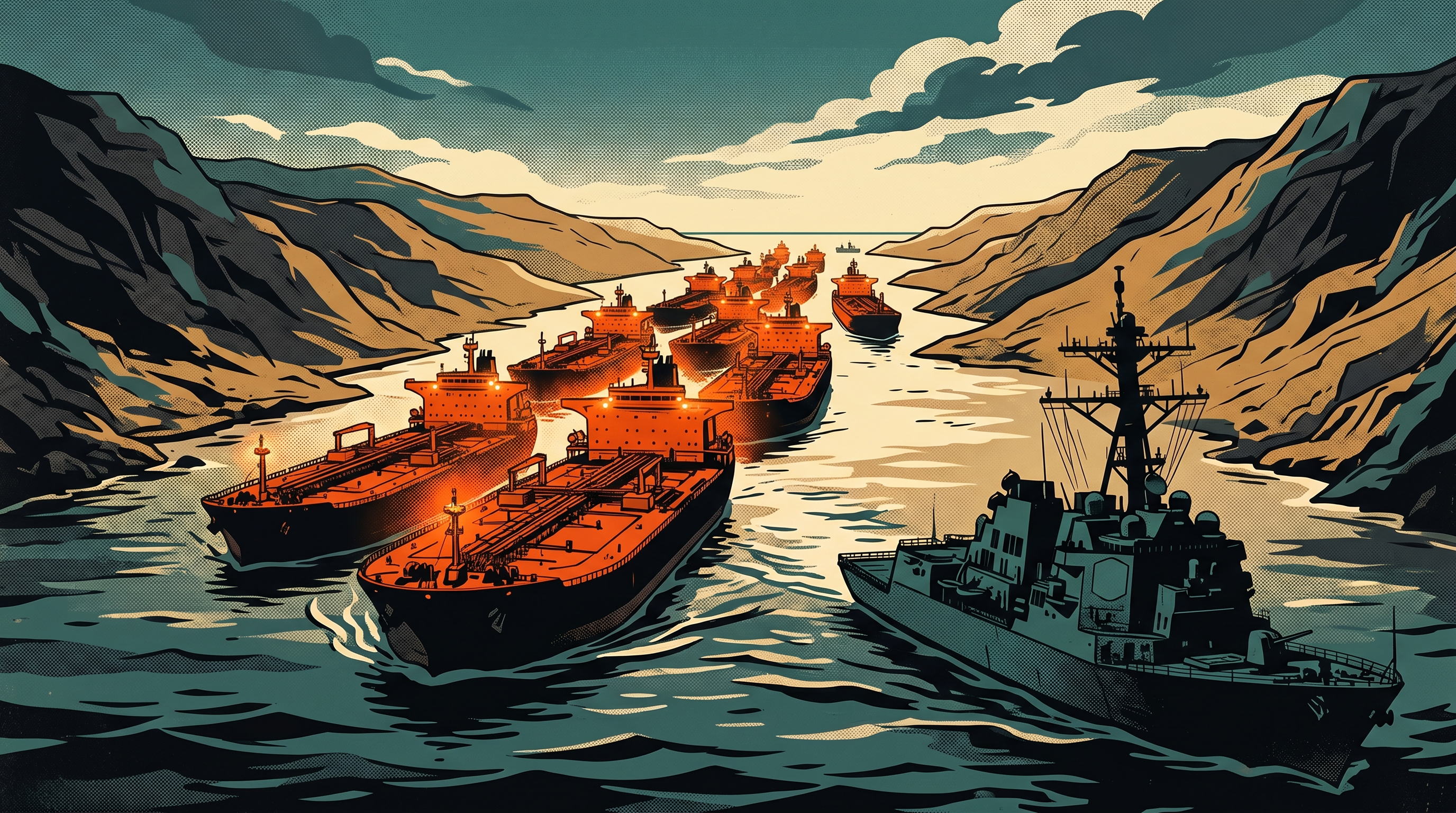
To understand why any of this matters beyond a brief mention in the shipping pages, you need to understand the Strait of Hormuz. Gulf states depend on it for energy exports. It is, simultaneously, an area of constant military shadowing between Iran, the United States, and the Gulf states themselves. Imagine three people in an elevator who all hate each other, except the elevator is a strategic waterway and everyone has missiles.
When something goes wrong near the Strait — a ship seized here, a drone strike there — the consequences ripple outward immediately. Shipping rates spike. War-risk insurance premiums climb. Vessels reroute, adding days and cost. Crews become reluctant to transit the area. Naval escort discussions begin. Commodity markets shudder. The price of your petrol twitches upward for reasons you'll never read about in enough detail to understand, because the details don't exist in any publicly available form.
This is the mechanism by which two murky incidents involving ships most people have never heard of can quietly rearrange the global economy before breakfast.
The Fog Is the Feature
Here is what most commentary will miss: the ambiguity is not a failure of intelligence or reporting. The ambiguity is the point.
A floating armoury is the perfect emblem of the modern grey zone. Not a warship, not a civilian cargo vessel — it exists in the deliberate gap between those categories, armed enough to be dangerous, civilian enough to be deniable. Ownership, flag state, operator: all unspecified. It is a vessel seemingly designed to make the question "whose is it and what is it doing?" as difficult to answer as possible.
Now pair that with Iran's seizure — conducted under a legal or military justification that is, likewise, unspecified. Was it lawful interdiction? An act of aggression? Enforcement of sanctions? A provocation? A response to a provocation? Nobody is saying, which means everybody gets to believe whatever is most convenient.
The Haji Ali attack adds another layer. A suspected drone or missile — suspected by whom, attributed to whom, fired from where, for what reason? — sinks an Indian-flagged ship in the same waters during the same period. Whether it's connected to the Hui Chuan seizure is "not established." The two incidents exist in a kind of quantum superposition: simultaneously related and unrelated, depending on which government you ask and what day of the week it is.
The fog of war used to be something that descended once fighting started. Now the fog comes first, and the fighting may never be formally acknowledged at all.
India's Quiet Nightmare
Buried in this story is a dimension that will receive far less attention than it deserves. India has major energy dependence on Gulf shipping routes. It has a large diaspora spread across the Gulf states. Indian crews are significantly represented in commercial maritime work throughout the region. Every murky incident in the Strait of Hormuz is, for India, simultaneously a threat to its energy supply, a danger to its citizens, and a diplomatic headache with no good options.
The Haji Ali was Indian-flagged. Its crew were rescued — this time. But the incident illustrates a structural vulnerability: India's economic lifeline runs directly through waters where Iran, the US, and Gulf states are engaged in permanent low-level confrontation, using tools and vessels and tactics specifically designed to maintain deniability. India is not a party to this confrontation. It is simply standing in the hallway, holding its groceries, while three armed strangers argue about who controls the thermostat.
The Ship That Is No One's
The Hui Chuan is, in miniature, the future of international conflict. Traditional international law, traditional journalism, traditional diplomacy — all of these were built for a world where ships had flags, wars had declarations, and facts could, at least in principle, be established. The Hui Chuan belongs to a different world. One where the absence of facts is not a temporary condition awaiting clarification but a permanent, designed feature of how power is exercised.
The next major crisis will not announce itself. It will reportedly occur, in a suspected location, involving an apparent act, attributed to a believed perpetrator — and by the time anyone works out what actually happened, the consequences will already be irreversible. The ghost ships are already in the water.