A war ends the way a loud party ends. The people who threw it stumble home pleased with themselves, and someone who was never invited is left mopping the floor. In this case the floor is in Madagascar, and the mess is a fuel bill.
"The US-Iran war may have ended," runs the headline, "but 6,000 miles away the death toll is rising." Read that twice. The shooting stops in one place, and the dying starts in another — a place that owns no stake in the quarrel, fired no weapon, and sits a continent and an ocean away from anyone's idea of a front line.
What Actually Happened
Here are the plain facts. In April 2026, Madagascar declared a two-week nationwide state of energy emergency. The government pointed its finger directly at the war the United States and Israel had waged against Iran. Madagascar imports its fuel — almost all of it — and gets most of its oil from Oman. When the region that supplies the oil catches fire, the price of moving anything anywhere goes up, and a poor island nation is first to feel the burn.
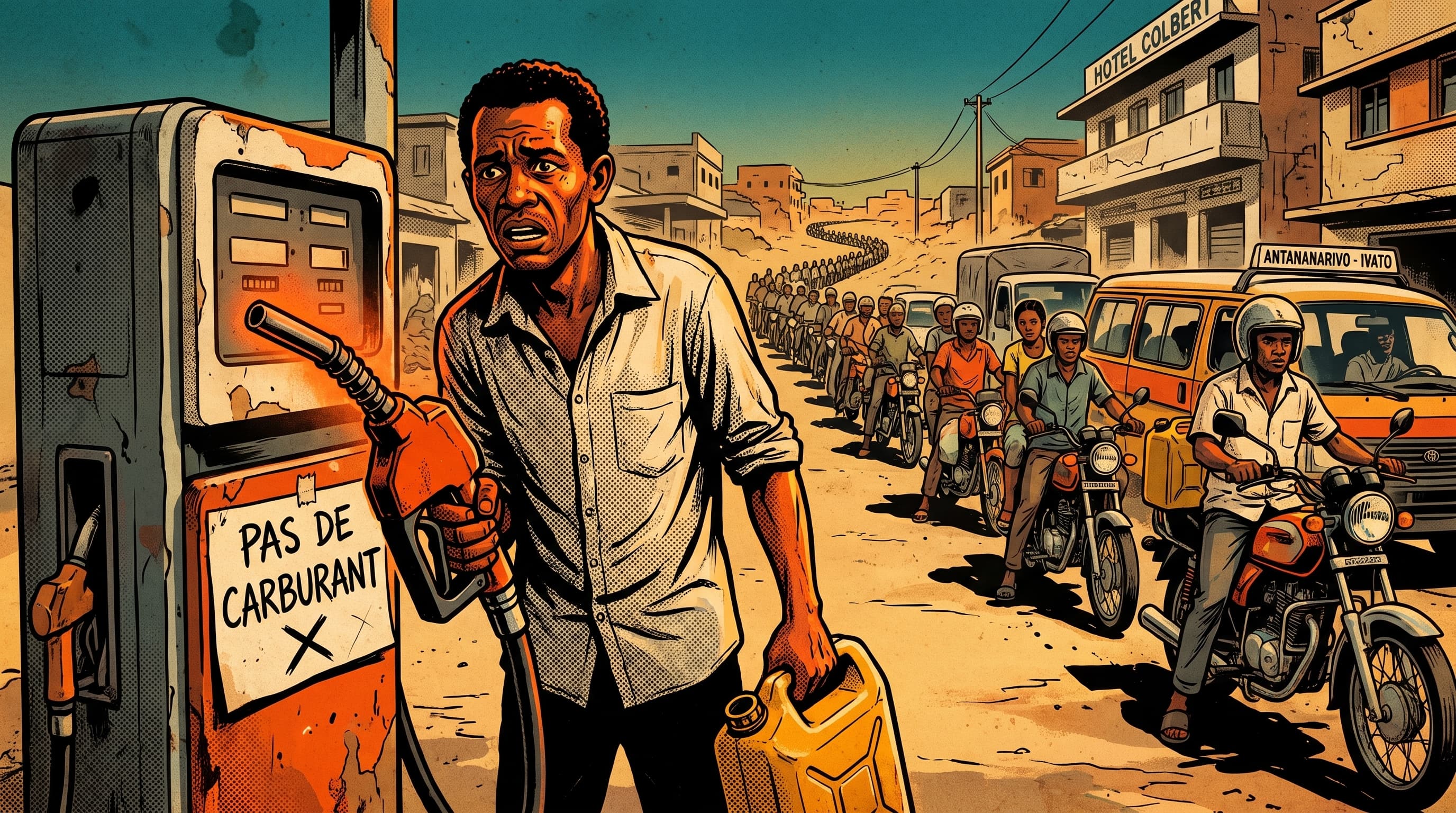
Petrol stations saw queues. People panicked and bought what they could. Some stations started rationing. Officials, watching all this, began to worry out loud about public disorder — which is the polite governmental term for "people might stop being patient." Two weeks proved nowhere near enough. By late April, the emergency was extended for another fifteen days.
That is the whole story, more or less. A war abroad. A fuel shock at home. And underneath it, a country that was already starving before anyone in Tehran or Tel Aviv lost a night's sleep.
The Privilege of Saying "It's Over"
Here is the part most people skate past. "The war is over" is not a fact. It is a luxury. It is something you can only say if you were standing in the right place when the missiles stopped flying.
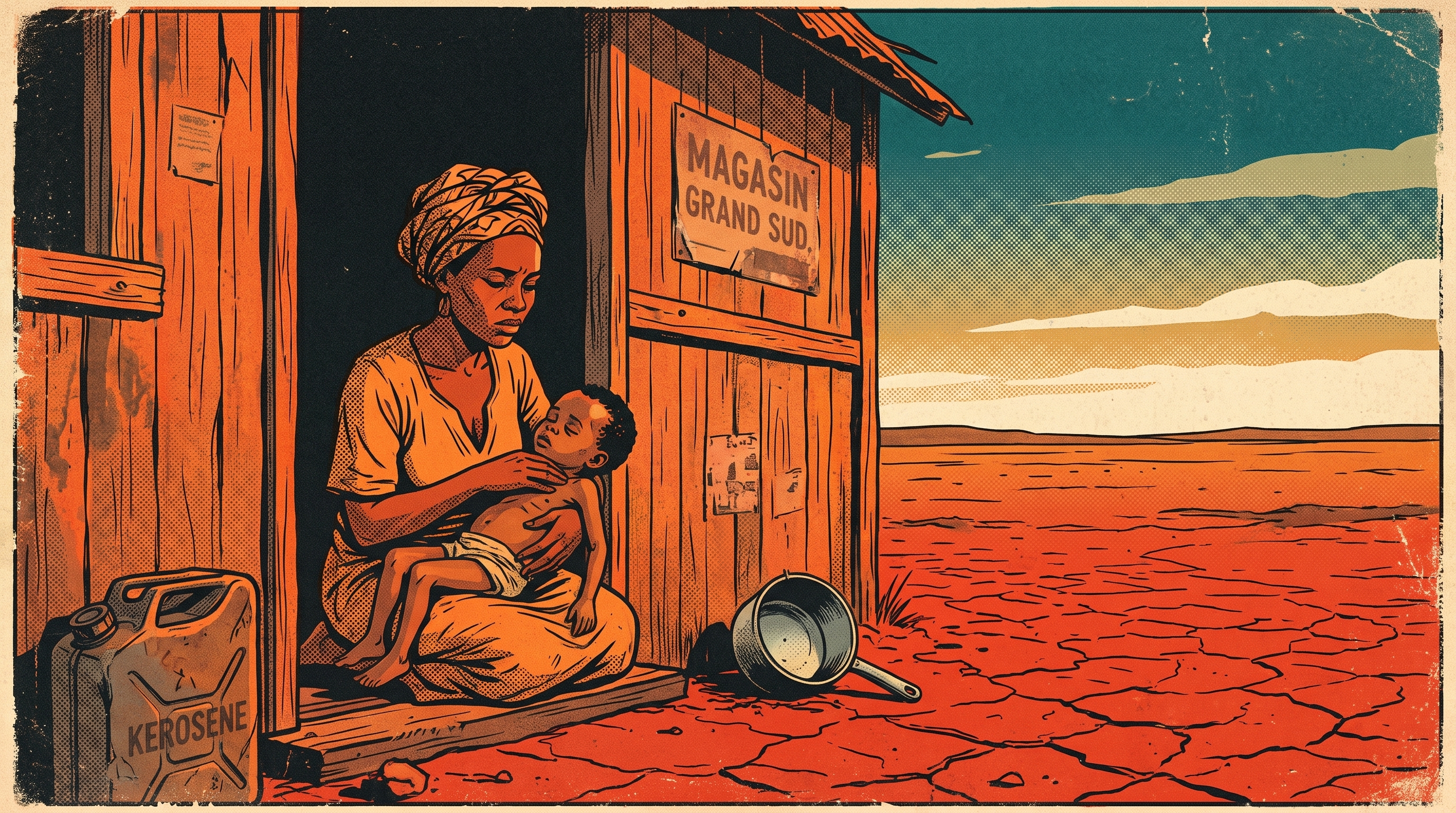
For the families who launched and absorbed the strikes, the phrase means relief. For a mother in the Grand Sud region of Madagascar, the same phrase is a cruel joke, because for her the deadliest part is only now arriving — not on the nose of a rocket, but on the bottom line of an import invoice.
This is how modern conflict works, and almost nobody wants to say it plainly. Wars no longer keep their casualties neatly inside the blast radius. They kill at a distance, through plumbing — through the pipes and tankers and supply chains that quietly hold up everyone's daily life. And the genius of the arrangement, if you can call it that, is that the dying gets outsourced. The people who decide on a war and the people who pay for it with their children are now two completely separate populations. One group gets the headlines. The other gets the funerals.
How a War 6,000 Miles Away Empties a Petrol Pump
Let me walk through the machinery, because it's less mysterious than it sounds.
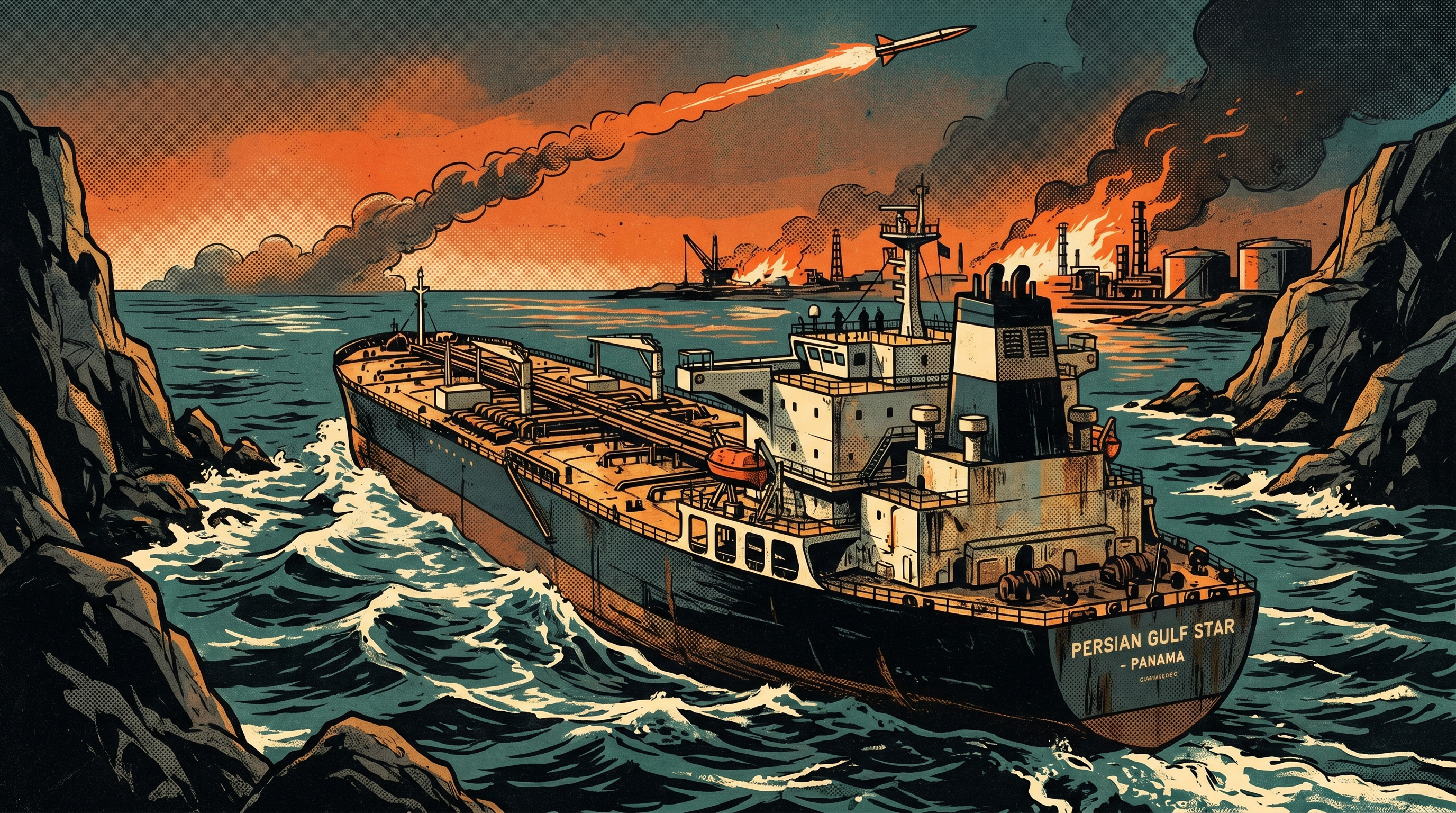
Picture the world's oil as water moving through a giant system of hoses. There's one famous narrow bit — the Strait of Hormuz — where an enormous share of the world's oil has to squeeze through. When fighting flares anywhere near it, every buyer on Earth flinches at once, because nobody knows if the hose is about to get pinched.
Madagascar's oil comes mostly from Oman, which sits south of the strait — technically on the safer side of the chokepoint. Madagascar did the geographically sensible thing and shopped below the danger zone. It didn't matter. The oil market doesn't price things by who's technically out of the line of fire; it prices things by fear. When fear spikes, the whole pool rises, and you pay more even for the oil that never went near the trouble. Buying "the safe option" turned out to be exactly as safe as standing in the dry end of a swimming pool while someone fills the deep end.
So the import price shoots up. What does the government do? It caps the pump price — keeps fuel cheap at the station — and quietly eats the difference itself. That's the subsidy. Sounds kind, and in the short term it is. But import costs climbed clean above the regulated price, which means the state is now buying expensive and selling cheap, swallowing the gap on every single litre. The subsidy bill balloons. You cannot run a country on that math for long, which is precisely why two weeks became four.
Then comes the part that actually kills people. Fuel is not just what goes in cars. Fuel is what moves food. No diesel means no trucks, no trucks means food doesn't reach the markets, and food that doesn't move gets scarce, and scarce food gets expensive. The country most exposed to that squeeze is the one already on its knees.
The Wound That Was Already Open
And Madagascar was already on its knees. Long before the fuel emergency, the numbers were grim. Acute malnutrition among children under five was projected to climb by 54 percent — from 357,900 children to 558,000. Of those, 155,600 were expected to suffer the most severe form, the kind that doesn't wait politely for the supply chain to recover.
That crisis wasn't built by the Iran war. It was built by drought, by floods, by ruined crops, by disease outbreaks, by a healthcare system too weak to catch people when they fall, by markets too broken to reach, and by food prices already climbing out of ordinary families' reach. The fuel shock didn't start the fire. It poured petrol on it.
So you have a country that was already drowning, and a global conflict that just kicked away one of the last things it was holding onto. The war didn't create the vulnerability. It found it, the way water finds a crack.
Where the Obituaries Pile Up
We have built a world where you can win a war you didn't fight in, and lose your child in a war you never knew was happening. The accounting is monstrous, and it is deliberate enough to keep happening: the deciders never meet the dead, and the dead never got a vote.
When the next conflict "ends" — and one always does — watch where the obituaries actually pile up. They will not be where the cameras are. They will be six thousand miles away, in a petrol queue, in a market with nothing on the shelves, in a clinic counting children it cannot feed. The missiles are the cheap part of a war. The supply chain is where the real killing gets done, quietly, on credit, paid by people who were never asked.
"The war is over" is a sentence with an asterisk. And the asterisk is a body count.