The Uncomfortable Arithmetic
There is something uniquely painful about mediocrity when it arrives at an address accustomed to excellence. Liverpool's 2025/26 Premier League campaign — 17 wins, 8 draws, 12 defeats from 37 matches — isn't a disaster. It's worse than that. It's forgettable.
A points-per-game average of 1.59 across the season. That translates, over a full 38-game campaign, to roughly 60 points. Enough to avoid embarrassment. Not enough to matter. Liverpool have spent the season in the no-man's-land between relevance and irrelevance, which is the one place a club of their stature cannot afford to dwell.
What the Numbers Actually Say
The raw record is bad enough. But the split between home and away tells you where the rot really lives.
At Anfield, Liverpool averaged 1.94 points per game — respectable, if unspectacular. The famous ground still does its job, mostly. Away from home, though, the number craters to 1.26 points per game. That's closer to a relegation candidate's travel form than a title contender's.
The away defeats read like a tour of humiliation. Aston Villa put four past them in a 4–2 win. Manchester United beat them 3–2. Brighton managed 2–1. They also dropped points at Chelsea, Crystal Palace, and Manchester City. Liverpool on the road this season have been like a house cat released into the wild: occasionally competent, mostly confused, frequently mauled.
The Defence That Dissolved
Here's the number that should genuinely alarm anyone invested in Liverpool's future: in the last eight league games of the season, the team conceded approximately 1.63 goals per game. The season average was 1.41. That late-season figure represents a 15.6% deterioration from an already unimpressive baseline.
Liverpool did the opposite. They got leakier. The back line didn't just fail to improve — it actively regressed at the point in the season when coherence should be at its peak.
Conceding 1.41 goals per game across a season is already mediocre for a club with Liverpool's resources and ambitions. That late-season slide points to something beyond tactical failure — fatigue, disorganisation, or a squad that has stopped believing its own defensive structure works.
The New Arrivals That Never Arrived
Liverpool's summer recruitment was supposed to signal intent. Florian Wirtz arrived as the marquee addition — a generational talent expected to slot seamlessly into the attacking machinery. Instead, he spent months looking like a man trying to have a conversation in a language he's still learning. The pressing triggers were different, the positional expectations unfamiliar, and the chemistry with those around him non-existent for long stretches. Wirtz wasn't bad — he was disconnected, which for a player of his profile might be worse.
He wasn't alone. Across the board, the summer signings struggled to integrate into Arne Slot's system with any urgency. There's always an adaptation period, but Liverpool's new faces seemed to spend the entire season in one. The result was a squad perpetually caught between two identities — the holdovers who understood the system's bones and the newcomers who were still reading the manual. When your expensive reinforcements spend nine months finding their feet, the season tends to be over before they've found them.
The Salah Question (And The Depth Behind Him)
Mohamed Salah scored against Everton, Fulham, Wolves, Burnley, and Bournemouth. Notice anything about that list? It's the bottom half of the table, essentially. The bread-and-butter fixtures. The games where individual brilliance can paper over collective dysfunction.
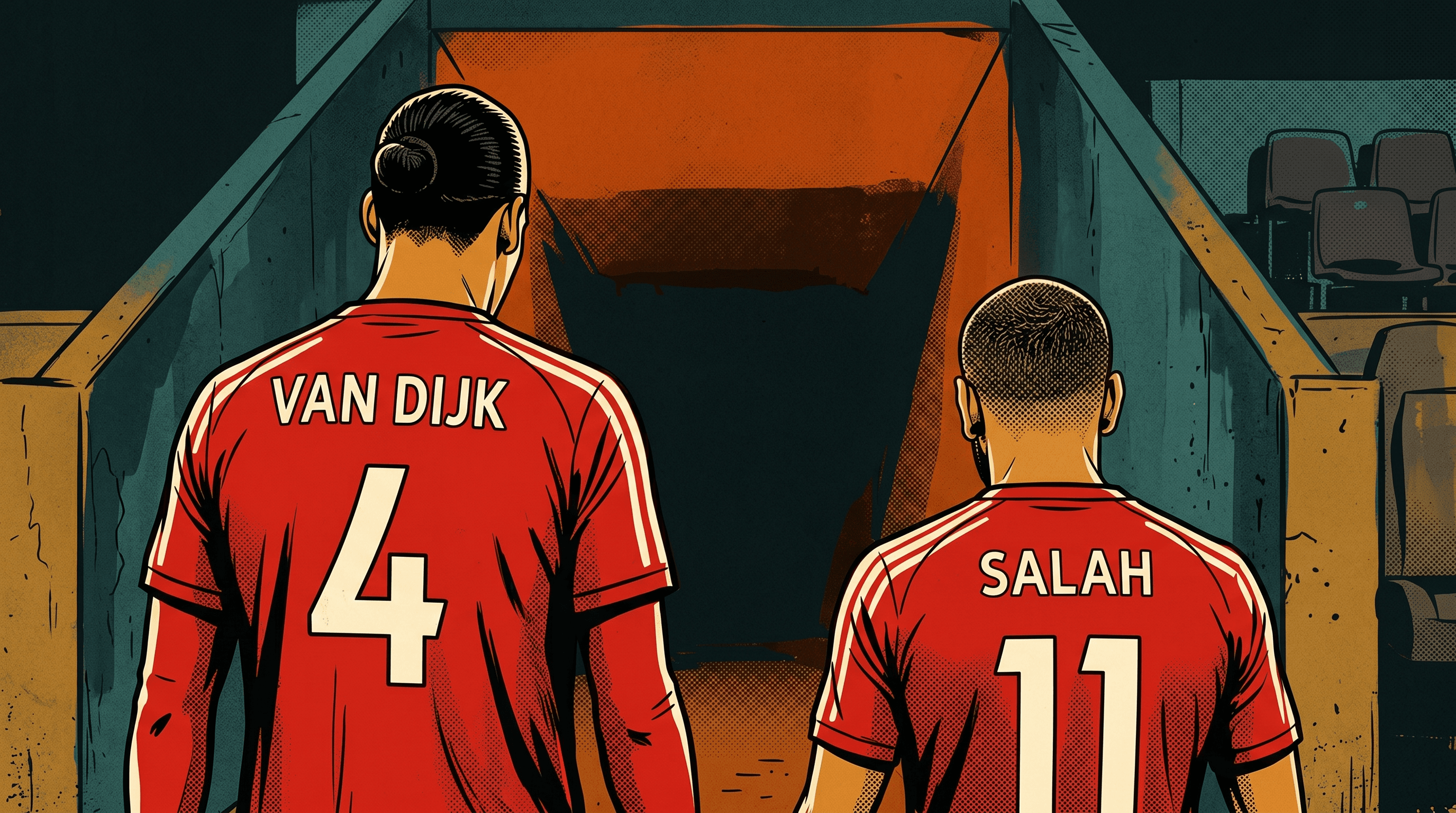
Van Dijk, Gakpo, Szoboszlai, Gravenberch, Mac Allister — none of them short on quality, all of them contributing in stretches throughout the campaign. The problem was never personnel quality in isolation — it was what happened when those individuals were asked to function as a unit, particularly away from home, and particularly in the season's closing weeks.
On paper, this is a squad that should be doing considerably better than 1.59 points per game. Which means the failure isn't about who's on the pitch. It's about what they're doing once they get there.
The Away-Day Problem
Imagine you're brilliant at cooking in your own kitchen. You know where everything is, the oven has that quirk you've mastered, and you've got your favourite knife. Now imagine someone sends you to cook the same meal in a stranger's kitchen every other week. Different layout, dull knives, an oven that runs hot. Some people adapt. Liverpool, this season, have consistently burned the soufflé.
That 0.68 points-per-game gap between home and away, over 19 matches, is the difference between a European place and mid-table anonymity. Anfield remains a fortress of sorts. Everywhere else, Liverpool have been tourists.
The 4–2 at Villa is particularly instructive. This isn't a one-goal away defeat that could be chalked up to a dodgy refereeing decision or an unlucky deflection. Four goals conceded away from home means your defensive shape is being systematically dismantled. When it happens once, it's an anomaly. When your away record reads like Liverpool's this season, it's an identity.
The Bigger Picture
With 37 games played and one remaining, there's nothing left to play for except professional pride and whatever marginal final-table position is still mathematically available. The season cannot be rescued. It can only be understood.
And understanding it requires acknowledging an uncomfortable truth: this Liverpool squad underperformed its talent level by a significant margin. You don't assemble a team featuring Salah, Van Dijk, Wirtz, Gravenberch, Mac Allister, and Gakpo and then shrug at 59 points from 37 games. Something has gone wrong at a level deeper than tactics or fitness. The defensive regression in the final eight games — that 15.6% worsening — hints at a team that lost its collective nerve, its organisational conviction, or both.
Sixty points across a season doesn't get you sacked if you're managing Brentford. It gets you serious questions if you're managing Liverpool. And those questions will centre on why a team averaging 1.68 goals per game — a perfectly adequate attacking output — simultaneously managed to concede 1.41. It's like filling a bathtub with the plug out. You're working hard. The water level never rises.
One Match Left, And Then What?
Liverpool's 2025/26 season has one match remaining. It will not change the story. The story is already written in the defensive deterioration, and the yawning gap between what this squad should have achieved and what it actually delivered.
The verdict is simple: Liverpool spent this season proving that talent without cohesion is just expensive chaos. A 1.59 points-per-game campaign from a squad of this calibre isn't a transitional blip to be excused. It's a warning. Whatever comes next — whether that's a new system, new signings, or a new voice in the dressing room — must address the fundamental disconnect between individual quality and collective function. Because right now, Liverpool have a squad that looks like a contender on the teamsheet and performs like a mid-table side on the pitch. And the gap between those two things is where seasons go to die.