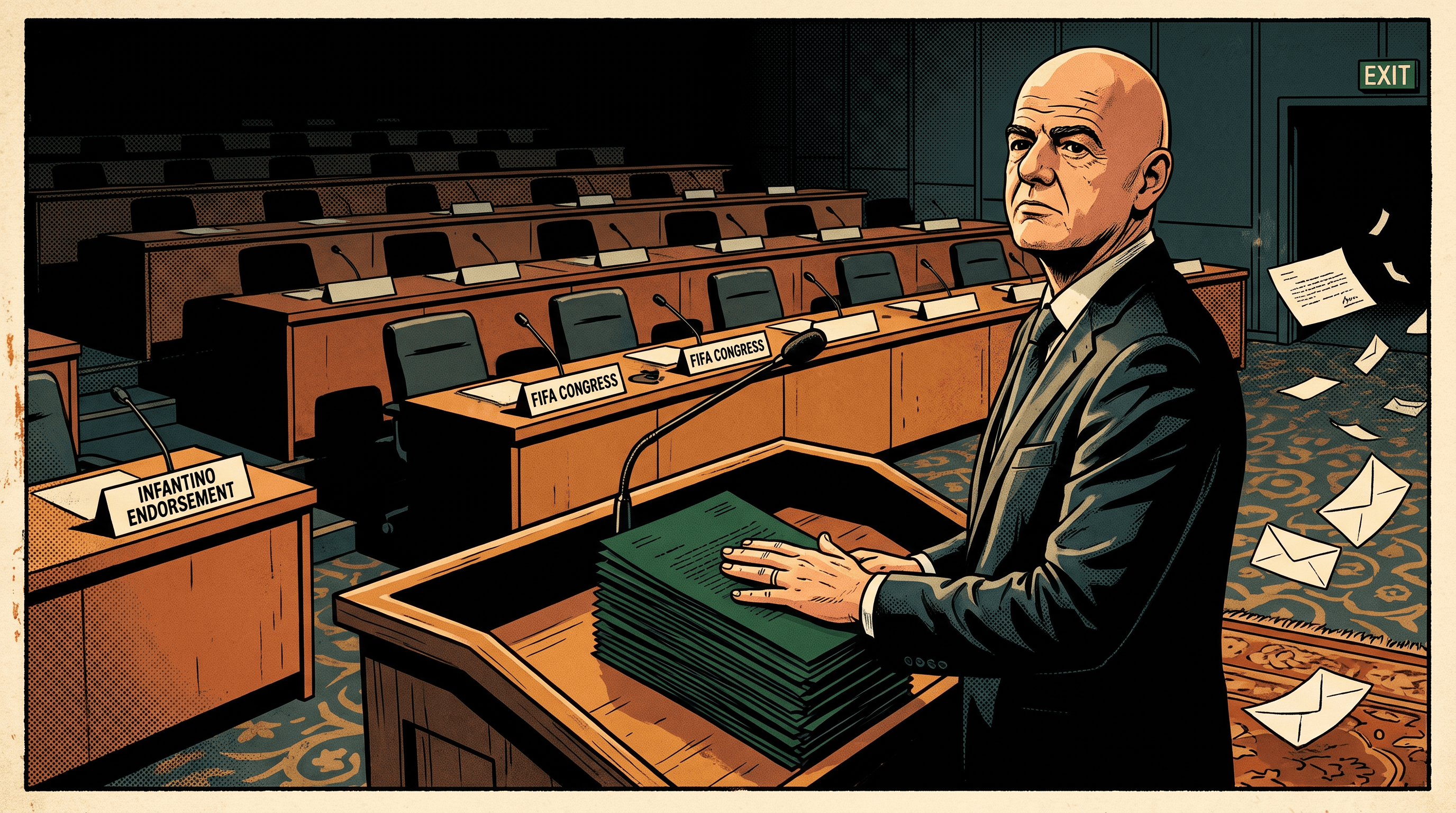
Manchester City have found the single asset in football that their money cannot move: a calendar.
The best player at the last World Cup is for sale, and the haggling has turned faintly ridiculous. Barcelona offered £38.5m for Rodri. City said no and named a floor of at least £60m. Two clubs are arguing over a 30-year-old with one year left on his deal who has already told everyone he wants to leave.
The Player Who Priced Himself Down
Here is the picture in plain terms. Rodri is in the final year of his City contract. He has turned down a lucrative extension. He can walk away for nothing in 2027. He has agreed personal terms with Barcelona, and on Wednesday he spoke with their manager Hansi Flick and sporting director Deco. He wants to go home to Spain — a wish that hardened after Pep Guardiola left the Etihad. Barcelona only became his first choice this week, once his talks with Real Madrid broke down.
Now add the rest. He is Spain's World Cup-winning captain. He won the Golden Ball as the best player at the tournament last month. He also had minor back surgery and will miss most of City's pre-season, which means City are essentially selling a 30-year-old with a sore back, an exit date, and a suitcase already by the door.
Every single fundamental of this deal points downward. In any sane market, that is a fire sale.
When £115m Is Normal, £60m Is a Confession
So why do City want £60m, and why is Barcelona the club that looks cautious? Because this is not really a market anymore.
Look at what money did this summer. City paid Nottingham Forest £116m for Elliot Anderson. They are negotiating up to £80m for Ayyoub Bouaddi from Lille. Real Madrid signed Yan Diomande for £115m. Fees that would once have caused a national inquiry now barely register as news.
In a world where a defender or a winger costs £115m, an expiring contract is the last force on Earth that can drag a price down, because it hands the buyer a simple threat: wait, and he's free. Rodri is the cleanest stress-test of the whole broken system — a genuinely elite footballer whose leverage has collapsed to almost nothing, in a summer when nobody else's has.
That is the joke buried in City's £60m. It is not a valuation. It is a number chosen to make their own books look sane.
The Milk-Carton Rule
Think of a footballer's contract as a carton of milk with a date stamped on the side.
Two years from expiry, the milk is fresh. The club can demand full price, because a buyer either pays up or waits what feels like forever. One year out — where Rodri sits now — the milk is turning, and everyone in the shop can read the date. And in 2027, the carton is sitting on the pavement outside with a handwritten sign that says please, take me.
Barcelona know this. They know that if they simply do nothing for twelve months, a World Cup-winning captain lands in their lap for zero. So their £38.5m is not really a price for Rodri. It is a fee to skip the queue — to grab him now, before someone else does, rather than gamble on a free deal a year later. City's £60m is the club standing over the carton insisting the milk is still fresh while the smell fills the room.
The leverage says the number should be small. City want it big anyway. Which brings us to the actual reason.
The Hall of Mirrors
You cannot spend £116m on Elliot Anderson in the morning and then accept £38.5m for your Golden Ball winner in the afternoon. The whole club would look like it had lost the ability to count. City's incoming midfielders each cost more than the man they are trying to sell — Anderson at £116m, Bouaddi at up to £80m, and Enzo Fernández of Chelsea under consideration on top. The £60m floor exists to stop that contradiction from being visible to the naked eye. It is face-saving arithmetic dressed up as a valuation.
And everyone in this story is chasing everyone else. Barcelona need Rodri because Frenkie de Jong wrecked his knee and is out for months; Rodri is the specific, named replacement. City may want Enzo Fernández to replace Rodri. Real Madrid want Enzo too — and to afford him, they might have to sell Aurélien Tchouaméni or Eduardo Camavinga, which would then require their replacements. It is a set of dominoes arranged in a circle.
Presiding over one end of it is José Mourinho, back at the Bernabéu for a second spell at the age of 63, having declared a central midfielder his top priority. The word from Spain is that he is unhappy at being gazumped by Barcelona. There is something wonderfully human about a 63-year-old man with a trophy cabinet the size of a garage still capable of genuine fury at losing a bidding war. Some things money can't buy either. Serenity, apparently, is one of them.
The Calendar Always Wins
Two honest possibilities remain. Maybe Barcelona don't even have the registration room to complete a deal at £60m. Maybe City's £60m is an opening position dressed as a floor. Either way, the trajectory doesn't change.
Because the £60m will not hold. A calendar is the one negotiator that never blinks, never gets emotional, and never needs a face-saving number of its own. Either Barcelona edge upward to let City keep their dignity, or City hold firm, keep him, and watch his value drain by the month until they hand him to whoever fancies a free World Cup winner in 2027.
An expiring contract is the last honest price in a game that has forgotten how to add up. City can argue with it all summer if they like. It wins in 2027 — and it won't even bother turning up to the meeting.