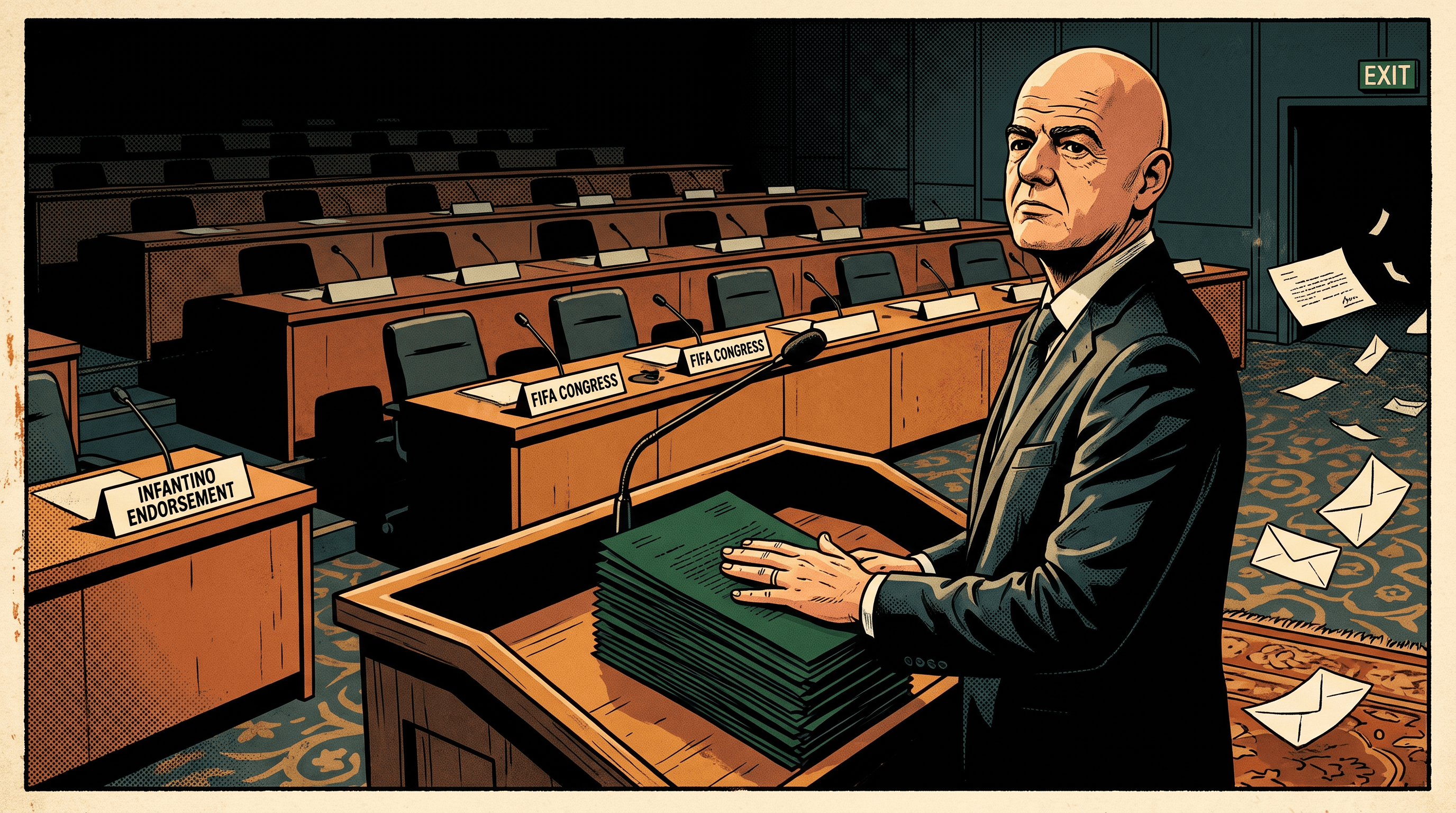
The surest measure of a fighter's menace has never been his knockout reel. It's the expanding universe of perfectly logical excuses his rivals construct for why now isn't quite the right time.
The Queue That Nobody Wants to Join
The heavyweight division in May 2026 looks, on paper, like a traffic jam of talent. Tyson Fury and Anthony Joshua are circling each other for what everyone agrees would be commercially enormous — a fight that, notably, still hasn't happened. Once it would have been the undisputed pinnacle of the sport; now it arrives late enough that the anticipation has curdled slightly, interest quietly waning as the division's centre of gravity shifts toward newer, hungrier contenders. Oleksandr Usyk, 38 years old and having already unified the division, is described as "selective" in his remaining fight choices, which is the polite way of saying he's shopping for legacy bouts rather than landmines. Daniel Dubois and Fabio Wardley just fought each other — and Dubois, rising from the canvas twice, finished Wardley in devastating fashion. It was the kind of performance that answered lingering questions about Dubois at the highest level while exposing Wardley as perhaps a tier below a prime version of the WBO champion.
And then there's Moses Itauma.
Young. Categorised as a prospect. Already framed as Britain's next great heavyweight hope. And generating the kind of respectful distance from established fighters that usually takes a decade to earn.
The Itauma Problem
Here's what's fascinating about Itauma's position. He hasn't gatecrashed the title picture. He hasn't demanded a shot at anyone's belt. He hasn't done anything except fight — with composure, sharpness, authority, and a balance between aggression and control that apparently improves at a rate his peers find uncomfortable.
Wardley, to his considerable credit, did something unusual recently. Rather than dismiss the hype around Itauma as premature media noise — the standard response to any young challenger — he effectively accepted it as justified. Not inflated. Not manufactured. Justified. It helps that the two are friends, which provides Wardley the most comfortable possible reason not to share a ring with Itauma any time soon. You don't fight your mates when there are belts to chase elsewhere — and nobody can call you afraid for it.
When a fighter on the verge of a world title shot publicly validates the threat level of someone who isn't even in the title conversation yet, that tells you more than any knockout highlight could.
How Avoidance Actually Works in Boxing
Think of the heavyweight division as a dinner party where everyone is trying to end up seated next to the person who'll make them look best and furthest from the person who might embarrass them.
Usyk, at 38, doesn't need to explain why he's not fighting a young prospect. He's conquered the division. He's earned selectivity. His avoidance is rational and everyone knows it — you don't ask a retiring surgeon to prove himself against the hot new resident.
Fury and Joshua have each other to talk about, which is convenient. As long as that superfight remains undone — and it remains undone — it serves as the perfect conversational shield. "Why would I fight Itauma when the biggest fight in British boxing history hasn't been made yet?" is a sentence that sounds responsible rather than evasive.
Dubois has been exposed before. Fighting someone whose entire reputation is built on destructive performances and rapid improvement is approximately the last thing a fighter with known vulnerabilities wants to do.
And Wardley? He's chasing the WBO belt — and his friend happens to be the division's most dangerous unmarked road. He has a clear, defensible path that doesn't require him to take the most dangerous fight available right now. His route makes sense. That's the point. Everyone's route makes sense.
The genius of Itauma's position is that nobody needs to publicly refuse him. Nobody needs to say his name with fear. They just need to have a slightly better option available at all times — and in a division this crowded, there's always a slightly better option.
What Makes Him a Scheduling Nightmare
What separates a genuine generational threat from a well-marketed prospect? The prospect gets talked about. The generational threat changes the decision-making of people who've never shared a ring with him.
Itauma is already doing the second thing.
Consider his reported attributes: composure under pressure, sharpness that doesn't miss, authority that makes every landed shot count, a balance between aggression and control that keeps him fresh in late rounds — and, the killer, rapid improvement. That last one is what keeps promoters awake at night. A fighter who's already impressive and getting better fast is a scheduling nightmare. Every month you wait, the fight gets harder. But every month you wait, you can also tell yourself he "needs more experience" or "hasn't fought anyone yet."
Don't fight him because he hasn't fought anyone good enough. He can't fight anyone good because nobody good will fight him. Repeat until whoever finally faces him is walking into a catastrophe.
This is not a new pattern. But it's rare to see it operating this early, this transparently, on a fighter categorised as a prospect.
The Age Factor Nobody's Saying Out Loud
Itauma's age is referenced constantly, always with a note of disbelief. The specifics almost don't matter. What matters is the implication: he has time, and everyone else doesn't.
Usyk is 38. Fury and Joshua are deep into their careers. Even Dubois and Wardley are established enough that their windows have defined edges. Itauma's window hasn't properly opened yet. He's operating on a completely different timeline.
This creates an almost comic asymmetry. The established fighters are trying to squeeze maximum value from their remaining years — title fights, legacy bouts, massive paydays. Every fight they take is a strategic choice with diminishing returns on the horizon. Taking a fight against Itauma offers almost nothing: beat him and you've beaten a prospect (no glory), lose to him and you've been ended by a kid (maximum humiliation).
What Wardley's Honesty Actually Means
The most revealing data point in this entire picture is Wardley's acceptance that the Itauma hype is real. Fighters don't do this. The standard playbook when asked about a rising threat is some variation of "He hasn't proven anything yet" or "Let him fight someone with a pulse first."
Wardley broke protocol. He looked at the hype and said, essentially, yes, that's about right.
Why would a fighter chasing a world title shot do this? The friendship offers one easy explanation — you're generous about people you like. But there's something else. He's already calculating that when their paths eventually cross, he wants to have been on record as respectful rather than dismissive. You don't lay groundwork for a "I always said he was special" narrative unless you think you might need it.
The Verdict
Moses Itauma hasn't won a world title. He hasn't shared a ring with anyone whose name casual fans would recognise. He is, by every formal metric, just a prospect.
But the division is already reorganising itself around him the way iron filings arrange themselves around a magnet — not consciously, not dramatically, but unmistakably. Usyk's selectivity, Fury and Joshua's endless dance, Dubois's known fragility, Wardley's honest deference — none of these are about Itauma. But all of them conveniently ensure he remains unfought.
The heavyweight division doesn't fear Moses Itauma. It just always has somewhere else to be when his name comes up.