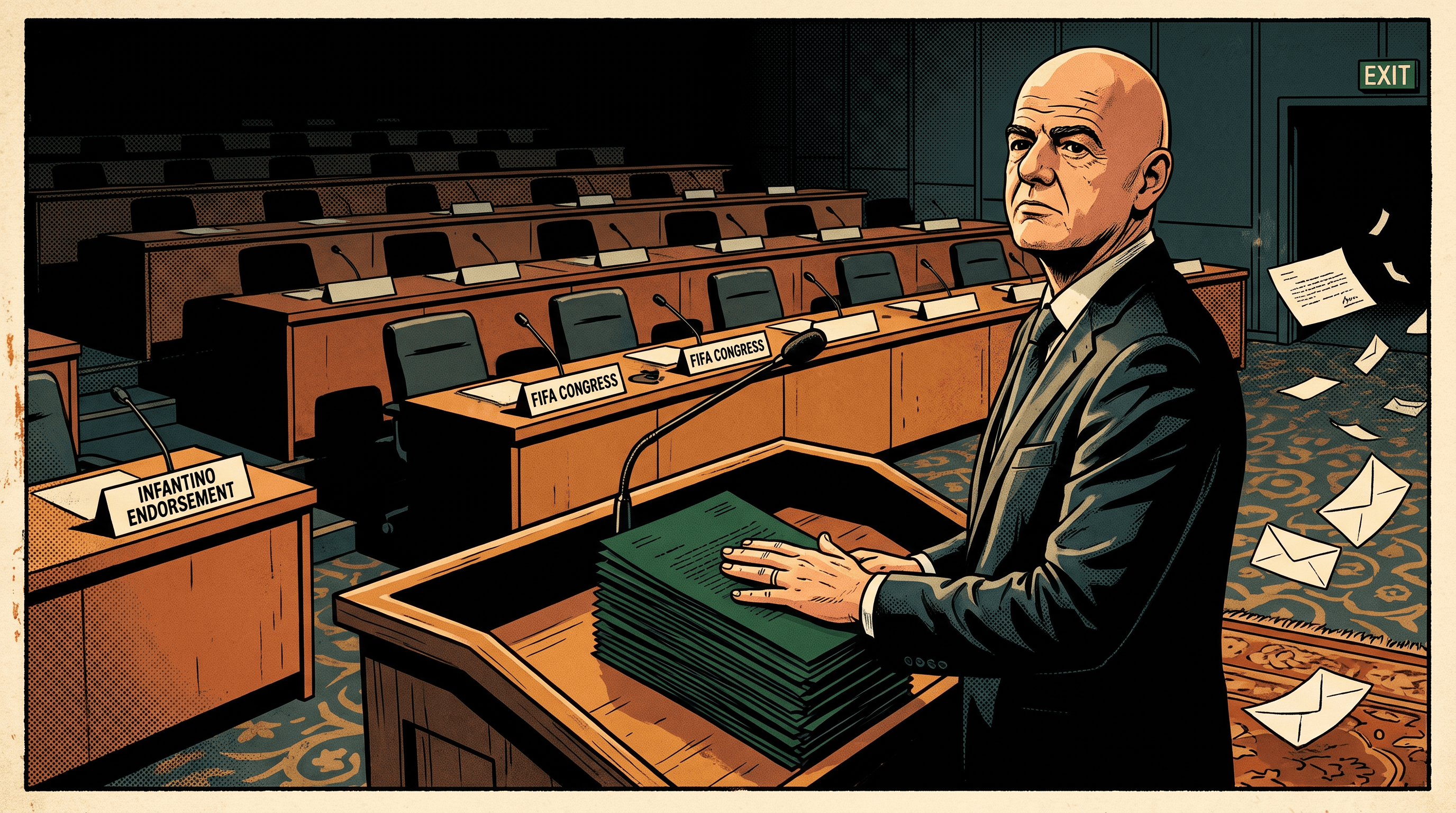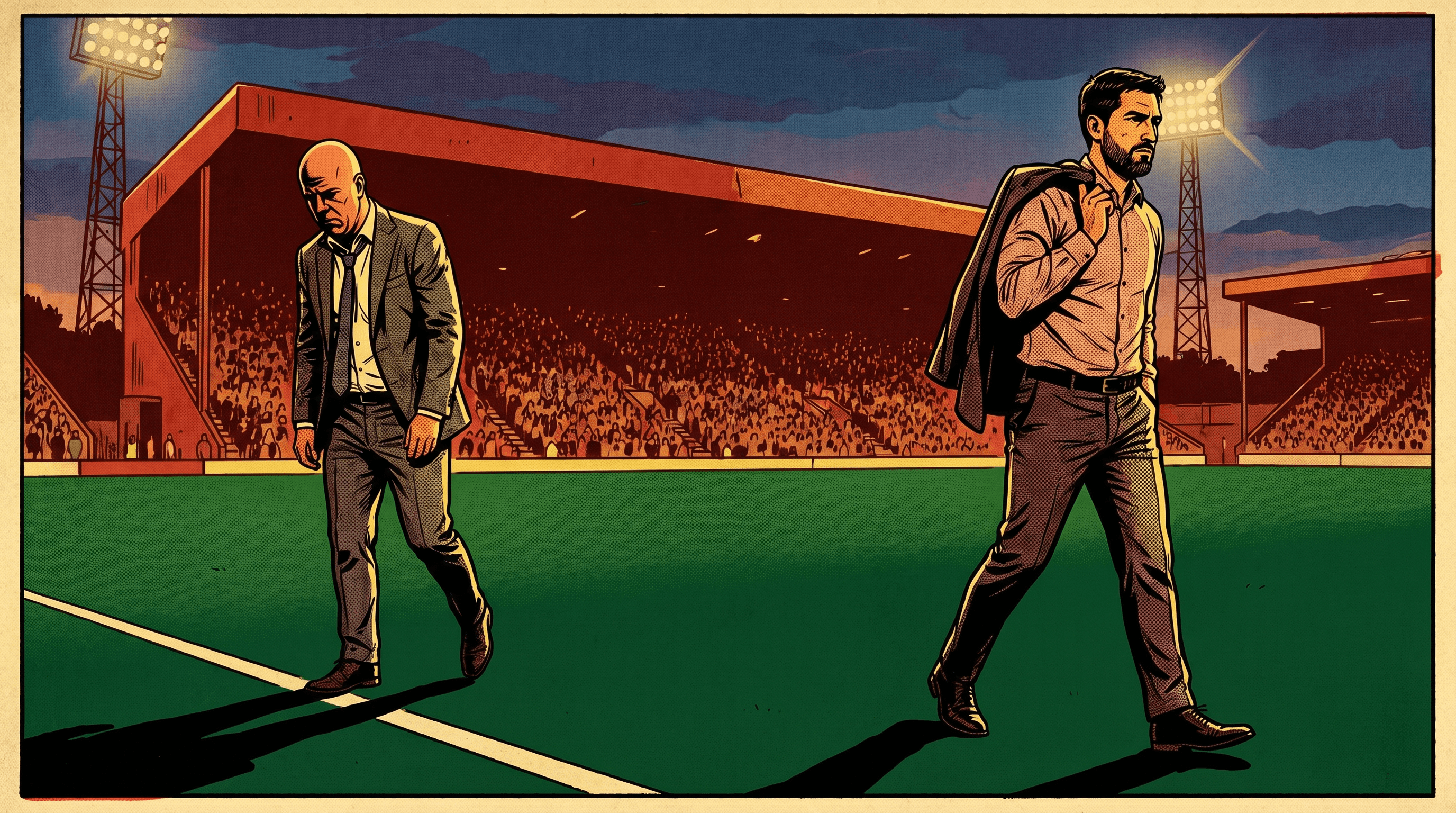
The most expensive way to admit you were wrong is to sack a manager, pay him off, and then hire someone whose entire philosophy is a confession that your predecessor's predecessor had the right idea all along.
The Wreckage
Liverpool sacked Arne Slot. They finished fifth on 60 points — their lowest tally since 2015/16. That's the whole story in two sentences, and no amount of boardroom euphemism can dress it up. The "evolution" from Jürgen Klopp was supposed to be exactly that. Instead, Liverpool got their worst season in a decade and a squad that looked like it had been sedated.
Now, according to BBC Sport, they've approached Andoni Iraola about the job. A 43-year-old Basque whose last gig was Bournemouth. If that sounds like a strange sentence to write about one of the biggest clubs on Earth, that's because it is — and also because it tells you everything about where Liverpool's hierarchy think they went wrong.
The Quiet Part, Said Loud
Here's what FSG and technical lead Richard Hughes are actually saying when they tell reporters the "next phase requires a more front-foot, aggressive and urgent style": we tried calm, and calm nearly killed us.
This is a U-turn performed at motorway speed. Liverpool spent the post-Klopp era telling anyone who'd listen that the club needed to evolve beyond heavy metal football, that sustainability demanded a different approach. Now, staring at a fifth-place finish, they've concluded that what they actually need is. heavy metal football, performed by a slightly different band.
The fascinating part isn't the retreat itself — clubs reverse course all the time. It's that Liverpool are trying to frame it as progress. Hiring the man who made Bournemouth "fast, energetic and hostile" is not evolution from Klopp. It's nostalgia for Klopp, laundered through a smaller club's overachievement.
And the Richard Hughes connection makes the whole thing smell less like a bold appointment and more like a phone call between two men who already had each other's numbers. Hughes was technical director at Bournemouth when Iraola was appointed there. This isn't a global coaching search. It's a reunion tour with better catering.
Why Iraola, Specifically
Strip away the Liverpool context, and Iraola's CV is genuinely impressive — just in a way that raises as many questions as it answers.
Think of him as a manager who builds machines designed to do one thing brilliantly: make life unbearable for whoever has the ball. His coaching path — AEK Larnaca to Mirandés to Rayo Vallecano to Bournemouth — reads like someone climbing a ladder where every rung is a club with fewer resources than its opponents.
At Rayo Vallecano, he won promotion to La Liga and reached a Copa del Rey semi-final. More impressively, his Rayo side, according to BBC Sport, generated more high turnovers leading to shots than any team in Europe's top five leagues except Bayern Munich. Pause on that. A club whose annual budget probably wouldn't cover Bayern's dry cleaning was second only to them in turning stolen possession into shooting opportunities.
At Bournemouth, he went further. He took them into European competition and set a new club record for Premier League points. Under his management, Bournemouth ranked first in the Premier League for possessions won in the defensive third, the middle third, and the final third. First for total distance covered. Among the leaders for high turnovers, shot-ending high turnovers, and sprints.
His tactical fingerprints are distinctive: vertical passing, early balls in behind, high-pushing number 8s attacking pockets of space, full-backs shoved so far forward they might as well file change-of-address forms, frequent 2v1s on the wing, and multiple runners flooding the box. The flanks get hammered. Full-backs overlap. Wide forwards cut inside. It is, in every meaningful sense, organised chaos.
The Step-Up Problem
Here's where it gets complicated, and where Liverpool are making a bet they can't hedge.
Imagine you're a brilliant street food chef — the best taco stand in the city, lines around the block, five-star reviews. Then someone offers you the head chef role at a Michelin three-star restaurant with 200 covers, a brigade of 40 cooks, and a wine list longer than most novels. The skills that made your tacos legendary — speed, instinct, improvisation — might translate. Or they might not. Because a Michelin kitchen doesn't just need great food. It needs systems that scale.
Iraola has never managed a super-club. He has limited European competition pedigree as a manager. He has not steered a top squad through simultaneous domestic and Champions League campaigns over multiple seasons. These aren't disqualifying facts. They're open questions. And open questions at Liverpool tend to get answered in public, at volume, with millions of people watching.
By several accounts, Iraola's early months at Bournemouth were bumpy — the timing of the press and the sheer volume of tactical information took time to absorb. At a club where the crowd will boo a sideways pass in August if they finished fifth in May, "bumpy" is a luxury that comes with a very short fuse.
The press that made Bournemouth elite at winning the ball back in every zone of the pitch was built with players who had something to prove and nothing to lose. Liverpool's squad has everything to lose and — after a season of underperformance — possibly something to prove, but in a far more fragile, ego-laden way. Getting Mohamed Salah to sprint 12 kilometres a match and press like a man whose mortgage depends on it is a different proposition entirely.
The Ladder Problem
There's a pattern in football that nobody talks about honestly enough: the manager who is perfect for the step below but untested at the step above. It's not about talent. It's about the nature of the job changing as the stakes increase. At Bournemouth, Iraola could lose five matches and everyone would shrug. At Liverpool, losing five matches triggers a crisis that gets debated on six continents and in at least four languages.
The counterargument is obvious: someone has to be first. Klopp had never managed a super-club before Dortmund gave him one. Every great appointment looks risky until it works. This is true, and also a thought that provides approximately zero comfort when you're watching your team lose 3-0 to Nottingham Forest in November.
What makes this different from a typical gamble is that Liverpool aren't gambling on the unknown. They're gambling on the known — specifically, the known quantity of pressing football, which they've already done, already peaked at, and already moved away from. The question isn't whether Iraola can implement a high press. He obviously can. The question is whether re-implementing a high press at Liverpool in 2026 is a strategic decision or an emotional one. Whether it's a plan or a reflex.
Forward Into the Past
Liverpool's appointment of Iraola — if it happens — will be sold as the dawn of a new era. It is nothing of the sort. It is an admission that the last new era failed, wrapped in the convenient packaging of a young, hungry coach with elite pressing numbers and a connection to the man doing the hiring.
None of this means it won't work. Iraola is clearly an exceptional coach. His record at every club he's managed suggests a mind that sees football in terms of energy, territory, and relentless forward momentum. At 43, he has decades of work ahead of him. The raw ingredients are there.
But Liverpool should be honest about what they're doing. They're not moving forward. They're moving back to what worked before and hoping that a different voice delivering a similar message will produce a different result than the silence that followed Klopp's departure. That's not vision. That's muscle memory.
The most dangerous thing a super-club can do is confuse nostalgia for strategy. Liverpool tried to evolve past Klopp, failed, and are now hiring Klopp's philosophy in a younger body.