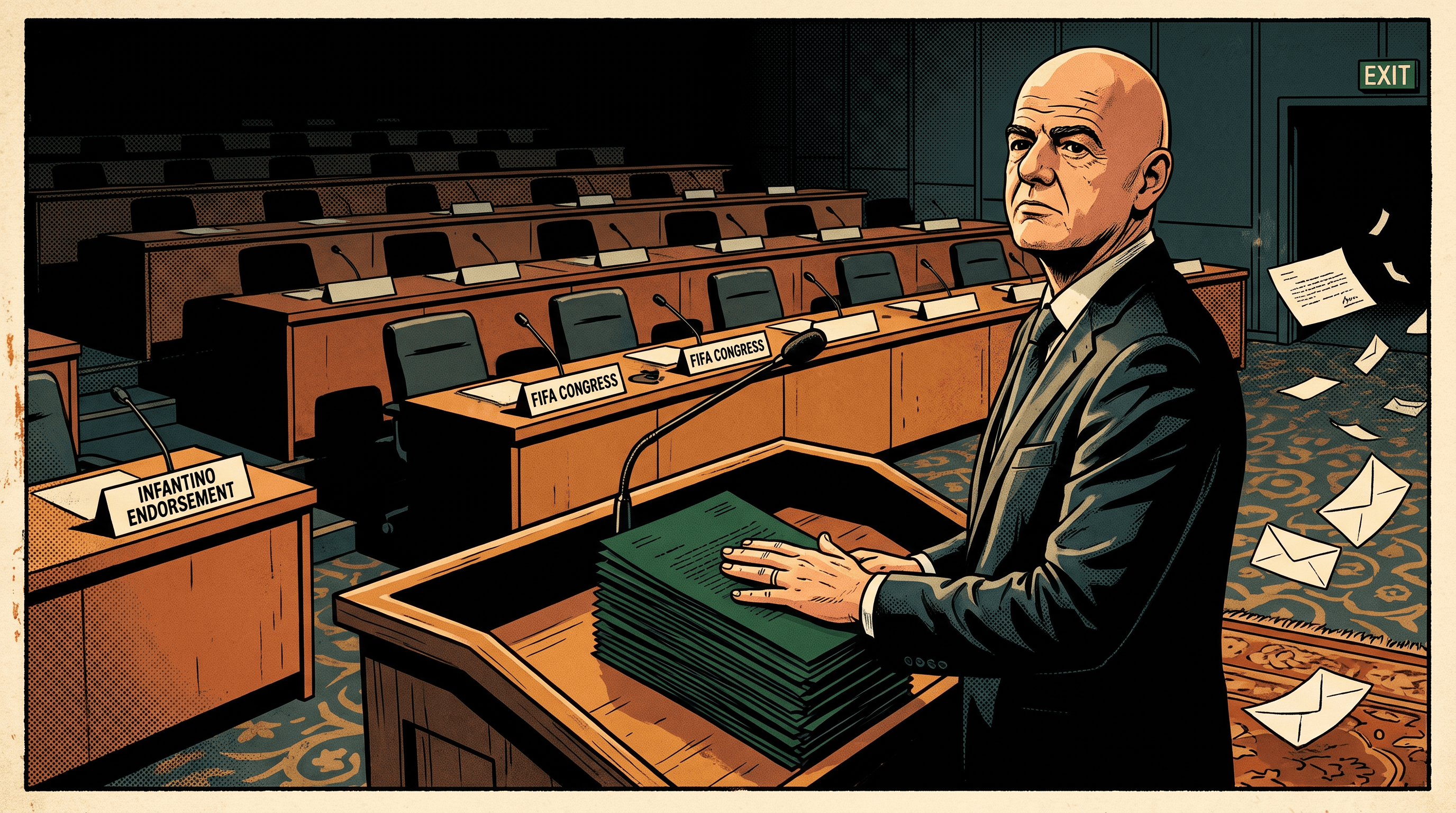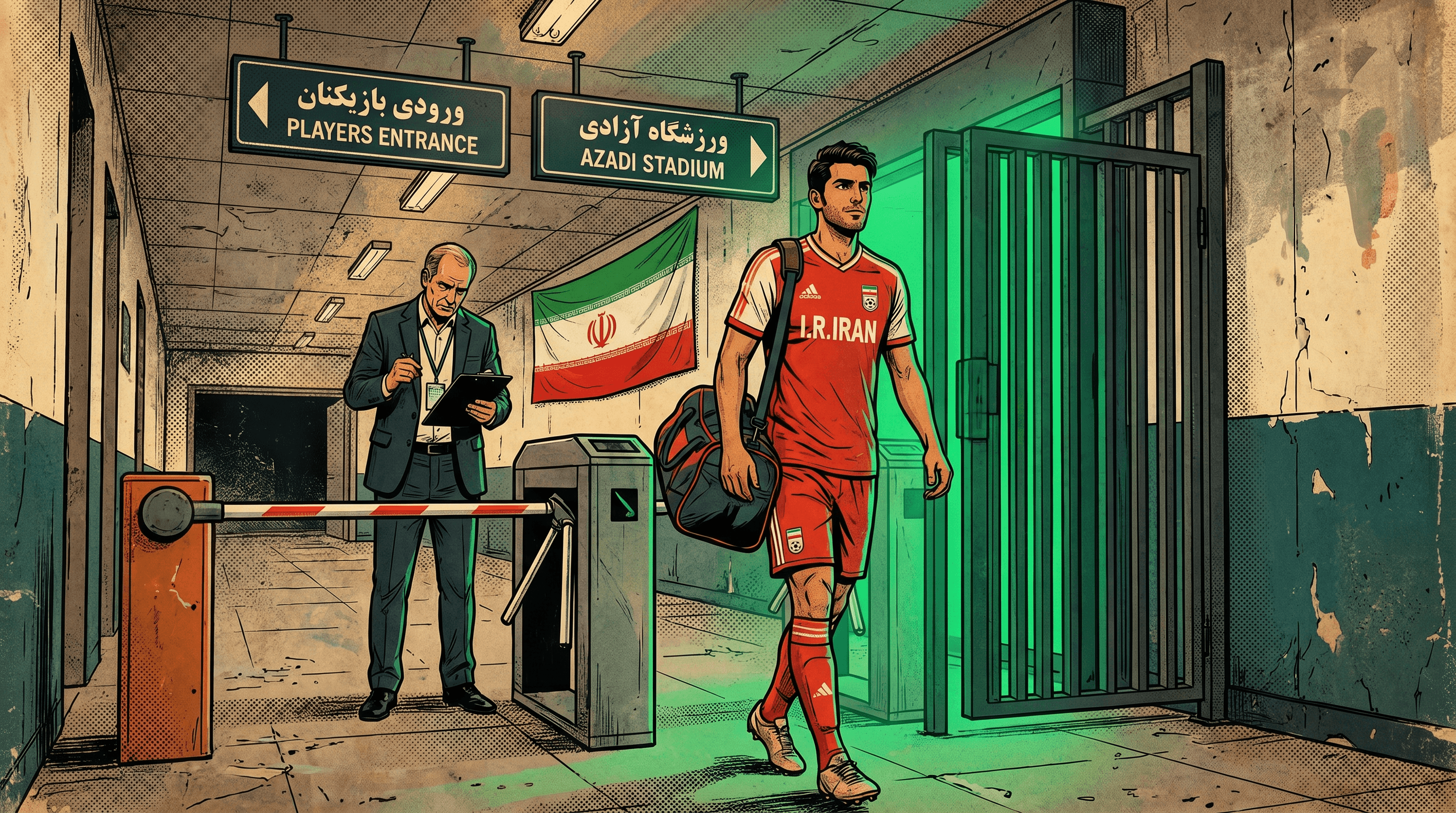
Here's a riddle for the modern age: how do you let a country into your World Cup while also keeping it out? The United States has just shown us the answer, and it's more elegant than you'd think. You wave the players through and slam the door on everyone holding a clipboard.
What Actually Happened
The tournament starts on 11 June, jointly hosted by the United States, Canada, and Mexico. Iran qualified the old-fashioned way — they topped their group in March 2025, roughly a year before war broke out. Back then, qualifying was a sporting achievement. Now it's a diplomatic incident.
On Friday, ten days before Iran's opening match in Los Angeles on 15 June, Washington confirmed it had cleared all the players and "necessary support staff" to travel. Sounds generous. But Iran's football federation says the US denied visas to a "large portion" of the team's backroom staff. Iranian state-linked media put a number on it: 15 administration officials refused entry, including the head of the football federation himself, his deputy, and the media director.
So the strikers can come. The man who runs Iranian football cannot. Iran's embassy in Turkey called it "politically biased interference in sport." Iran called the whole announcement a "whitewash" and has formally asked FIFA to step in.
The Surgical Strike Nobody's Naming
Let's be honest about what this is, because the polite language is doing a lot of heavy lifting. This isn't a paperwork delay or a consular backlog. It's a precision operation.
The US has separated the people who kick the ball from the people who represent the state, and it has decided the ball-kickers are fine but the representatives are not. Secretary of State Marco Rubio told lawmakers earlier in the week that Iran's delegation could not include anyone linked to the Islamic Revolutionary Guards. US officials wrapped it in tougher language still — Iran would not be permitted to "abuse this system to sneak terrorists into the United States under false pretences."
That's a remarkable sentence to aim at a federation president and a media director. Whatever you think of the Iranian state — and there is plenty to think — the idea that the man in charge of team merchandise and press conferences is the tip of the spear strains the imagination. The move isn't really about any individual. It's about who gets to stand for Iran on American soil. The answer, apparently, is eleven footballers and nobody who can speak for the country that sent them.
The Catch-22 Hiding in the Word "Cleared"
Picture a bouncer at a club who tells you you're on the list. Great. Then he adds the conditions. You have to fly in from another country the morning of, you have to leave the same day, and oh — some of your friends served in the military, so technically they might be a problem, but he won't say which ones or what happens if they're already inside.
That's roughly Iran's situation. The visa condition requires the squad to enter and leave the US on the same day as each match. Their team base isn't even in America anymore — it was moved to Mexico from Tucson, Arizona, in late May. So the trip now looks like this: a roughly 20-hour flight from Turkey via Mexico, landing early Sunday, presumably to play, then turn around and leave. Their group games are scattered across California and Seattle, which means this fly-in-fly-out routine repeats. It's the travel schedule of a touring band, except the band is also at war with the venue.
Then comes the part that turns a logistics headache into something darker. Military service in Iran is mandatory. Several of Iran's squad players completed that mandatory service with the Revolutionary Guards — not by choice, but because that's how the system works. Rubio's line was that nobody linked to the IRGC could be in the delegation. The players, by that definition, are linked. They were also cleared.
So which rule wins? Nobody will say. When asked whether any restrictions would apply to Iran inside the country during the tournament, the Department of Homeland Security declined to confirm anything, citing its "commitment to safety and security" — the bureaucratic equivalent of pulling your coat over your face and walking quickly away. The players are in, but on terms that could be reinterpreted at any moment by people who have openly reserved the right to do so.
Why a Three-Host Tournament Changes the Math
A World Cup is supposed to be neutral ground. The whole romantic pitch of FIFA is that for a few weeks, the football floats above the politics. That illusion works best when the host is one country and the visiting teams all face the same border, the same rules, the same welcome.
This tournament has three hosts. And what we've just watched is one of those hosts deciding, unilaterally, who from a qualified nation actually gets to show up. Iran earned its place on the pitch. It did not earn the right to bring its own federation president into Los Angeles. Those are now two different things, and the difference was decided in Washington, not by FIFA.
That's the quiet precedent. When you spread a World Cup across multiple host nations, you don't dilute any single host's power — you hand each of them a veto over visiting delegations on their own soil. The unified, borderless festival is a nice poster. The reality is three separate immigration desks, and at least one of them is running its own foreign policy.
And FIFA? Iran has formally asked it to intervene. FIFA's entire brand rests on the promise that sport sits above politics. This is the first time the competition has put a host nation in the position of receiving the team of a country it's actively at war with. There is no precedent here, which means whatever FIFA does — or doesn't do — becomes the precedent. So far the silence is deafening, and silence is itself an answer.
The Takeaway
There are murky reports of a Trump-Iran deal "largely negotiated," which tells you everything about where this really sits — not in a stadium, but in a back room, with footballers as the chips on the table.
Strip away the language about safety and security and terrorists and false pretences, and what remains is simple. The United States has worked out that you can host a rival without honouring it. You let the players run, because banning a qualified team is a scandal FIFA can't ignore. You block the suits, because nobody starts a riot over a media director's visa. And you keep every condition vague enough that you can tighten the leash whenever you like.
It's clever. It's surgical. And it makes a mockery of the only thing a World Cup is supposed to guarantee: that once you've earned your spot, the border isn't a referee. Iran got their eleven men. They just didn't get to bring the country they qualified to represent — and that, not any goal scored on 15 June, is the result that will outlast the tournament.