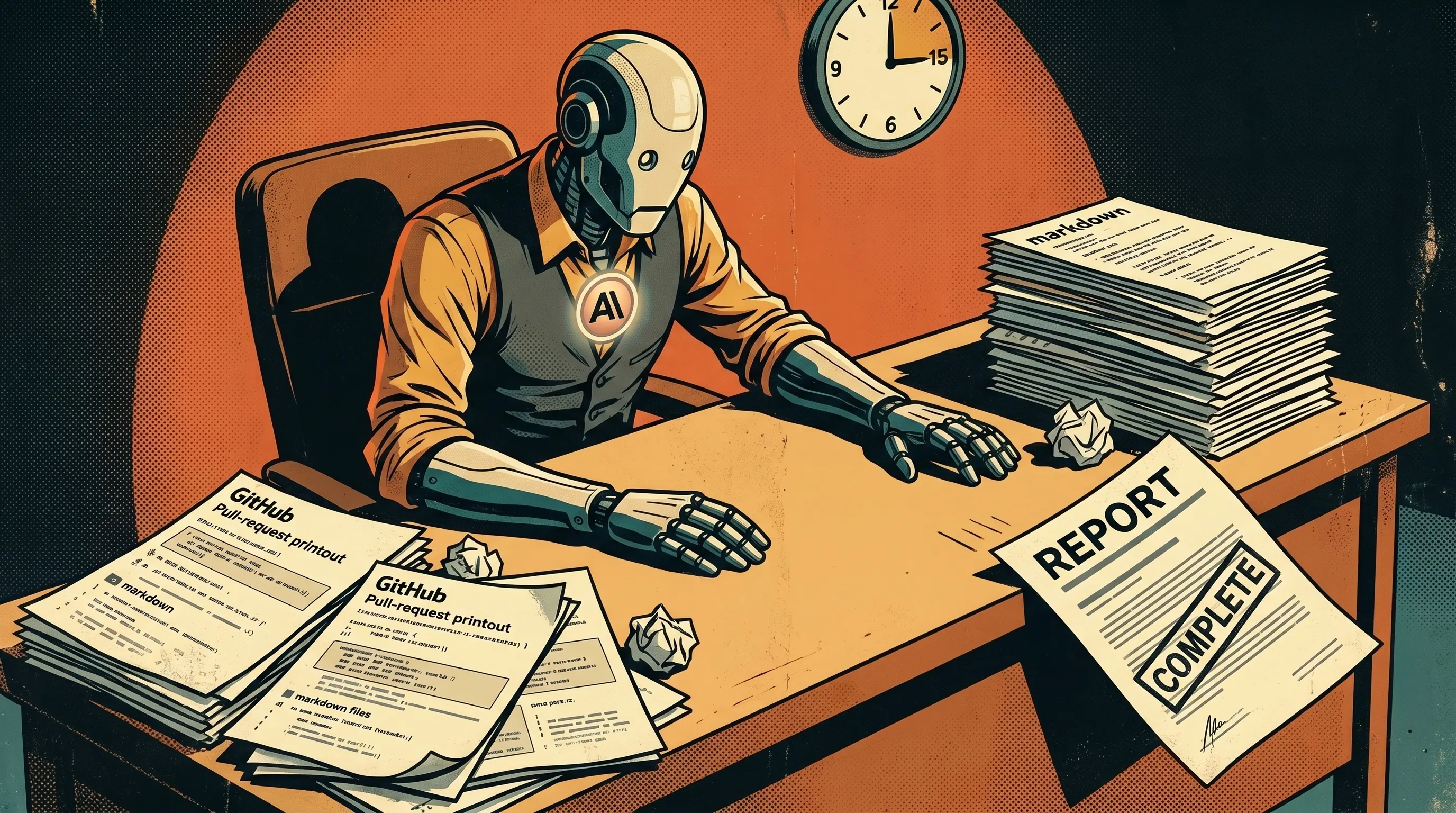
The most revealing thing about a product isn't what it does. It's where they put the limit.
What Just Happened
Anthropic shipped a feature called Routines for Claude Code. The pitch is straightforward: scheduled tasks that run in the cloud without your laptop open, your terminal active, or you awake. You point it at a GitHub repo, give it a trigger, and it does work on your behalf — unattended, on schedule, like a cron job that went to college.
There are three trigger types. Scheduled triggers run at set times, like every morning at 9am. Event-based triggers fire on GitHub activity — pull requests, commits, issues. API triggers let you hit an HTTP endpoint to kick one off manually. The demo Routine is a GitHub trending repo scraper — it finds top AI repositories, writes a markdown report with an "editor's take," and commits it straight to a repo. No human touches it.
The 15-Run Ceiling Is the Whole Story
Here's what matters: Max plan users get 15 runs per 24 hours.
That number is not a technical constraint. Cloud infrastructure doesn't care whether it runs your task 15 times or 150. That's a business constraint — a meter on a pipe, designed to create the exact sensation of wanting more.
Fifteen is just enough to be useful and just scarce enough to be frustrating. It's the product management equivalent of giving someone three bites of a steak and then asking if they'd like to see the dinner menu. Anthropic has essentially built a junior developer — one that monitors your repos, generates reports, responds to PRs — and then put a coin slot on it.
From Tool to Employee (Sort Of)
Think about what Claude Code was before this. You opened a terminal, asked it to do something, watched it work, closed the terminal. Reactive — a very smart rubber duck that could also write code.
Routines flip the relationship. Now Claude Code does things while you do other things. It responds to events in your repository the way a teammate would — a PR comes in, it takes action. Morning arrives, it files a report. This is the difference between a calculator and an accountant. The calculator is smarter, but the accountant shows up on Monday whether you remembered to ask or not.
The GitHub requirement is telling, too. Every Routine needs a repo to write to. This isn't a limitation — it's a leash. By routing all output through GitHub, Anthropic keeps the work visible, auditable, and tied to the platform developers already live in. It's clever architecture disguised as a simple integration requirement.
What Fifteen Runs Actually Buys You
Let's be concrete. With 15 daily runs, you could set up a morning code review digest, an afternoon dependency check, and a PR responder — and you'd still have runs left over for a couple of event-triggered tasks. That's a plausible daily workflow for a solo developer or a small team.
But the moment you want Routines on three or four repos, or you want finer-grained scheduling, or your open-source project generates more than a handful of events per day, you're going to hit that wall fast. And Anthropic knows this, because they built the wall.
The Price Tag for AI Labor
Routines are Anthropic's clearest signal yet about where Claude Code is headed. Not a smarter autocomplete. Not a better copilot. An autonomous agent that runs on their infrastructure, on their schedule, metered by their pricing. The 15-run cap isn't a limitation of the technology. It's the first draft of a price tag for something that didn't have a category six months ago: AI labor, billed daily, capped like cell phone minutes in 2005.
The junior developer of the future doesn't quit, doesn't call in sick, and never asks for a raise. It just hits its daily limit and waits for tomorrow.


