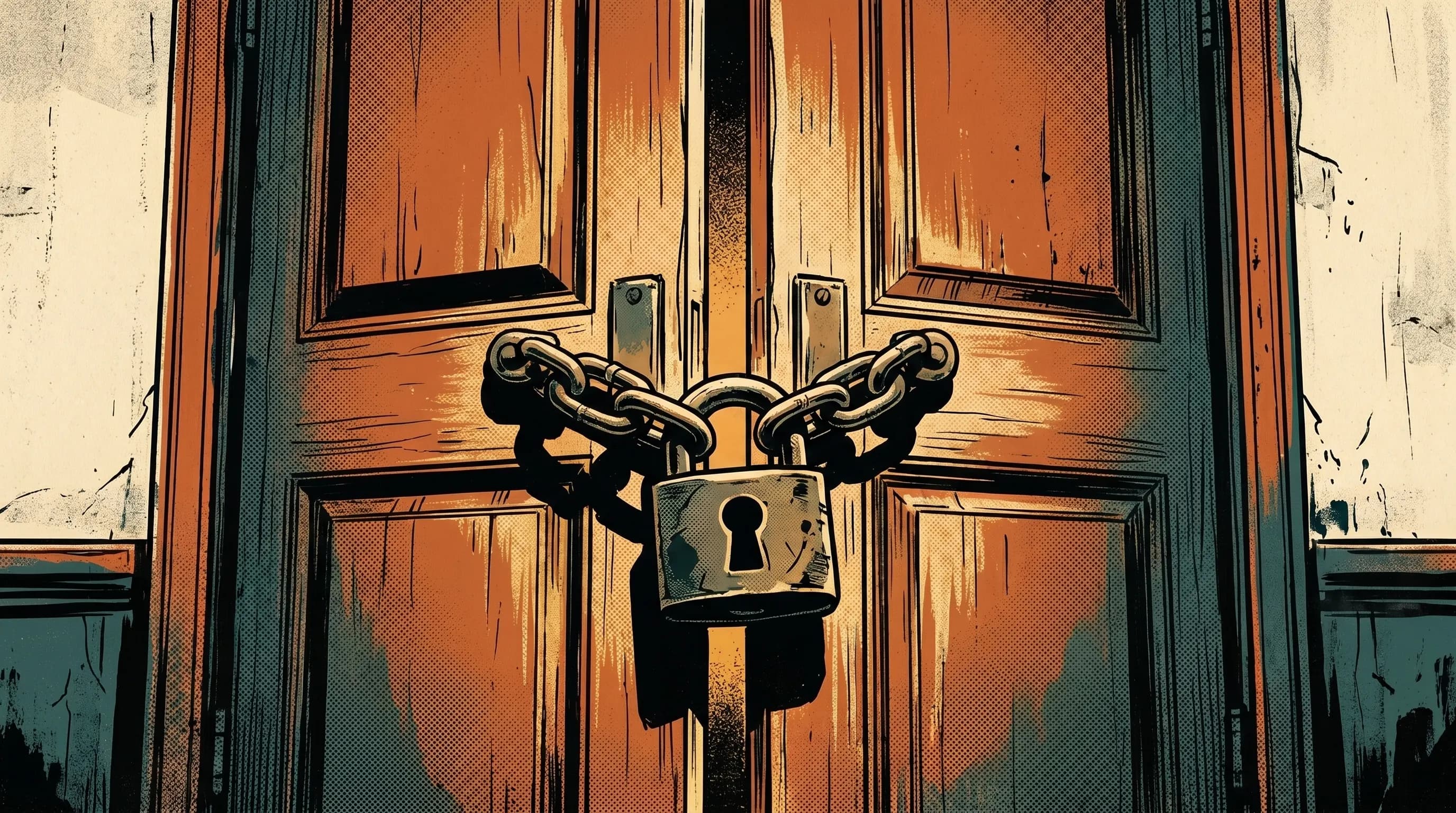
Nobody voted for Anthropic. Keep that thought close.
A Decision That Should Require a Senate Hearing
Anthropic, the AI company, has built something it decided not to release. The model — reportedly referred to internally as "Claude Mythos," though that name is unverified — is described as unusually good at one particular trick: finding the hidden cracks in software. Not the obvious ones. The ones that survived years of human review and automated testing.
Rather than release this model publicly, Anthropic chose to limit access to major tech firms for controlled testing. No press conference. No congressional briefing. No international treaty. Just a private company, making a unilateral call about who gets access to a tool with serious implications for global security — and then presumably moving on to the next sprint.
The response from the commentariat, led most visibly by Tom Friedman, has been to reach immediately for the nuclear metaphor. Friedman wrote that we should "imagine a world where everyone had a nuclear bazooka" — which is vivid, alarming, and almost entirely beside the point.
Why the Nuclear Metaphor Is Both Right and Wrong
Friedman's instinct is correct in one narrow sense: he's right that something profound has shifted. Cyber capabilities that were previously available only to intelligence agencies — nation-state-level tools — are now within reach of private actors. That is a proliferation problem. He's also right that "interdependence is not a choice; it's our condition," and that the global nature of digital infrastructure makes unilateral risk management somewhere between naive and useless. His argument that US–China cooperation on AI governance is necessary, because both nations are vulnerable to internal criminal misuse of these tools, is serious and worth engaging.
But the nuclear metaphor contains a flaw that everyone seems to be politely ignoring.
Nuclear weapons proliferation, for all its horror, was ultimately a problem between governments. The Non-Proliferation Treaty was negotiated by states, signed by states, and enforced — however imperfectly — by states. The decisions were made by people who, in theory at least, had been given some form of democratic mandate to make them.
What Anthropic just did is structurally different. A private company made a proliferation decision. It assessed the risk, weighed the options, and chose who gets the weapon and who doesn't. Not Congress. Not a multilateral body. Not even a particularly robust public debate. Anthropic.
The Invisible Government You Never Elected
Imagine that in 1946, instead of the Atomic Energy Act, the decision about who could enrich uranium was left to the company that built the first bomb. They'd probably make reasonable calls! They'd be thoughtful about it. They'd limit access to responsible parties. They'd set up a review process. They genuinely wouldn't want catastrophe.
And it still would be an outrage. Because the legitimacy of the decision doesn't come from its quality — it comes from the process that produced it.
What we have now is a series of extraordinarily consequential decisions being made by a small number of private AI companies, without legislative framework, without international coordination, and without public input. OpenAI has called for regulation in vague terms. Congress, by all accounts, is moving at its customary geological pace. And in the gap between "we should probably do something about this" and "here is the law," the companies are governing themselves.
This is not a conspiracy. It's not even, particularly, malice. It's what happens when technology outruns institutions — which it has done before, and institutions eventually caught up. The question is what gets broken in the meantime.
The Gap Between the Problem and the Proposed Solutions
The policy ideas currently circulating in response to AI disruption — four-day workweeks, sovereign wealth funds, shifting the tax base away from payroll and toward capital and corporate profits — are fine as far as they go. They address the economic anxiety that AI is already generating, the very real job disruption that doesn't require superintelligence to be disruptive. These are legitimate debates to have.
But they are debates about distribution. About who gets the proceeds from the productivity gains. They say nothing about who gets to decide what gets built, what gets released, and who gets access to tools that can crack open the world's software infrastructure like a walnut.
Friedman, to his credit, sees the scope of what's changing. He described this moment as AI being "a new species… silicon-based" being brought into existence. That framing is less a geopolitical observation than an existential one, and it's hard to argue it's wrong. But if you actually believe a new species is being born — if you actually believe this is a non-proliferation turning point — then the response can't just be "the US and China should probably talk more."
The response has to involve some kind of democratic claim over who makes the decisions.
The Honest Problem With Self-Regulation
To be fair to Anthropic: the alternative to them making this call was releasing a model that, by their own assessment, represented a serious security risk. Nobody was waiting with a regulatory framework into which they could hand the decision. Congress wasn't going to convene an emergency session. The choice was genuinely binary — release or don't — and they chose "don't," which, on its face, seems like the responsible option.
This is the trap. The absence of governance doesn't create a vacuum; it creates private governance by default. And private governance, however well-intentioned, has a structural problem: it is accountable to shareholders, to its own engineers' ethics, to competitive pressure, and to the long-term vision of its founders. It is not accountable to the public in any meaningful, enforceable sense.
We may have more time than the doomsayers suggest. But "more time" is not the same as "time we're using well," and right now we are spending it watching private companies make civilizational bets while our elected representatives slowly update their understanding of what a chatbot is.
What the Nuclear Bazooka Actually Teaches Us
Friedman's nuclear bazooka line is memorable — more memorable than it perhaps deserves to be, given that it illuminates the problem without pointing toward the solution. The reason nuclear weapons didn't end civilization wasn't primarily because of mutually assured destruction as a strategic doctrine. It was because the international community built, however imperfectly, an architecture of norms, treaties, and institutions around them.
That architecture took time, political will, and international negotiation. It required governments to accept constraints on their own behavior in exchange for constraints on everyone else's.
Nothing like that exists for AI. And nobody — not Friedman, not Anthropic — seems to have a plan for building it faster than the technology itself moves.
The Thing Nobody Wants to Say Out Loud
What Anthropic did with "Claude Mythos" — might be exactly the right decision, evaluated purely on its technical and security merits. The model might genuinely be too dangerous to release publicly. The controlled access to major tech firms might be exactly the right containment strategy for this particular moment.
It doesn't matter.
The legitimacy problem isn't about whether the decision was right. It's about the fact that we've sleepwalked into a world where a private company in San Francisco gets to make it. That's not a conspiracy. It's not even a scandal. It's just the quiet, mundane, extraordinarily consequential result of letting technology outpace democracy — and then being surprised when the technology starts making the rules.
Nobody voted for Anthropic. And until that changes — until there is actual democratic architecture around these decisions — every responsible choice they make is also a precedent for the irresponsible ones to come.


