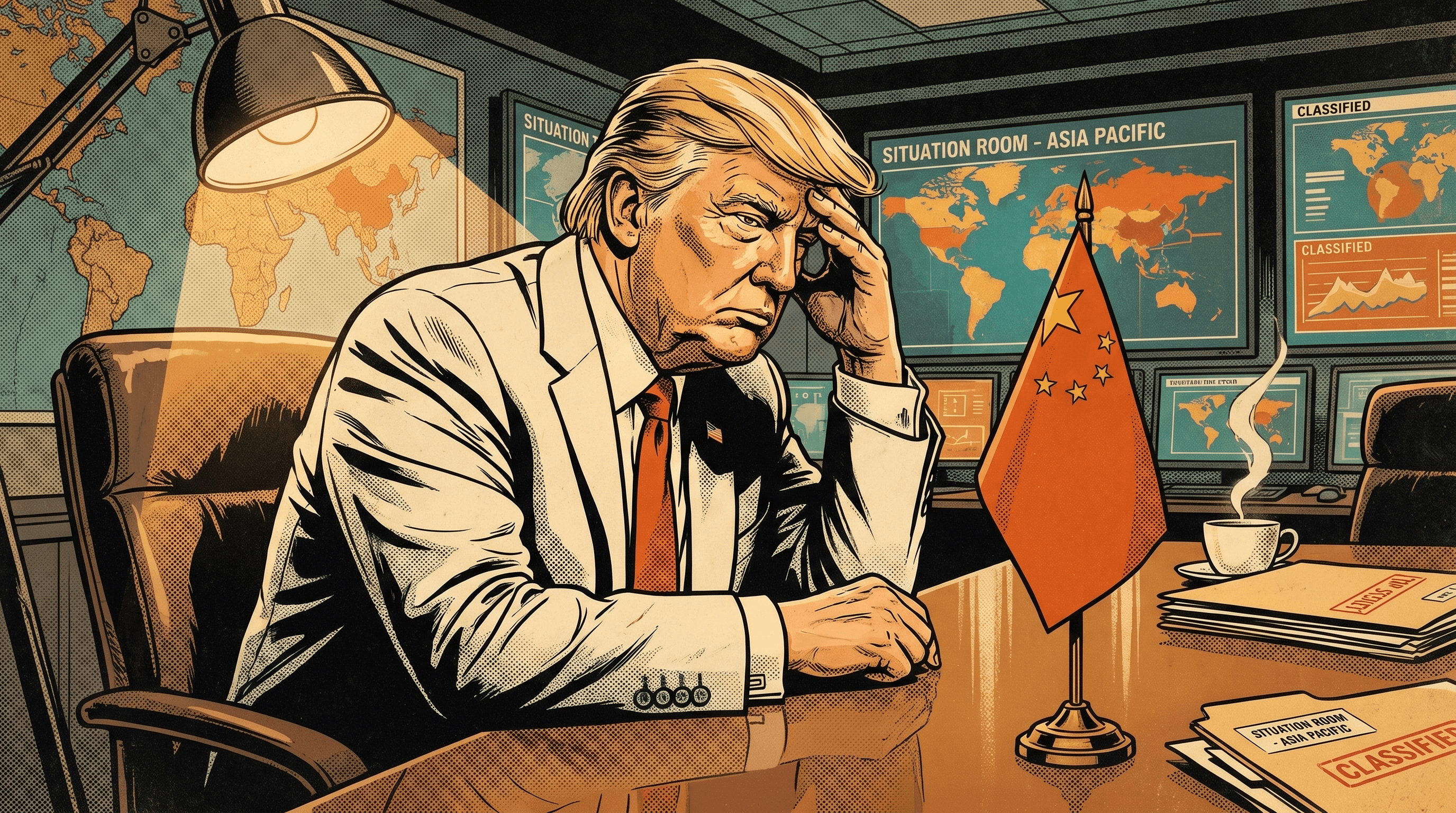
Here is a sentence nobody in Washington wants to say out loud: the quickest way out of America's war with Iran might be to ask China for a favour.
That is roughly where things stand on day 101. A war the United States is fighting alongside Israel has now run longer than three months, and the grand achievement of the last two of those months — a ceasefire — just got shredded. Israel and Iran traded missile strikes, the first such exchange since the truce began, and the most serious breakdown of it so far. The word everyone keeps using for this ceasefire is "precarious," which is diplomatic for "we all knew it wouldn't hold, we just didn't want to be the one holding it when it didn't."
The Setup
Let's keep this simple, because the basic facts are simple.
Around two months ago, the shooting between Israel and Iran was supposed to stop. It mostly did. Then it didn't. The missiles that flew this week were not a skirmish on the margins — they were the truce cracking down the middle. And the United States is not a referee watching from the stands. It is a party to this war. When Israel fires, America is in the room.
Donald Trump's response was to announce that he had told Israel to hold off. They struck anyway. So we are asked to believe one of two things: either the President of the United States asked Israel not to do something and Israel did it within earshot, or he is telling us he asked so that we don't blame him when it went wrong.
What He's Actually Doing
I'd put my money on the second.
"I told them to hold off" is not the language of a man who controls events. It is the language of a man building an alibi. Read it again: it is pre-emptive disownership. It plants a flag that says whatever happens next, remember I was the reasonable one. This is not lost leverage. You cannot lose leverage you were never confident you had. This is a hedge dressed up as restraint.
And the tell — the thing that gives the whole game away — is the Strait of Hormuz.
The Strait has long been the pressure point in the friction between Washington and Tehran. It is the narrow stretch of water that the world's oil has to squeeze through, and Iran sits right on top of it. When Trump was asked directly whether China would be willing to lean on Iran to reopen the Strait, the question itself was the story. Because the question only makes sense if the answer to "can Washington fix this itself?" is no.
Think about what that means. The United States — the most powerful military on earth, currently at war with Iran — is being asked, in public, whether it needs its single biggest rival to go and have a quiet word with the enemy. Washington is leaning on Beijing as a lever over Tehran. The off-ramp to America's war runs straight through the country America spends the rest of its week trying to contain.
The Breakdown: Why China Holds the Wrench
Here's the part that sounds backwards until you see the plumbing.
Imagine three people. America is the guy who got into a fight at a bar. Iran is the guy he's fighting. And China is the bartender who happens to be Iran's biggest customer — Iran sells China a lot of what it pulls out of the ground, and that oil goes out through the Strait of Hormuz.
Now, America can punch Iran. America is very good at punching. What America cannot do is make Iran cooperate. You can't bomb a country into reopening a shipping lane and meaning it. Force closes things. It doesn't reliably open them.
But the bartender? The bartender has something America doesn't: a relationship Iran actually values. China buys. China pays. When your best customer makes a phone call, you answer it in a way you'd never answer your enemy. So if anyone on earth can nudge Tehran toward unclenching its fist around the Strait, it isn't the country dropping the bombs. It's the country writing the cheques.
Which is why the supposedly tough-guy move here — asking China to intervene — is actually an admission. It's the bar-fighter turning to the bartender mid-swing and going, "Hey, could you maybe tell him to calm down?" Powerful, sure. In control? Not so much.
America brought the muscle. China brought the wrench. Guess which one actually loosens the bolt.
The Part That Would Be Funny If It Weren't a War
Meanwhile, in a sub-plot that belongs in a different and stupider movie, Iran's football team showed up at the World Cup in Mexico tangled in a visa row with the United States.
The reported arrangement is almost too perfect. Iran's players and staff were said to be forced to fly in and out of the US for every single group-stage game rather than just stay there — commuting across a border, match by match, like the world's most geopolitically awkward delivery drivers. Picture the logistics. You're at war with a country, and also that country's centre-backs keep landing at your airport on a Tuesday and leaving on a Wednesday.
Here is a country that can't decide whether Iran is an enemy to be bombed, a partner to be courted through Beijing, or a visa application to be processed. The answer, apparently, is all three at once, depending on the day and the department. You can launch missiles at a nation and stamp its footballers' passports in the same week. That's not a strategy. That's a government arguing with itself in public.
What It Adds Up To
Strip away the theatre and the position is plain. A ceasefire America helped broker has collapsed on its watch. The President's response was to insist he'd advised against the very strikes he couldn't stop — an alibi, not a policy. And the route out of the mess he's standing in apparently requires asking his chief rival to do the one thing his own arsenal can't.
That "I told Israel to hold off" line isn't the sound of leverage slipping away. It's the sound of a man who already knows how this looks and is getting his excuse on the record early.
So believe the actions, not the announcements. The bombs say one thing. The phone call to Beijing says another, and it's louder: the most powerful country on earth is fighting a war it needs someone else's permission to end. When you have to ask your rival to fetch the off-ramp, the rival is the one driving.


