Every war against a dictatorship is sold, at some point, as a favour to the people living under it. The sales pitch never changes. The results never change either.
What's Happening
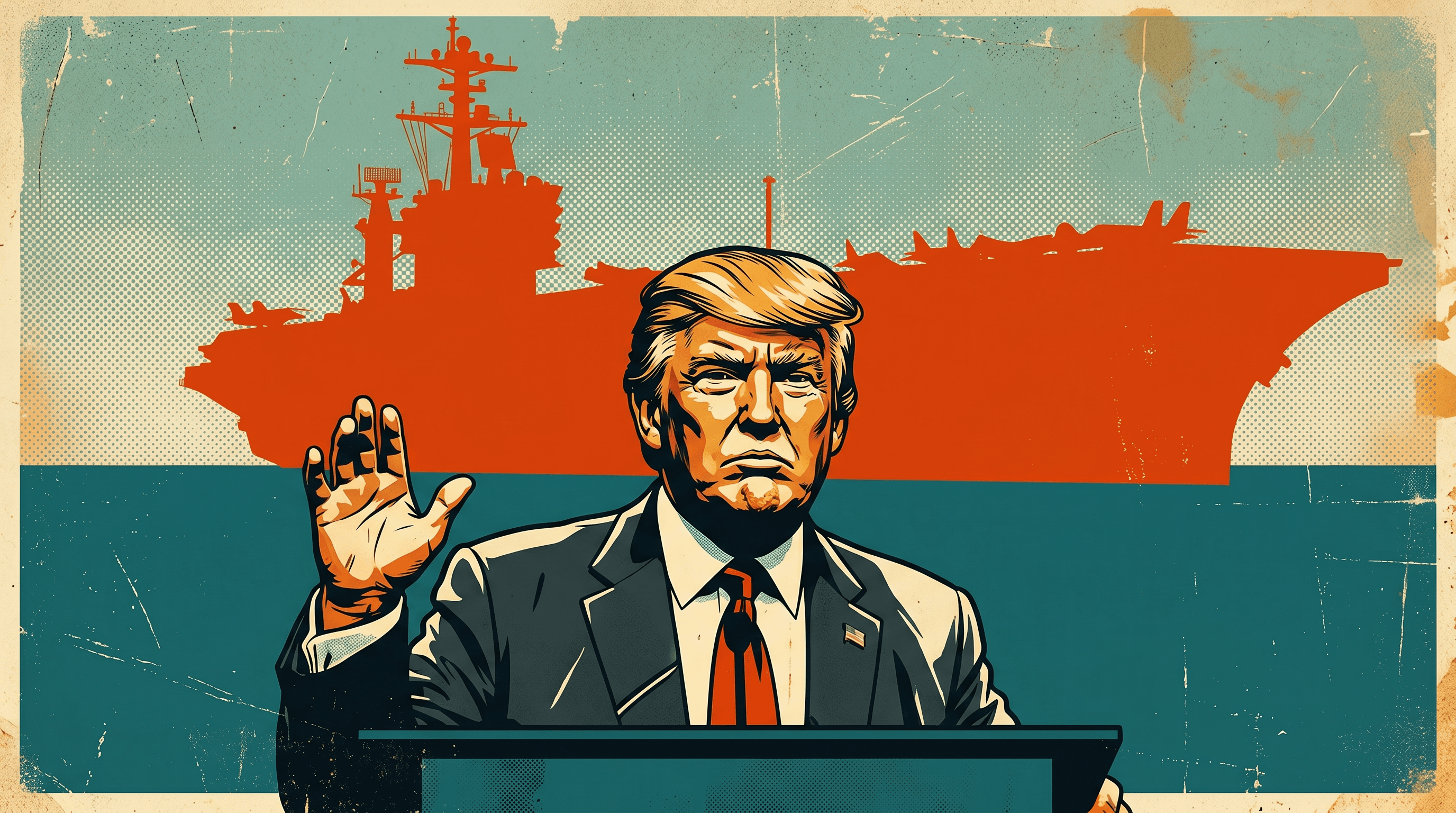
The United States is at war with Iran. On Monday, an operation called "Project Freedom" — named with all the subtlety of a Michael Bay sequel — will begin escorting stranded ships through the Strait of Hormuz, one of the most critical chokepoints for global oil and energy flows. President Trump announced the operation, framing it as humanitarian while simultaneously warning that any interference would be met with force. In the same breath, he described "very positive discussions" with Iran, though who is discussing what, and where, remains conveniently unspecified.
Meanwhile, inside Iran, at least 21 political prisoners have been executed since the war began. A lawyer working with detainees reports that prison conditions have grown dramatically harsher. Journalists covering the war now face espionage charges — the kind that carry consequences you don't recover from. Opposition-minded Iranians are expressing not hope, not gratitude toward their supposed liberators, but despair. The regime, they say, has not weakened. It may emerge from this war more brutal than before.
The Pattern No One Wants to Name
Here is what should be obvious but apparently requires restating every twenty years: authoritarian regimes do not loosen their grip when bombs are falling. They tighten it. Every time. Without exception.
This isn't a bug in the "pressure campaign" theory of regime change. It's a feature that its advocates refuse to acknowledge. The moment external military force arrives, every internal critic becomes a potential traitor. Every journalist becomes a spy. Every prisoner becomes leverage. The regime doesn't need to invent an excuse to crush dissent — Washington provides one, gift-wrapped, with a ribbon that reads "Project Freedom."
Trump's dual signalling — hard military posture paired with vague claims of positive diplomacy — is the rhetorical equivalent of punching someone while insisting you're open to a handshake. It sounds sophisticated to people who've never been on the receiving end. To those inside Iran, it means nothing except that the violence has an American return address, and the regime now has the one thing it always wanted: a foreign enemy vivid enough to justify anything.
How This Actually Works (A Brief Tour of Authoritarian Logic)
Think of a dictatorship like a company with terrible management but no competitors. Employees grumble. Some start talking about quitting. A few brave ones openly criticise the CEO in meetings. The CEO is nervous — momentum is building against him.
Now imagine a rival company launches a hostile takeover bid. What happens? Every employee, even the ones who hated the CEO, suddenly rallies around the existing leadership. The grumblers shut up. The critics are now seen as collaborators with the enemy. And the CEO? He fires the troublemakers — not despite the crisis, but because of it. "We're under attack. This is no time for disloyalty."
The 21 political prisoners killed since the war began weren't killed because the regime was weakening. They were killed because the war gave the regime permission. Under military assault, internal dissent stops looking like politics and starts looking like treason — and the legal machinery for this already existed in Iran. What the war provided was the political cover to run it at full speed.
The lawyer reporting harsher prison conditions isn't describing a regime in its death throes. They're describing one that has found its excuse. The journalists facing espionage charges aren't collateral damage of some liberation campaign. They are the campaign's actual product — the foreseen consequence of handing a paranoid government exactly the external threat it needed.
"Project Freedom"
"Project Freedom." Consider the name for a moment. Freedom for whom? The ships in the Strait of Hormuz, certainly — vessels from countries not party to the conflict need safe passage, and that's a legitimate maritime concern. But the branding isn't aimed at ship captains. It's aimed at domestic audiences who need to believe that American military force is, at its core, philanthropic. A kind of armed charity work.
The people actually living under the Iranian regime — the ones whose freedom is theoretically at stake — are watching 21 of their fellow dissidents get executed. They're watching journalism become a capital offence. They're watching the walls close in. And they're reaching the conclusion that opposition-minded Iranians have reportedly reached: the regime didn't weaken. It survived. It may come out the other side worse.
This is what "very positive discussions" look like from inside a cell.
The Comfortable Lie
There exists a persistent fantasy in Washington — bipartisan, immortal, immune to evidence — that sufficient military pressure transforms dictatorships into democracies the way sufficient heat transforms coal into diamonds. Sufficient heat mostly just burns things.
The comfortable version of this war is that it's a pressure campaign, that the regime is cornered, that freedom is around the corner for ordinary Iranians. The uncomfortable version — the one supported by 21 executions, worsening prison conditions, and the despair of the very people supposedly being liberated — is that external military force gave Iran's hardliners exactly what they needed. Not weakness. Strength. Not a reason to reform. A reason to kill.
Trump's simultaneous tough talk and vague diplomacy isn't a contradiction. It's the sound of a policy that doesn't need to be coherent because coherence was never the point. The ships will be escorted. The operation will be called "Freedom." And inside Iran, the regime will continue doing what regimes do when handed the gift of a foreign enemy: eliminating anyone who might have once posed an internal threat, while the world watches the Strait of Hormuz instead.
The Takeaway
Wars do not liberate people from dictatorships. They liberate dictatorships from the constraints that internal opposition once imposed. Twenty-one executions is not a side effect of pressure working. It is the sound of pressure working exactly as authoritarians hoped it would — just not in the direction anyone promised.
The next time someone names a military operation "Freedom," ask who's being freed — and who's being buried while you check.


